Buying Guide
Tesla Powerwall Review for Ontario Homeowners
Home battery storage is one of the most-asked-about topics I encounter, and the Tesla Powerwall is the product everyone wants to discuss. I'm Sam from City Power Electrical Services (ECRA/ESA #7015314), and I want to give GTA homeowners an honest, practical review — not the marketing version, but what this product actually means for you in Ontario.
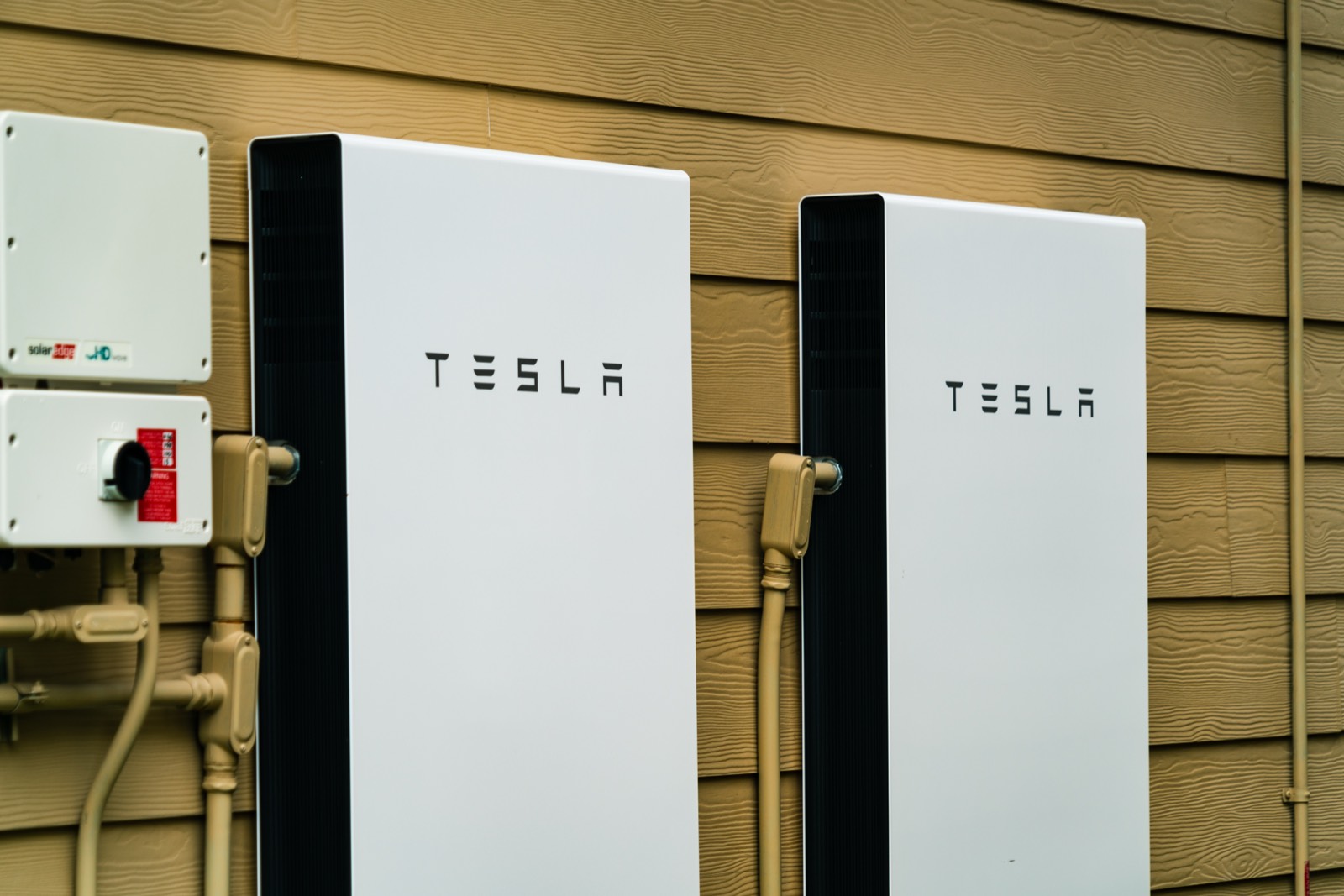
What the Tesla Powerwall is. The Tesla Powerwall is a rechargeable lithium-ion battery system designed for residential use. The current model (Powerwall 3, as of 2026) stores 13.5 kWh of usable energy and has a continuous power output of 11.5 kW (with a peak of 30 kW for brief surge loads). It includes a built-in solar inverter (if paired with solar panels) and a gateway that manages power flow between the grid, solar, battery, and your home.
In plain terms: a Powerwall can store enough energy to run a typical home's essential loads for several hours during a power outage, or it can optimize how you use electricity from the grid to reduce costs.
Cost. A single Tesla Powerwall 3 installed in Ontario costs approximately $14,000 to $18,000 CAD, including the battery unit, the gateway, electrical installation, permits, and inspections. Two Powerwalls (which many homeowners need for whole-home backup) run $25,000 to $32,000 installed. These prices include the ESA permit and inspection for the electrical work.
The electrical installation is significant — the Powerwall connects between your electrical panel and the utility meter, with a gateway that manages the switching between grid power, battery power, and solar (if applicable). This requires a licensed electrician experienced with battery storage systems.
Use Case 1: Backup Power During Outages. This is the primary reason most GTA homeowners consider a Powerwall. When the grid goes down, the Powerwall automatically switches to battery power, keeping your home running. The transition is nearly seamless — typically less than a second.
How long will it last? A single Powerwall (13.5 kWh) can power essential loads — refrigerator, lights, internet router, phone charging, and a furnace fan — for 10 to 15 hours in moderate conditions. If you're trying to run central AC, an electric stove, and an electric dryer off a Powerwall, it'll drain in 2 to 4 hours. Two Powerwalls double the runtime.
Compared to a standby generator ($12,000 to $22,000 installed) that runs indefinitely on natural gas, the Powerwall provides limited runtime. For extended outages (like the 2013 GTA ice storm that lasted days), a generator is the more practical backup solution. For short outages (a few hours to a day), the Powerwall works well and is completely silent and maintenance-free.
Use Case 2: Solar Self-Consumption. If you have rooftop solar panels, a Powerwall stores excess solar energy generated during the day for use in the evening and overnight. This maximizes your "self-consumption" — the percentage of your solar energy you use yourself rather than exporting to the grid.
In Ontario, the net metering program allows solar homeowners to export excess energy to the grid and receive a credit on their bill at the retail rate. This means that, economically, the grid acts as a free battery — you export during the day and draw back at night at the same rate. With net metering available, the financial incentive to add a battery for solar self-consumption is reduced compared to jurisdictions without net metering. The Powerwall still adds value as backup power, but the energy arbitrage benefit is limited by net metering.
Use Case 3: Time-of-Use Optimization. Ontario's residential electricity pricing uses time-of-use (TOU) rates with off-peak, mid-peak, and on-peak pricing. The difference between off-peak (approximately 7.6 cents per kWh) and on-peak (approximately 15.8 cents per kWh) is about 8 cents per kWh. A Powerwall could theoretically charge during off-peak hours and discharge during on-peak hours, saving you the difference.
Here's the math: a 13.5 kWh Powerwall cycling once daily, shifting that energy from on-peak to off-peak, saves approximately $1.08 per day, or about $394 per year. At a cost of $14,000 to $18,000, the payback from TOU arbitrage alone would be 35 to 45 years — far longer than the battery's expected lifespan of 10 to 15 years. TOU arbitrage alone does not justify the investment in Ontario at current rate structures.
Use Case 4: Peak Demand Reduction. For homeowners on commercial-style rates with demand charges (uncommon for residential but possible for some large homes), a Powerwall can reduce peak demand by supplementing grid power during high-draw periods. This is a niche application.
The honest assessment for Ontario homeowners. The Tesla Powerwall makes the most financial sense in Ontario if you value backup power highly (you have a sump pump that must run, medical equipment that requires power, or a home business that can't afford downtime), you already have or are installing solar panels and want to maximize self-consumption and have backup, or you live in an area with frequent outages and want silent, maintenance-free protection.
The Powerwall does not make financial sense purely as an electricity cost-savings device in Ontario. The TOU rate differential is not large enough, and net metering removes most of the self-consumption benefit. The payback period based on energy savings alone exceeds the product's lifespan.
Performance in Canadian winters. The Powerwall is rated for operation from minus 20 to plus 50 degrees Celsius. In a GTA garage or utility room (which rarely drops below minus 10 even in winter), it performs well. If installed outdoors, efficiency decreases in extreme cold because the battery uses some energy to keep itself warm. I recommend indoor or garage installation for Ontario homeowners whenever possible.
Warranty and lifespan. Tesla warrants the Powerwall for 10 years with a guaranteed retention of 70% of the original 13.5 kWh capacity. Real-world lifespan is expected to be 10 to 15 years, after which the battery will still work but with reduced capacity (similar to how an old phone battery holds less charge).
Alternatives to consider. For pure backup power, a natural gas standby generator ($12,000 to $22,000 installed) provides unlimited runtime at a similar or lower cost. For smaller-scale backup, a portable power station (like EcoFlow Delta Pro at $3,000 to $5,000) can cover essential loads for shorter outages without the installation cost. For solar plus storage, other battery options like the Enphase IQ Battery, LG RESU, and Sonnen are also worth considering — competition is increasing and prices are gradually declining.
If you're interested in home battery storage or any electrical upgrade, call City Power Electrical Services at 416-837-4038. I'll give you an honest assessment based on your specific situation — your energy usage, your outage risk, and your goals — so you can make an informed decision.
Want a licensed electrician to take a look?
Free written quote, usually the same day. ESA permits handled.