Troubleshooting
Knob and Tube Wiring: Dangers Homeowners Must Know
Knob-and-tube wiring is one of the most misunderstood electrical issues in older GTA homes. I'm Sam from City Power Electrical Services (ECRA/ESA #7015314), and I work with knob-and-tube wiring constantly in Toronto's century homes. Let me cut through the myths and explain the real dangers.
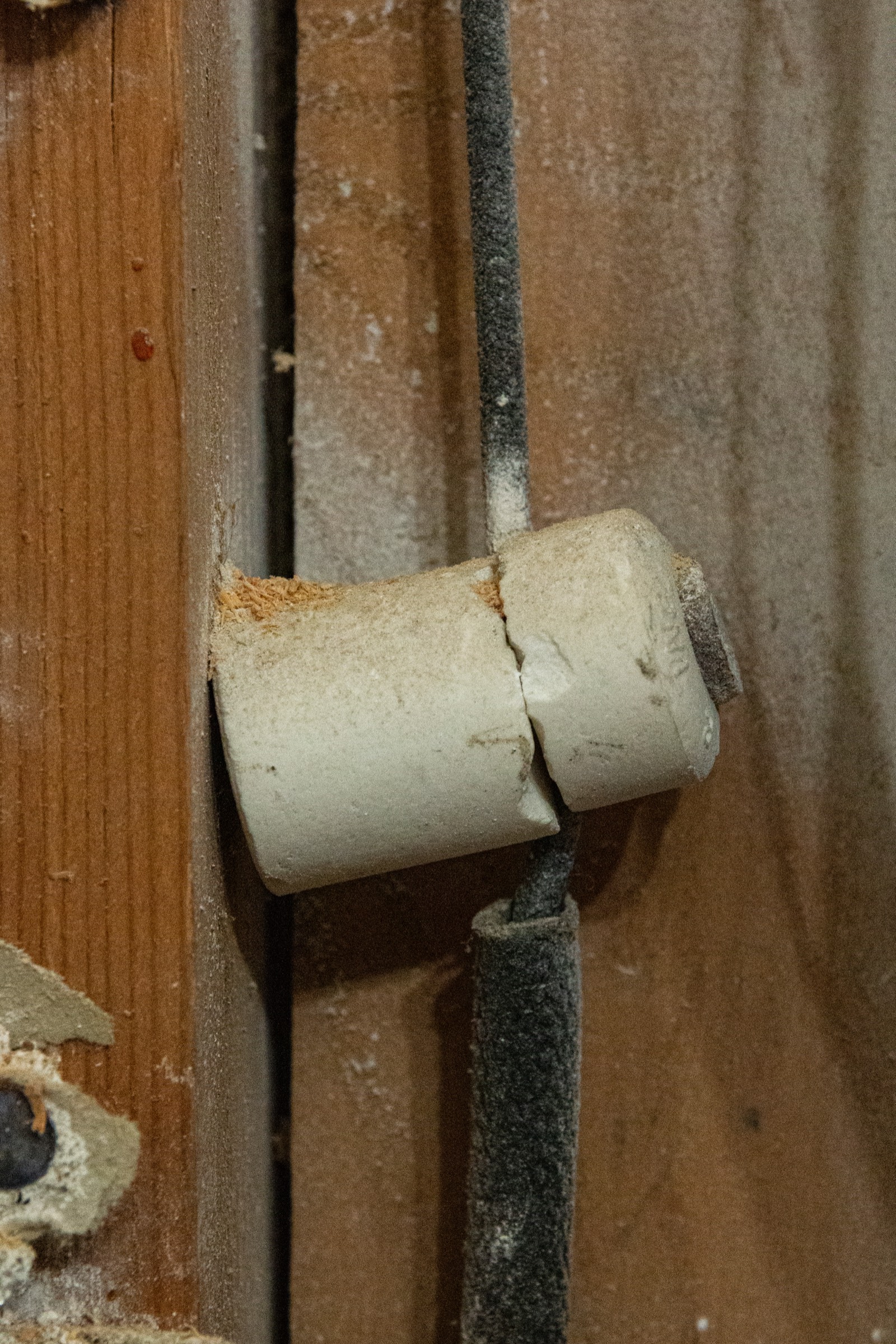
First, some context. Knob-and-tube wiring was the standard electrical wiring method in Ontario homes from the 1890s through the 1940s. It consists of individual conductors (hot and neutral, no ground) run through the house using ceramic knobs to support the wires along joists and ceramic tubes to protect wires where they pass through framing members. When it was installed, it was the best available technology and it was safe — for the electrical demands of that era.
So is knob-and-tube wiring inherently dangerous? In its original, undisturbed condition with no insulation contact and moderate electrical loads, knob-and-tube wiring can still function. However, in my experience inspecting hundreds of GTA homes, I almost never find K&T that's still in original condition. Over 80+ years, things change — and that's where the danger lies.
Danger 1: Insulation contact. This is the single biggest risk. Knob-and-tube wiring was designed to dissipate heat into the surrounding air. The individual conductors are separated by several inches and suspended in open space. When blown-in insulation (cellulose, fibreglass, or spray foam) covers K&T wiring, the heat has nowhere to go. The insulation traps the heat around the wire, which can degrade the rubber insulation on the conductors, leading to bare wire contact with combustible insulation material.
The Ontario Electrical Safety Code prohibits insulation from being in contact with knob-and-tube wiring. Yet I regularly find homes in Toronto, East York, and Scarborough where insulation has been blown directly over active K&T wiring — sometimes by insulation companies that either didn't know or didn't care about the code requirement. This is a serious fire hazard.
Danger 2: Deteriorated insulation. The rubber and cloth insulation on K&T conductors was never designed to last a century. In many homes, the insulation has dried out, cracked, and is literally falling off the conductors. Bare copper wire near wood framing, combustible insulation, or other wires is a short circuit and fire waiting to happen. I've pulled K&T wiring out of attics where the rubber insulation crumbled to dust in my hands.
Danger 3: Amateur modifications. Over 80+ years of ownership, knob-and-tube circuits have often been extended, spliced, and modified by homeowners and handymen who weren't electricians. I routinely find electrical tape splices, wire nuts joining K&T to modern NMD cable in open air (without junction boxes), circuits tapped and extended to add outlets, and connections made with no mechanical fastening — just twisted together.
These amateur modifications are where the real danger concentrates. A proper splice in a proper junction box is safe. A splice made with electrical tape inside a wall cavity in 1967 is a fire hazard.
Danger 4: No ground wire. Knob-and-tube wiring has no ground conductor. This means your outlets are two-prong, ungrounded outlets. Without a ground, there's no safe path for fault current, which increases the risk of electrical shock from faulty appliances. It also means you can't properly use three-prong appliances, surge protectors, or GFCI outlets (though GFCIs can be installed on ungrounded circuits as an added safety measure, with the "No Equipment Ground" label).
Danger 5: Overloaded circuits. K&T circuits were designed for the electrical loads of the early 20th century — a few lamps, maybe a radio, and a basic kitchen. Today, we plug in computers, TVs, phone chargers, kitchen appliances, and space heaters. The original 15-amp K&T circuits can handle these loads electrically, but the old wiring runs at higher temperatures under heavier loads, accelerating the deterioration of already-aged insulation.
The insurance reality. In Ontario, most insurance companies now require disclosure of knob-and-tube wiring. Many major insurers — including Aviva, Intact, Economical, and Wawanesa — will either refuse to issue a new policy on a home with active K&T, require an electrician's report confirming the wiring is safe, or charge significantly higher premiums. Some specialty insurers still cover K&T homes but at elevated rates.
If you're buying a home with K&T wiring, be prepared for this to come up during the insurance process. Your mortgage lender may also require the K&T to be addressed as a condition of financing.
What about the "knob-and-tube is fine if it's not disturbed" argument? I hear this sometimes, usually from people selling homes with K&T. While it's true that K&T wiring in perfect original condition with no insulation contact is less risky than modified K&T buried in insulation, the reality is that very few homes have undisturbed K&T. After 80+ years, some modification or insulation contact has almost always occurred. The only way to know for sure is to have a licensed electrician do a thorough inspection.
My recommendation as a licensed electrician who sees this daily. If your home has active knob-and-tube wiring, the safest course of action is to replace it with modern NMD90 copper wiring. Yes, it's an investment — typically $8,000 to $16,000 for a complete replacement. But it eliminates the fire risk, solves the insurance issue, adds to your home's resale value, and gives you the electrical capacity for modern living.
At minimum, have a licensed electrician inspect all accessible K&T wiring, check for insulation contact, identify any amateur modifications, and assess the condition of the wire insulation. This inspection gives you the information you need to make an informed decision.
To get your knob-and-tube wiring assessed by a licensed electrician, call City Power Electrical Services at 416-837-4038. I'll give you an honest evaluation — if your K&T is in genuinely good condition and you're managing the risk properly, I'll tell you that. If it needs to come out, I'll tell you that too.
Want a licensed electrician to take a look?
Free written quote, usually the same day. ESA permits handled.