Buying Guide
100 Amp vs 200 Amp Panel: Do You Need to Upgrade?
One of the most common questions I get from GTA homeowners is whether their 100-amp panel is enough or if they need to upgrade to 200 amps. I'm Sam from City Power Electrical Services (ECRA/ESA #7015314), and the answer depends on what you're doing with your home. Here's how to figure it out.
First, what do the numbers mean? The amp rating of your panel is the maximum amount of electrical current your service can deliver at any given time. A 100-amp panel at 240V can deliver up to 24,000 watts (100 amps x 240 volts). A 200-amp panel can deliver up to 48,000 watts. That doesn't mean you're using that much power continuously — it's the maximum available.
What a 100-amp panel can realistically handle. Using the CEC demand load calculation method (which accounts for the fact that not all circuits draw full power simultaneously), a 100-amp panel can typically support a gas furnace and central air conditioner (small to mid-size), a gas stove, a gas dryer, a gas or electric water heater (standard 40-gallon), standard lighting and outlets throughout a mid-size home, and typical household electronics and appliances. In other words, a 100-amp panel is generally adequate for a mid-size home with gas appliances and no major additional electrical loads.
When 100 amps is not enough. You need an electric vehicle charger. A Level 2 EV charger on a 48-amp circuit consumes nearly half the capacity of a 100-amp panel. While a load management device can sometimes work around this, in many cases a panel upgrade is the better solution. You have an electric stove and electric dryer. An electric range can draw 40 to 50 amps, and an electric dryer draws 24 to 30 amps. Combined with other loads, this can push a 100-amp panel to its limit. You're adding central air conditioning to a home that didn't have it. A central AC unit draws 20 to 30 amps on a dedicated 240V circuit. You're finishing a basement with additional circuits. A finished basement typically adds 4 to 8 new circuits, increasing the total demand on the panel. You're adding a hot tub or pool equipment. You have an electric tankless water heater (which can draw 100+ amps by itself — more on that below). You're adding a home workshop with large power tools. You're installing electric heating (baseboard or radiant).
A cautionary note about electric tankless water heaters: these are power-hungry beasts. A whole-house electric tankless water heater can draw 120 to 150 amps at peak demand. Not only would you need a 200-amp panel, you might need a 400-amp service. Gas tankless water heaters only need a standard electrical connection for the controls.
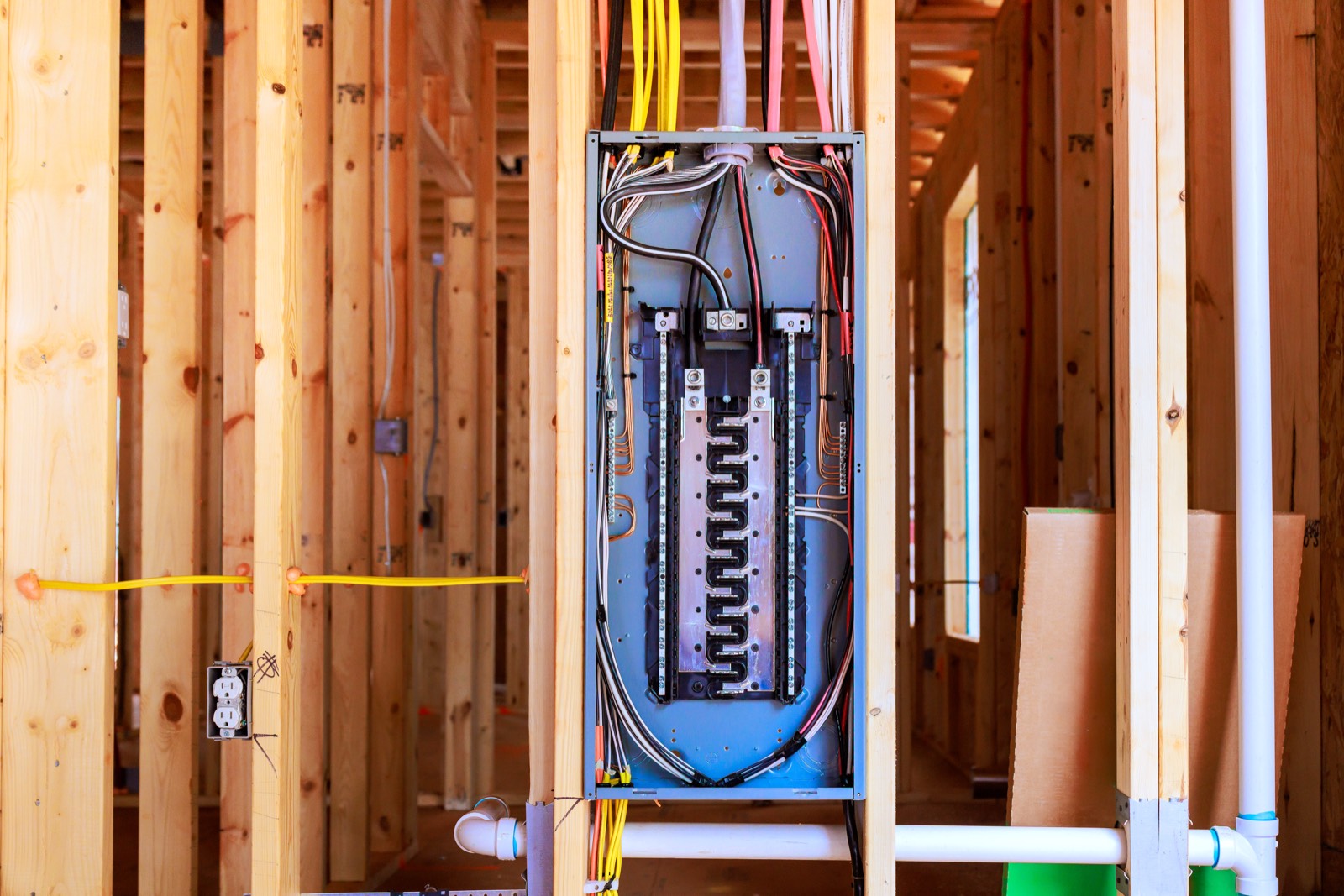
What a 200-amp panel provides. With 200 amps, you have ample capacity for modern living in a typical single-family home. You can run all major appliances (even electric stove and dryer), central air conditioning, an EV charger, a hot tub, a finished basement with multiple circuits, and still have room for future additions. A 200-amp panel also typically has more breaker spaces (30 to 40 spaces vs 16 to 24 in many 100-amp panels), which means more room for dedicated circuits.
Doing the math. Here's a simplified load calculation for a typical GTA home. The basic 5,000-watt general load (CEC requirement for any dwelling) plus 60 watts per square metre for a 1,500-square-foot (139 sq m) home gives about 13,340 watts base load. An electric range adds 6,000 watts. An electric dryer adds 3,500 watts. Central AC adds 4,000 watts. An electric water heater adds 3,000 watts. An EV charger at 40 amps adds 9,600 watts.
After applying the CEC demand factors (which reduce the calculation because not everything runs at full power simultaneously), a home with all of these loads would require approximately 100 to 120 amps of service capacity. With a 100-amp panel, you're right at the limit, and adding any more loads (or running everything simultaneously on a hot summer day while charging your EV) would exceed capacity. With a 200-amp panel, you have comfortable headroom.
Can you add circuits to a 100-amp panel? Yes, if there are available breaker spaces and the total calculated load doesn't exceed the 100-amp service capacity. If you just need to add one circuit for a dedicated outlet and your panel has available spaces, an electrician can do that without a panel upgrade. The key is the load calculation — it's not about having open breaker spaces, it's about whether the total demand exceeds the service capacity.
The cost comparison. Continuing to use your 100-amp panel costs nothing (for now). Upgrading to 200 amps costs $3,200 to $4,500 for a straightforward upgrade, or $4,000 to $6,000 if the service entrance, meter base, or mast needs replacement.
My recommendation for GTA homeowners. If your home has a 100-amp panel and you're planning any significant electrical addition — EV charger, AC, renovation, finished basement — do the upgrade now. A 200-amp panel gives you the capacity to do everything you want now and in the future. Doing it now, before you add the new loads, means a single project and a single disruption. Doing it later means paying twice for the panel work.
If your 100-amp panel is meeting your needs and you have no plans for additional electrical loads, there's no urgency to upgrade. A working 100-amp panel is not inherently unsafe — it's simply limited in capacity.
To find out if your GTA home needs a panel upgrade, call City Power Electrical Services at 416-837-4038. I'll do a load calculation based on your actual usage and planned additions and give you an honest recommendation.
Want a licensed electrician to take a look?
Free written quote, usually the same day. ESA permits handled.