Answered by a licensed electrician
How far can EV chargers be?
Quick answer
There is no fixed code distance limit for a home EV charger. The real limit is whether the circuit can be safely routed, protected and sized for voltage drop. Most GTA homeowners land around $1,500–$3,000 all-in for Level 2 charging, while long runs, trenching or finished-wall fishing are quoted after a site visit.
An EV charger can be installed far from the panel if the circuit is designed for the full route
There is no simple metre limit that says a Level 2 charger must be beside the electrical panel. We can run a properly sized 240V circuit across a garage, through a basement, along an exterior wall, out to a driveway post, or to a detached garage if the route is practical and code-compliant.
The important measurement is not the straight-line distance from the panel to the car. It is the wiring route: up from the panel, across joists, around finished ceilings, through exterior transitions, down a wall, through conduit, or underground if needed. A charger that looks 6 metres away from the panel may be a much longer electrical run once the cable has to follow safe framing and protection paths.
Longer runs matter because they can affect:
- Wire size: a long circuit may need larger conductors to control voltage drop under continuous charging load.
- Labour: fishing wire through a finished basement ceiling is very different from an open unfinished garage wall.
- Protection: exterior and garage wiring may need conduit or other mechanical protection where it can be hit.
- Route approvals: underground work, exterior penetrations and panel work must be done under the right ESA notification where required.
- Final charger location: the charger must be mounted where the vehicle can plug in safely without a household extension cord.
For a clean installation with the panel nearby and capacity available, a Level 2 charger can be a straightforward project. Longer wire runs or finished routes can push the installation into the higher range on the quote, and if service capacity is tight we may need load management or a home EV charger installation plan that includes panel work.
The best charger location is where the factory cable reaches the car without creating a trip or snow hazard
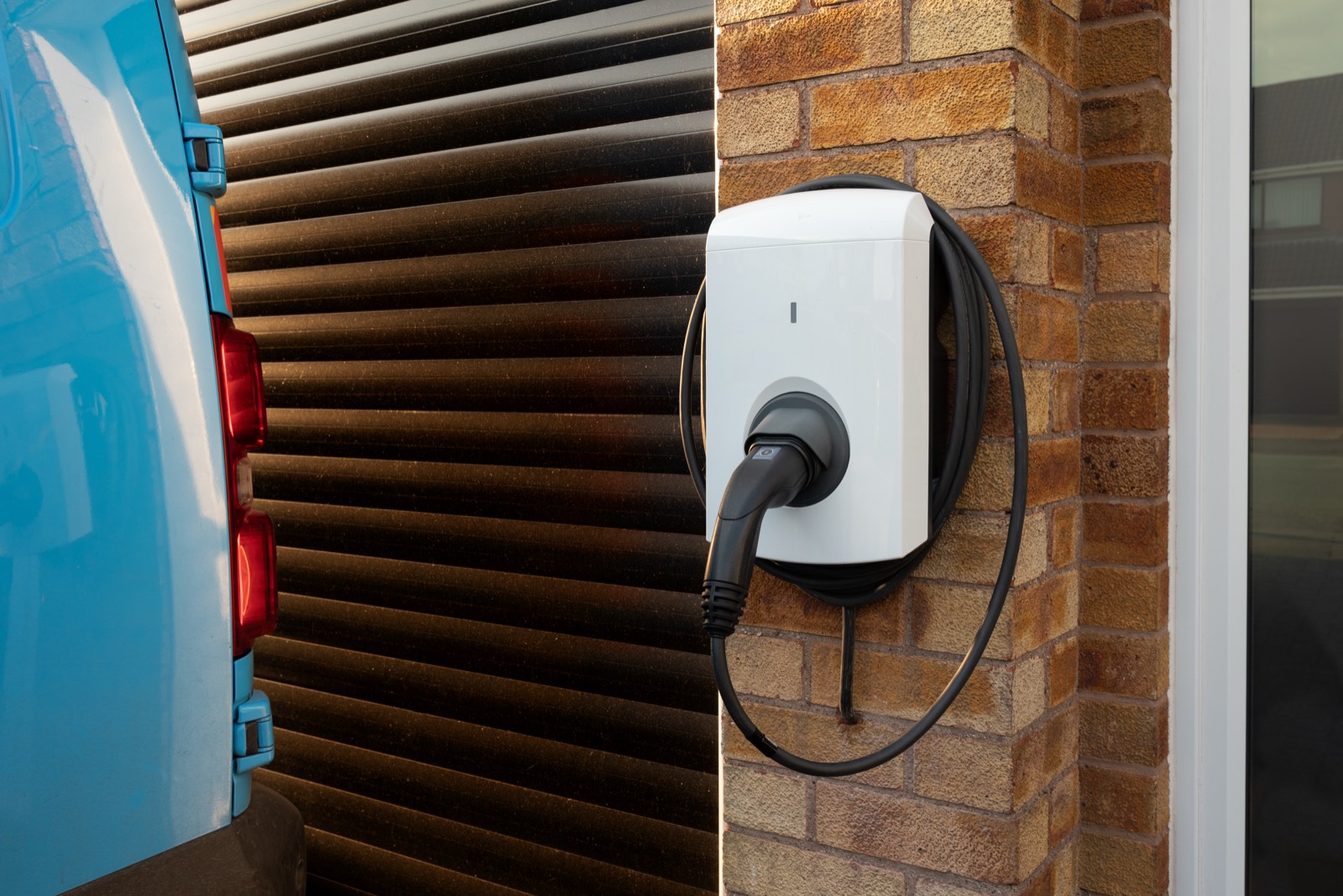
The charger should be close enough to the vehicle’s charge port that the manufacturer’s cord reaches comfortably, with slack, without crossing a walkway or being stretched across the garage. Do not plan an EV installation around a household extension cord. The permanent circuit should bring power to a sensible charger location instead.
In a garage, we normally look at where the car parks every day, which side the charge port is on, and whether a second EV may be added later. A charger centred between two parking spots can be useful, but only if the cable can be managed off the floor. Wall-mounted cable hooks, stud placement and the height of the charger all affect whether the setup feels easy every night or annoying after the first week.
For a driveway, the location has to account for snowbanks, shovelling, vehicle bumpers, garbage bins and visitors walking past the car. Exterior mounting is possible when the charger is rated for outdoor use and installed with weatherproof fittings. If you are planning outdoor charging, read Can Level 2 chargers go outside? before choosing the exact wall or post location.
For a detached garage or parking pad, the question becomes route-first. Can we get from the house panel to the garage safely? Is there an existing sub-panel? Is trenching needed? Are there utilities, interlock, asphalt, tree roots or finished landscaping in the way? Those details affect the written quote more than the brand of charger.
| Location | What we check | Distance issue |
|---|---|---|
| Attached garage | Panel route, wall surface, stud bay, door tracks | Usually easiest if the panel is in or near the garage |
| Finished garage | Drywall, insulation, fire separation and clean conduit path | More labour if wiring cannot be fished cleanly |
| Driveway wall | Weather rating, snow exposure, bollard risk, cable reach | Exterior conduit and weatherproof fittings may be needed |
| Driveway post or pedestal | Mounting base, vehicle impact risk, underground feed | Trenching and locates become quote factors |
| Detached garage | Existing feed, sub-panel capacity, trench route | Distance may require larger wire or a new feeder |
If your charger will be in an attached garage, our guide on whether EV chargers can be installed in garages covers the placement details that matter before the estimate.
Farther runs cost more because the route may need larger wire, conduit, trenching or wall fishing
Distance itself is not the only cost driver; the difficulty of the route is what changes the estimate. Ten metres through open joists may be simpler than three metres through tile, finished drywall and a crowded panel wall.
A nearby-panel Level 2 installation can be at the lower end of the home charging range. Most homeowners end up around $1,500–$3,000 all-in for typical installations, while longer wire runs or finished-wall routes can land higher. If capacity is not available, a load-management device may avoid a service upgrade; if a 200A upgrade is required, that is a separate scope commonly quoted in the $3,200–$4,500 range.
When we quote distance, we are looking for real route conditions, not just a Google Maps-style measurement. Common quote factors include:
- Panel location: basement, garage, utility room, condo mechanical closet or exterior service wall.
- Panel capacity: available breaker spaces, load calculation and whether an EVEMS/load-management device is needed.
- Wall finish: open framing, drywall, plaster, tile, cabinets or finished ceilings.
- Exterior transitions: drilling through brick, siding or foundation walls, then sealing the penetration properly.
- Conduit path: garage walls, exterior walls, corners, height changes and places where the conduit could be struck.
- Underground work: trench path, surface restoration, utility locates and burial-rated wiring method.
- Charger type: hardwired units are often cleaner outdoors; receptacle-based installs have different box, cover and protection requirements.
The circuit also has to match the charger setting. Many Level 2 chargers can be configured at different amperages, but the breaker, wire and charger settings must agree. If you are still choosing the unit, see our notes on the best EV chargers for Canadian homes before buying one based only on app features.
City Power Electrical Services, ECRA/ESA #7015314, provides free written estimates in Toronto and the GTA, and EV charger jobs are filed with the ESA where required so the route, breaker and installation can be inspected properly.
ESA inspection is about the whole circuit, not just whether the charger turns on
The charger location has to pass as part of a complete electrical installation. ESA does not only care that the car charges. The inspector is looking at whether the circuit is correctly sized, protected, supported and installed according to the Ontario Electrical Safety Code and the charger manufacturer’s instructions.
On a distance-heavy EV install, the inspection and workmanship details often include:
- Correct breaker size for the configured charger output.
- Conductors sized for the load and route conditions.
- Proper grounding and bonding.
- Cable or conduit supported and protected from physical damage.
- Weatherproof boxes, covers and fittings outdoors.
- Safe transitions through walls and exterior surfaces.
- No loose connections in the panel, junction boxes or charger terminals.
- Labelling or documentation where load management is installed.
If the charger is far from the panel, voltage drop becomes part of the design conversation. The symptom of a poor design is not always an immediate failure; it can be nuisance charging errors, heat at terminations, or the charger reducing output. We avoid that by sizing the circuit for the real load and distance before the wire is installed.
The charger should also have its own properly protected branch circuit or approved load-management arrangement. If you want the deeper code answer, read Do EV chargers need dedicated breakers?. For placement, the short version is simple: do not share the EV charger with random garage receptacles, tools or lighting.
Winter is another placement issue in Ontario. Outdoor chargers can work well, but the cord should not lie where it will freeze into packed snow, and the unit should be mounted where the screen, holster and plug remain accessible after shovelling. Our page on whether EV chargers work in winter covers cold-weather use separately.
The right quote starts with the car position, then works back to the panel
The fastest way to answer “how far can my EV charger be?” is to start at the parking spot and work backwards. Where does the vehicle normally sit? Which side is the charge port on? Will you reverse in or drive in? Do you need to reach two vehicles? Once that is clear, the electrical route can be designed properly.
Before requesting a quote, take these notes:
- A photo of the electrical panel with the door open.
- A photo of the panel location from farther back, showing surrounding walls.
- The proposed charger wall, post or garage area.
- The normal parking position of the vehicle.
- The charger model, if already purchased.
- Whether walls or ceilings between the panel and charger are finished.
- Whether trenching, driveway crossing or exterior mounting may be needed.
A site visit or photo review lets us separate a simple nearby install from a long, routed installation that needs conduit, trenching, larger conductors or load management. The safest and cleanest EV charger is not always the one mounted closest to the panel; it is the one placed where you will actually plug in every day, with a circuit designed for the full distance.
Want a licensed electrician to take a look?
Free written quote, usually the same day. ESA permits handled.
People also ask
Can an EV charger be across the garage from the panel?
Yes. A charger can be mounted across the garage if the circuit is routed safely and protected from damage. The quote depends on whether the wire can run through open framing, surface conduit, attic or finished walls. The electrician also checks voltage drop, breaker size, charger setting and whether the panel has capacity.
Can I put an EV charger at the end of my driveway?
Often yes, but a driveway location usually needs an exterior-rated charger, a secure mounting post or wall, weatherproof fittings and a safe underground or exterior conduit route. Trenching, utility locates, asphalt or interlock restoration, and vehicle impact protection can all affect the written quote.
Does a longer EV charger run need bigger wire?
Sometimes. The longer the circuit and the higher the charging amperage, the more voltage drop matters. An electrician may upsize the conductor for a long route so the charger receives proper voltage under continuous load. The breaker, wire size and charger output setting must all be coordinated.
Is it cheaper to install the charger beside the panel?
Usually, if the car can park close enough for the factory cord to reach safely. A short, open route normally uses less labour and material. But the cheapest wall is not always the best location if the cable crosses a walkway, sits in snow, or cannot reach the vehicle’s charge port comfortably.