Answered by a licensed electrician
Can EV chargers be installed in garages?
Quick answer
Yes, EV chargers can be installed in attached or detached garages when the circuit is sized for the charger, the cable route is protected, and an ESA notification is filed for the new EV circuit. Most GTA homeowners land between $1,500 and $3,000 all-in, with longer runs or finished walls increasing the quote.
Yes, a garage is usually the best place for a home EV charger, as long as the wiring route, breaker size, wall location and ESA inspection are planned before installation. The charger must be on an approved circuit, mounted where the cord reaches the vehicle comfortably, and installed to suit the garage type: attached, detached, finished, unfinished, heated or unheated.
For a homeowner, the practical quote question is not just “can it go in the garage?” It is: where is the panel, where does the vehicle park, how will the cable get there, and does the service have enough capacity?
City Power Electrical Services is an ECRA/ESA Licensed Electrical Contractor, #7015314, and we install garage EV chargers across Toronto and the GTA with ESA notification where required.
Attached garages are usually the simplest EV charger installs
Attached garages are usually simpler because the electrical panel is often in the basement, utility room, laundry room or garage itself, and the wiring can usually stay inside the house envelope. That reduces trenching, weather exposure and the number of transitions between indoor and outdoor wiring methods.
The first site check is panel location. If the panel is on the garage wall, the installation may be a short surface-mounted conduit run to the charger. If the panel is in the basement on the opposite side of the house, we look for a route through unfinished ceiling, joist bays, mechanical rooms or a garage ceiling bulkhead. Finished drywall does not prevent an install, but it affects labour, patching access and final routing.
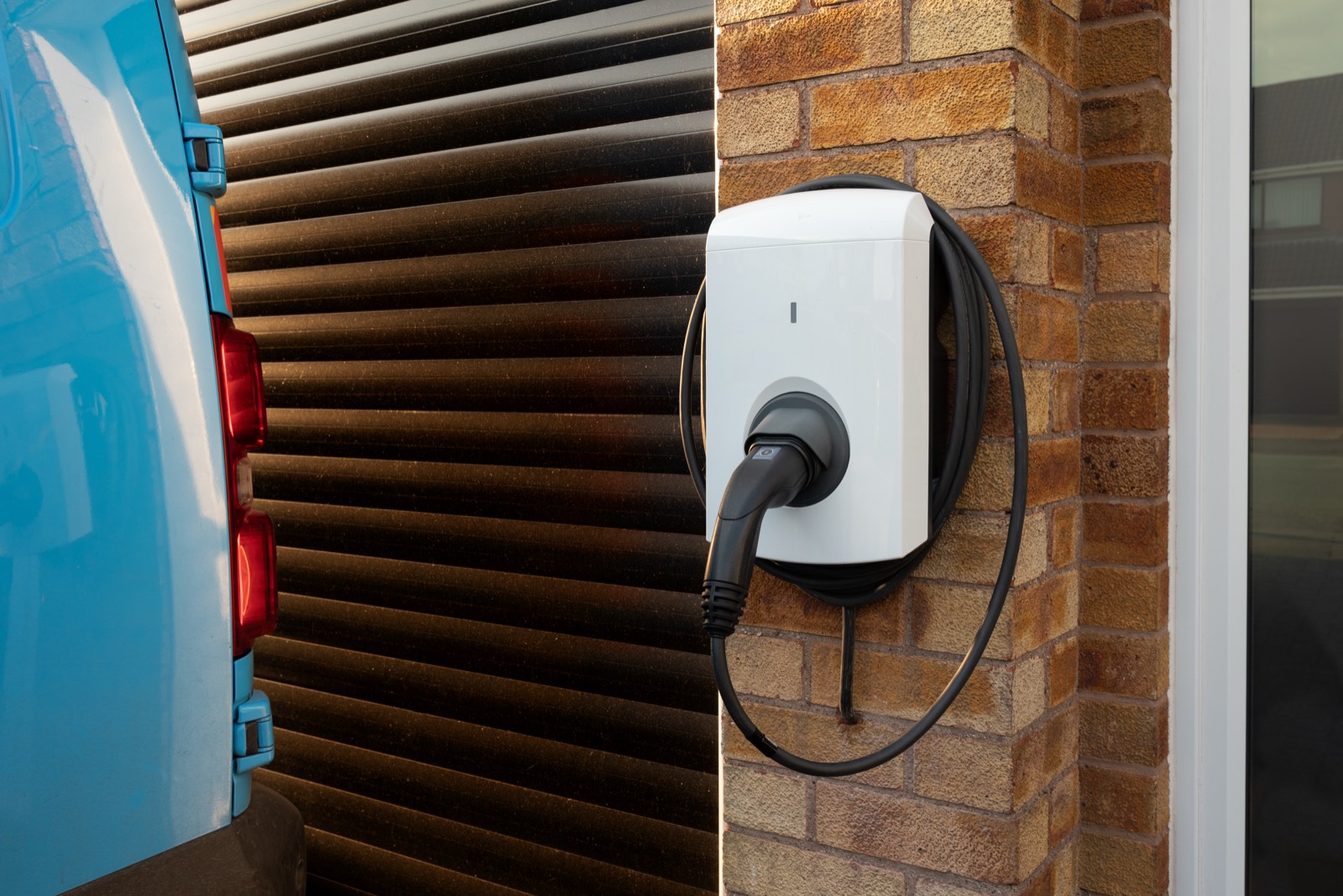
The second check is charger placement. A Level 2 charger should be mounted where the cable reaches the charge port without crossing a walkway, hanging over a sharp edge, or being stretched tight when the vehicle is backed in or pulled in nose-first. Many chargers have a long cord, but cord reach still matters in single-car garages, tandem garages and two-car garages where vehicles swap sides.
Common attached-garage mounting spots include:
- Beside the overhead door, if the vehicle parks nose-in and the charge port is near the front quarter
- On the side wall between two parking spaces, if two EVs may use the same charger at different times
- Near the front wall of the garage, if the charge port is at the rear of the vehicle
- On a garage post or framed wall section, where the unit can be mounted solidly and protected from impact
- Close to the panel, only if that location still gives safe cable reach to the vehicle
Do not choose the charger location based only on the shortest wire run. A charger mounted cheaply in the wrong corner becomes annoying every night. We would rather measure the parking position, door swing, shelving, snowblower storage and cable path before choosing the final wall.
If you are still choosing equipment, see our guide to the best EV chargers for Canadian homes. Charger amperage, cord length, Wi-Fi reliability and indoor/outdoor rating all affect the garage layout.
Detached garages can work, but the feeder and route decide the job
Detached garages can absolutely have EV chargers, but the installation depends on how power currently reaches the garage. Some detached garages only have a small lighting circuit. Others have a proper sub-panel. Many older GTA garages have wiring that was never intended for a continuous EV charging load.
For a detached garage, we check three things before quoting:
| Site condition | Why it matters |
|---|---|
| Existing garage feed | A small feed may handle lights and a door opener, but not a Level 2 charger. |
| Route from house to garage | Underground conduit, burial-rated cable, hardscape, driveway crossings and finished basements all affect the work. |
| Garage panel or junction point | A charger usually needs a properly sized dedicated circuit from a suitable panel or sub-panel. |
| Grounding and bonding | Detached structures must be wired so fault current clears safely and metal parts do not become energized. |
| Future use | A workshop, heater, welder or second EV may change the right feeder size. |
If the detached garage already has a suitable sub-panel with spare capacity, the charger circuit may be installed from that panel. If not, the job may require a new feeder from the house panel to the garage, often in underground conduit. That route may pass through a basement wall, exterior wall, trench, driveway edge, garden bed or garage slab area. The OESC requirements for mechanical protection, burial depth, conduit transitions and wet-location conductors matter here.
Detached garage installs are where “how far can the charger be?” becomes a real design question. Distance increases voltage drop, wire size, trenching and labour. A long run can still be done safely, but it should be designed instead of improvised. We cover the distance issue in more detail here: how far EV chargers can be from the panel.
If the charger location is technically outside the detached garage, such as on an exterior wall facing the driveway, the unit and wiring method must be suitable for weather exposure. See whether Level 2 chargers can go outside for that placement question.
The charger needs a properly sized dedicated EV circuit
A garage EV charger should be installed on its own EV circuit, not shared with garage receptacles, lights, a freezer, a garage door opener or a workshop circuit. EV charging is a long-duration load, so the breaker, wire and charger settings must be matched properly.
A common example is a charger set to 32 amps on a 40-amp circuit, or 40 amps on a 50-amp circuit, where the charger and wiring are rated for it. The exact setup depends on the charger, panel capacity, wire route and load calculation. We do not just install the largest breaker that fits in the panel.
Before installation, we check:
- Main service size: 100A and 200A services are treated differently in the load calculation
- Panel condition: space, breaker compatibility, rust, overheating signs and double-tapped conductors
- Existing large loads: range, dryer, hot tub, air conditioner, heat pump, electric heat or basement apartment loads
- Charger amperage: the setting must match the circuit, not just the car’s maximum acceptance rate
- Hardwired versus receptacle: hardwired installations are often cleaner in garages and avoid plug wear
- Cable protection: conduit, sleeving or armoured cable may be needed where wiring is exposed to damage
For more on the circuit requirement, read whether EV chargers need dedicated breakers.
A garage receptacle should not be treated as an EV charger just because the plug fits an adapter. Receptacles used for EV charging see repeated long charging sessions, heat cycling and cord movement. If an EV will be charged daily, the safer approach is a properly installed EV circuit with equipment rated for that use.
If panel capacity is tight, a load-management device may avoid a service upgrade by reducing EV charging when the home is using too much power. If a service upgrade is needed, the utility step may involve Toronto Hydro, Alectra, Hydro One or another local distributor depending on the address.
ESA notification and inspection are part of a proper garage charger install
A new EV charger circuit normally requires an ESA notification, and the work should be done by a licensed electrical contractor. The notification is not paperwork for its own sake; it is the inspection path that confirms the new circuit, breaker, wiring method and charger connection meet Ontario requirements.
For a typical garage charger, the ESA process looks like this:
- We assess the panel, service capacity, garage route and charger location
- We provide a written quote with the scope, circuit size and route
- The ESA notification is filed where required before or during the work
- The circuit is installed with the correct breaker, wire, conduit or cable protection
- The charger is mounted, connected, labelled and configured to the approved amperage
- ESA inspection is completed as required, and any defect is corrected before closeout
The inspector is not choosing your charger brand or deciding where you park. They are looking at electrical safety: correct conductor size, approved equipment, proper overcurrent protection, bonding and grounding, support, protection from physical damage, panel workmanship, labelling and code-compliant installation.
For many straightforward GTA garage installations, where the panel is nearby and capacity is available, the installed electrical portion is commonly in the $800–$1,500 range. When the run is longer or finished walls make the route harder, the electrical work can land around $1,500–$3,500, before considering the charger if it is supplied separately. Most homeowners end up around $1,500–$3,000 all-in, depending on route, charger and panel conditions.
The fastest quotes come from clear photos: panel with the door open, panel location relative to the garage, the proposed charger wall, the parking spot, and any finished ceiling or basement area between them. If the garage is detached, include the distance between house and garage and photos of the existing garage panel or receptacles.
The best garage location is the one that works every day
The best charger location is not always the closest point to the panel; it is the place where the charger is protected, reachable and convenient for daily charging. In a garage, that means thinking about the vehicle’s charge port, cable slack, storage, winter slush, door clearance and future vehicles.
A good garage EV charger layout usually has:
- The charger mounted on solid framing, not a loose panel or thin wall finish
- A cable path that does not cross the main walking route if avoidable
- Enough height to hang the cord without leaving it on the floor
- Protection from being hit by car doors, bikes, garbage bins or snow shovels
- Access to the charger screen, release button and cord holster
- A route that avoids unnecessary drywall openings where a cleaner conduit run is available
- A circuit size that suits the home’s electrical capacity, not just the car’s marketing spec
In attached garages, we often balance a slightly longer conduit run against a much better cable reach. In detached garages, we often design the feeder so the garage is not maxed out the moment the charger is added. In both cases, the quote should describe the route clearly so you know what will be visible when the work is done.
If you are ready to plan the install, start with our EV charger installation service. We can confirm the garage location, panel capacity, ESA notification and the cleanest wiring route before you buy equipment or mount anything on the wall.
Want a licensed electrician to take a look?
Free written quote, usually the same day. ESA permits handled.
People also ask
Can I install an EV charger in a detached garage?
Yes, but the detached garage must have a suitable electrical supply. If the existing garage feed only supports lights and a door opener, a Level 2 charger may need a new feeder, sub-panel or underground conduit from the house. The route, burial method, grounding and ESA inspection are what usually drive the scope.
Does a garage EV charger need an ESA permit in Ontario?
A new EV charger circuit normally requires an ESA notification in Ontario. A licensed electrical contractor files the notification, installs the circuit and arranges inspection where required. ESA looks at the breaker, conductor size, wiring method, bonding, grounding, equipment approval, labelling and protection from physical damage.
Where should a charger be mounted in a garage?
Mount it where the cord reaches the vehicle without stretching, crossing a main walkway or lying on the floor. The best spot depends on whether you park nose-in or back-in, where the charge port is, and whether one or two parking spaces need access. Panel distance matters, but daily cable reach matters too.
Can I use an existing garage outlet for EV charging?
Only if the outlet and circuit are specifically suitable for the charging load, which many existing garage receptacles are not. Daily EV charging is a long-duration load and should not share a circuit with lights, freezers or garage tools. A dedicated EV circuit is the proper approach for Level 2 charging.