Answered by a licensed electrician
Do EV chargers need dedicated breakers?
Quick answer
Yes. A Level 2 EV charger normally needs a dedicated breaker and branch circuit sized to the charger’s maximum continuous output. A 40A charging load is commonly put on a 50A circuit because EV charging is treated as continuous. In the GTA, many home installations land between $1,500 and $3,000 all-in, with ESA notification included.
Yes — a home EV charger normally needs its own dedicated breaker
A Level 2 EV charger should normally be on a dedicated branch circuit: one breaker, one cable run, one charger or EV receptacle. It should not share a breaker with garage plugs, lights, a freezer, a door opener, a heater, or an outdoor receptacle.
That dedicated circuit matters because an EV charger is not a small occasional load. It can draw near its rated current for hours at a time, often overnight when nobody is watching the panel. Sharing that circuit with anything else can overload the breaker, create nuisance tripping, or hide a real capacity problem.
For a proper EV charger installation, we look at three things before choosing the breaker:
- The charger’s maximum output setting, not just the plug shape
- The circuit conductor size and installation conditions
- The home’s available service capacity after a load calculation
A plug-in charger using a NEMA 14-50 receptacle still needs a dedicated circuit. The receptacle does not make it a general-purpose outlet for welders, compressors, RVs, or extension cords. If the circuit is installed for EV charging, the breaker, wiring, box, receptacle, cover, and labelling all need to suit that use.
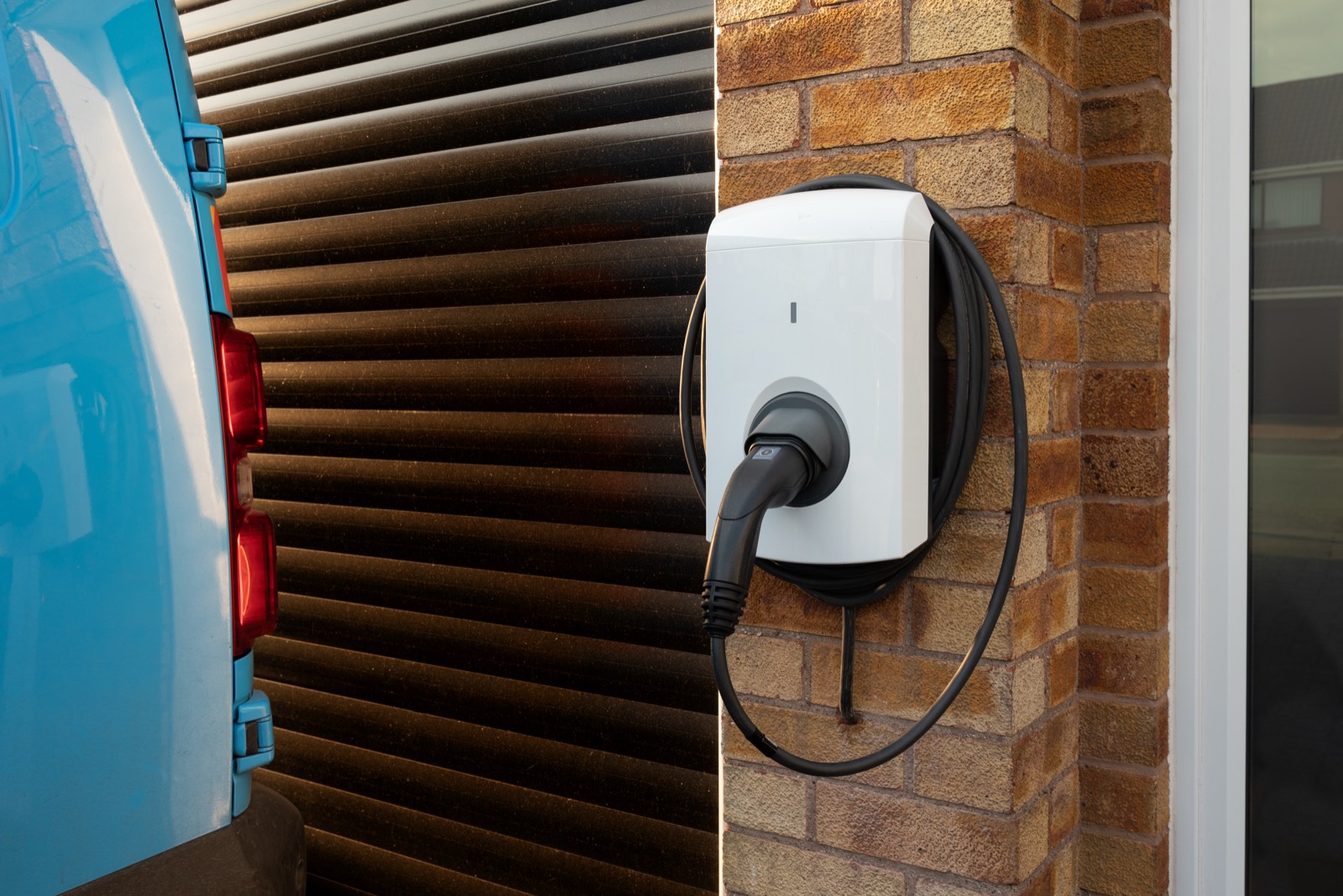
Hardwired chargers are also dedicated. The cable usually runs from the panel to a wall-mounted EVSE, with no other outlets tapped along the way. Hardwiring can be the cleaner option outdoors, in tight garages, or where the charger output is higher than a standard receptacle setup.
City Power Electrical Services files ESA notifications where required for EV charger work, provides free written estimates, and serves Toronto and the GTA from our North York office.
The breaker must match the charger, the wire, and the continuous load
The breaker is not chosen by guessing, and it is not chosen only by what the car can accept. It must protect the wiring and match the charger’s configured output under the Ontario Electrical Safety Code.
EV charging is treated as a continuous load because the charger can run at high current for long periods. In practical terms, a charger is usually set so the charging current is no more than 80% of the circuit rating, unless the equipment and installation are specifically rated otherwise.
Common relationships look like this:
| Charger output setting | Typical circuit rating | Common use |
|---|---|---|
| 16A charging | 20A circuit | Slower Level 2 charging, smaller battery or limited capacity |
| 24A charging | 30A circuit | Moderate overnight charging |
| 32A charging | 40A circuit | Common residential Level 2 setting |
| 40A charging | 50A circuit | Common for NEMA 14-50 or hardwired chargers |
| 48A charging | 60A circuit | Hardwired charger only, where capacity allows |
The important point is that the breaker protects the conductor. A larger breaker cannot be installed just because the charger trips, and a charger cannot be left configured above what the circuit can safely carry. If the circuit is 40A, the charger should not be left outputting 40A continuously; it is usually limited to 32A.
The conductor size also depends on more than the number stamped on the breaker. A licensed electrician checks copper versus aluminum, cable type, temperature ratings, conduit fill, run length, and whether the route passes through insulation or finished walls. A long run to a detached garage may also need voltage-drop consideration so the charger does not run hot or inefficiently.
This is why replacing only the breaker is not an EV charger installation. The breaker, conductors, terminations, receptacle or disconnect, and charger settings all have to agree.
A load calculation decides whether the panel can handle it
A dedicated breaker does not automatically mean the house has enough capacity. Before adding an EV charger, the home needs a load calculation using the existing service size and major electrical loads.
This is especially important in GTA homes with 100A services, electric ranges, dryers, air conditioning, heat pumps, hot tubs, basement apartments, electric water heating, or older panels with little physical space. A panel can have an empty breaker position and still fail the load calculation.
The load calculation looks at items such as:
- Main service size, such as 100A or 200A
- Existing panel condition and available breaker spaces
- Electric range, dryer, water heater, heat pump, and air conditioning loads
- Hot tub, pool, workshop, or garage equipment
- Secondary suite or basement kitchen loads
- Whether an EV energy management system can control charging demand
If the calculation shows enough capacity, the charger can be installed on the appropriate dedicated circuit. If capacity is tight, the answer is not to “sneak in” a smaller breaker or use a tandem breaker without checking the panel listing. The safer options are to lower the charger output, install approved load management, add a subpanel where appropriate, or upgrade the service.
Load management can be a good fit when the driver does not need maximum charging speed every night. It monitors household demand and reduces or pauses EV charging when the main service is heavily loaded. That can let a home charge safely without automatically moving to a 200A service.
If you are comparing panel space options, see are tandem breakers allowed. Tandems are only acceptable where the panel is designed and labelled for them; they do not create more service capacity.
ESA notification and inspection are part of doing it legally
A new EV charger circuit normally requires an ESA notification before the work is done, followed by inspection or acceptance through ESA’s process. The notification is not paperwork for paperwork’s sake; it is the record that the installation was completed under Ontario’s electrical safety system.
For an EV charger, ESA or the licensed electrical contractor’s process may check details such as:
- Breaker rating matched to the conductor and charger setting
- Dedicated circuit with no unrelated loads added
- Proper grounding and bonding
- Correct cable or conduit for the route and location
- Outdoor-rated equipment where exposed to weather
- Suitable box, cover, receptacle, or hardwired connection
- Labelling and accessibility at the panel
- Load calculation or load-management setup where capacity is close
If the charger is outside, weather exposure changes the installation. The enclosure, fittings, cable route, and mounting location need to suit snow, rain, sun, and physical damage. For that situation, read can Level 2 chargers go outside.
If the charger is in a garage, the concerns are different: impact protection, cord reach, parking position, panel distance, and whether the cable route crosses finished ceilings or fire separations. See can EV chargers be installed in garages for that layout question.
Utility involvement is usually not needed for a simple charger circuit. It becomes relevant if the service is being upgraded, the meter base is being changed, or the utility must disconnect and reconnect power. In Toronto and the GTA, that may involve Toronto Hydro, Alectra, Hydro One, Elexicon, Oshawa Power, Oakville Hydro, Burlington Hydro, or the local utility for the property.
Do not solve EV charging by sharing circuits or upsizing breakers
The wrong fixes are the ones that make the breaker look convenient while leaving the wiring unsafe. EV charging is a sustained load, so shortcuts show up as heat, nuisance trips, damaged receptacles, or failed inspections.
Avoid these common mistakes:
- Adding an EV receptacle to an existing garage circuit
- Sharing the charger circuit with a freezer or garage door opener
- Swapping in a larger breaker without replacing the wiring
- Installing a 50A receptacle on a circuit that is not rated for it
- Leaving the charger software set higher than the circuit allows
- Using a dryer or range outlet with adapters as a permanent charging plan
- Assuming an empty panel space means enough service capacity
Repeated tripping is also not a normal part of EV charging. If a charger breaker trips, it may be overloaded, misconfigured, overheated, affected by a ground-fault issue, or connected to equipment that is not compatible. Do not keep resetting it night after night; see is it safe to reset breakers repeatedly if this is already happening.
Cost depends on panel distance, wall finishes, charger type, capacity, and whether load management or a service upgrade is needed. As a GTA reference, many Level 2 installations fall in the $1,500–$3,000 all-in range, while a straightforward panel-nearby installation can be less and a long finished-wall run can be more. The charger unit itself may add $500–$1,200.
If the panel is close, has capacity, and the route is open, the job is usually straightforward. If the panel is full, the garage is detached, the service is 100A with several large loads, or the charger is going outdoors, the dedicated breaker is only one part of the design. The right installation starts with the load calculation and ends with the ESA record, not just a breaker in the panel.
Want a licensed electrician to take a look?
Free written quote, usually the same day. ESA permits handled.
People also ask
Can I plug an EV charger into an existing dryer or range outlet?
Not as a permanent plan unless the outlet, breaker, wiring, location, and charger settings are confirmed suitable for EV charging. Dryer and range circuits were installed for specific appliances, not continuous overnight EV loads with adapters. A licensed electrician should verify the circuit and, in most cases, install a dedicated EV circuit with ESA notification.
Can two EV chargers share one breaker?
Usually not as a simple shared circuit. Two chargers can overload a breaker if both draw at the same time. A compliant setup may use load-sharing equipment or an EV energy management system that limits total current. The design still needs a load calculation, correct overcurrent protection, and installation under ESA requirements.
Does a 50 amp breaker mean my EV charges at 50 amps?
No. Because EV charging is a continuous load, a 50A circuit is commonly used for up to 40A of charging current, assuming the equipment and wiring are suitable. The charger’s internal setting or app configuration must be limited to the circuit rating. The breaker size is protection for the wiring, not the charging speed.
Do I need a permit for just adding the EV breaker?
Yes, a new EV charger circuit normally requires an ESA notification in Ontario, even if the work seems small and the panel has space. The inspection process confirms the breaker, conductor, grounding, charger setting, and load calculation are correct. The notification should be filed by a Licensed Electrical Contractor before the work starts.