Answered by a licensed electrician
Are tandem breakers allowed?
Quick answer
Tandem breakers are allowed in Ontario only when the panel manufacturer’s label permits that exact breaker type in that exact position. The Ontario Electrical Safety Code requires approved equipment to be used as approved. If the panel is full, a 100A-to-200A upgrade in the GTA typically runs $3,200–$4,500 including ESA permit and inspection.
Yes, tandem breakers are allowed only when the panel is listed for them
A tandem breaker is legal when the electrical panel was designed, labelled, and approved to accept that style of breaker in the slot where it is installed. It is not legal just because the breaker physically clips onto the bus bar.
This is the key distinction homeowners miss after a home inspection comment: a tandem breaker is not automatically a defect, and it is not automatically acceptable. The panel label decides.
Inside the panel door there should be a manufacturer’s label or directory. That label normally shows:
- The panel make and model
- The maximum number of breaker spaces and circuits
- Which breaker series or catalogue types are approved
- Whether tandem, twin, duplex, or quad breakers are permitted
- Which slots, if any, can accept tandem breakers
Some panels allow tandems only in certain lower positions. Some older panels allow none. Some panels allow a limited number, even though every slot may look similar. If the label says 24 spaces / 24 circuits, filling it with 30 or 40 circuits using tandems is a problem. If it says 24 spaces / 48 circuits and identifies approved tandem locations, those tandem positions may be acceptable.
If you are trying to understand the device itself, start with what a tandem breaker is. For compliance, the practical question is narrower: does this exact panel approve this exact breaker in this exact slot?
No, you cannot use a tandem breaker to bypass a full panel
A tandem breaker cannot be used as a shortcut when the panel has reached its approved circuit limit. The Ontario Electrical Safety Code expects electrical equipment to be installed according to its approval, labelling, and manufacturer’s instructions. A crowded panel does not create permission to exceed the panel rating.
That means these common fixes are not acceptable:
- Installing a tandem where the panel label does not permit tandems
- Moving tandems into slots not marked for tandem use
- Using a breaker from another manufacturer because it “fits”
- Double-tapping two conductors under one breaker terminal not rated for two wires
- Adding circuits without updating the panel directory
- Stuffing neutrals and grounds into terminals that are not approved for multiple conductors
A home inspector may write “tandem breakers present” because they cannot confirm approval during a visual inspection, especially if the panel label is missing, painted over, or unreadable. An electrician then has to verify the breaker type, the panel label, and the wiring terminations.
The failure mode is not theoretical. The wrong breaker can have poor contact with the bus, can sit loosely on the mounting rail, or can fail to trip as intended. A double-tapped conductor can loosen under heat cycling. A tandem installed in an unapproved position can overload a part of the panel assembly that was not designed for that circuit count.
The rule of thumb is simple: if the panel label does not clearly approve the tandem arrangement, do not treat it as approved.
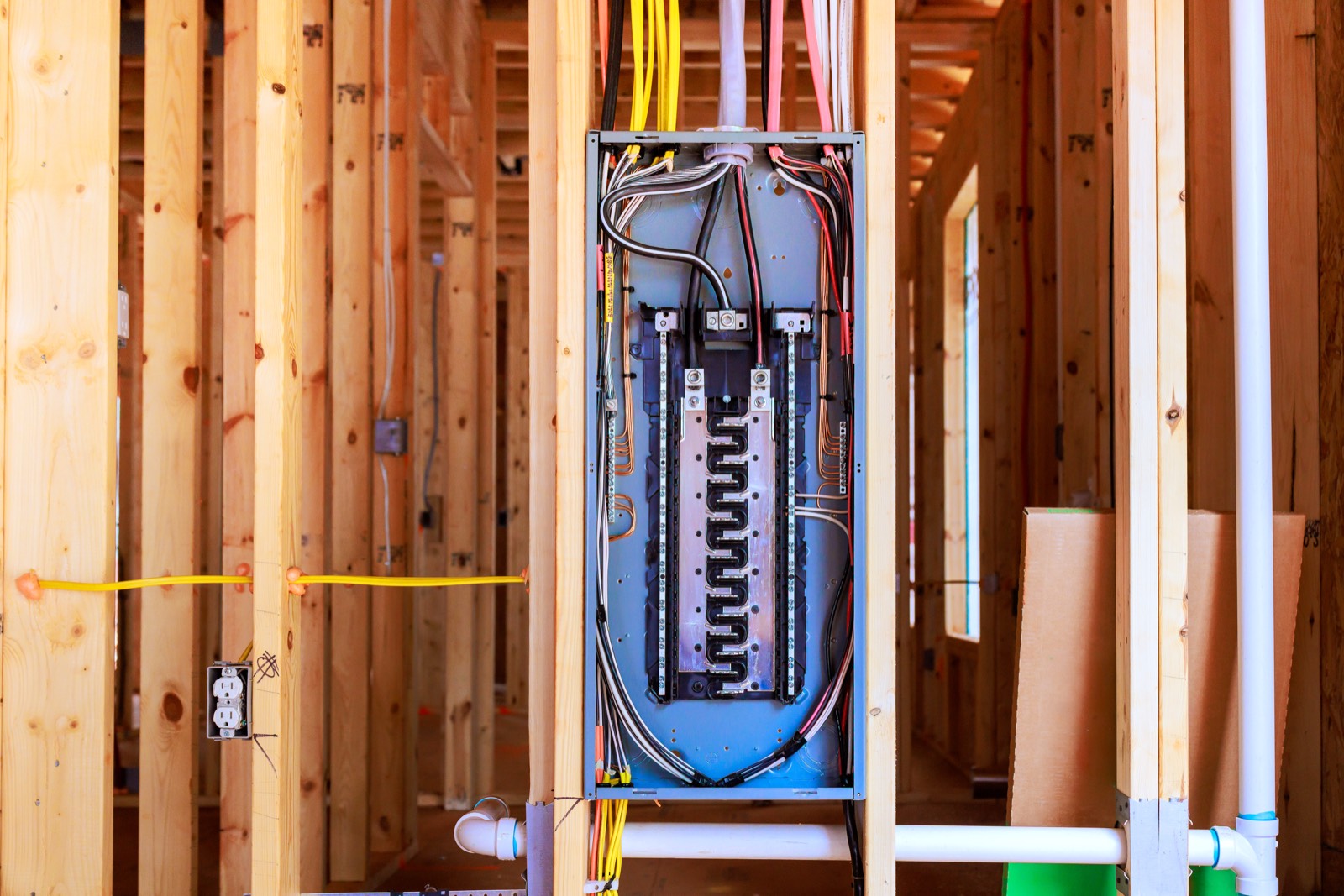
The panel label, not the empty slot, decides what is legal
A spare-looking breaker position does not prove capacity. The label and load calculation decide whether another circuit can be added.
Here is what an electrician checks before accepting or adding tandem breakers:
| Check | What it tells us |
|---|---|
| Panel model and label | Whether tandem breakers are approved at all |
| Breaker catalogue type | Whether the installed breaker is listed for that panel |
| Slot map | Whether the tandem is in an approved position |
| Circuit count | Whether the panel’s maximum circuit rating has been exceeded |
| Wire size and breaker rating | Whether the conductor matches the breaker amperage |
| Terminations | Whether any breaker, neutral, or ground terminals are double-tapped improperly |
| Load calculation | Whether the service has capacity for the added load |
This matters most when a homeowner wants to add a basement circuit, kitchen receptacle, garage circuit, heat pump, hot tub, or EV charger and finds that the panel is already full. A tandem may create a physical space, but it does not create electrical capacity.
For example, a new Level 2 EV charger normally needs a properly sized dedicated circuit, not a shared circuit squeezed into whatever space is left. If that is the project, read do EV chargers need dedicated breakers before deciding that a tandem solves the issue.
There is also a difference between a tandem breaker and a two-pole breaker. A tandem usually provides two separate 120V circuits from one panel space. It is not the same as a common-trip two-pole breaker for a 240V load. Some quad breakers combine these functions in panels that approve them, but again, the panel label and breaker listing control what is allowed.
Double-tapping is a separate defect from tandem breakers
Double-tapping means placing two conductors under one breaker terminal that is not rated for two conductors. It is not the same thing as using a tandem breaker.
This distinction matters because homeowners often hear “double breaker,” “double tap,” and “tandem breaker” used loosely. They are different conditions:
- A tandem breaker is a manufactured breaker that can serve two circuits from one approved panel space.
- A double-tapped breaker is usually one breaker terminal holding two wires where only one is allowed.
- A two-pole breaker serves a 240V load or multi-wire branch circuit where both legs must disconnect together.
- A quad breaker is a special breaker assembly used only where the panel approves that design.
A double tap can sometimes be corrected by moving one conductor to an approved spare breaker, installing an approved tandem in an allowed position, adding a junction and pigtail where suitable, or installing a subpanel. The right repair depends on what the panel label permits and what the circuit actually supplies.
Do not keep resetting a breaker, tightening terminals, or rearranging conductors yourself to “make room.” If a breaker has been tripping, heating, or behaving oddly, that is a diagnostic issue, not a panel-space issue. See whether it is safe to reset breakers repeatedly if the panel problem started with nuisance trips.
If the panel is full, inspect it before choosing tandems, a subpanel, or an upgrade
If the panel is full, the safe next step is a panel inspection and load review, not guessing. Sometimes an approved tandem is fine. Sometimes a small subpanel is the clean answer. Sometimes the service is already at its practical limit and a panel upgrade is the proper fix.
We look at the panel in this order:
- Is the panel from a manufacturer and model still serviceable?
- Is the label readable enough to confirm approved breaker types?
- Are the existing breakers the correct type for the panel?
- Are any tandems installed outside approved slots?
- Are there double taps, overcrowded neutrals, or missing connectors?
- Is the panel directory accurate enough to identify circuits?
- Does the home’s calculated load support the new circuit?
- Is an ESA notification required for the work being proposed?
An ESA inspector is not just counting breakers. They are looking for approved equipment, correct overcurrent protection, conductor sizing, proper bonding and grounding, workmanship, and whether the installation matches the notification. If a new circuit is being added, the breaker space is only one part of the inspection.
Cost depends on the path. A comprehensive electrical safety inspection in the GTA is typically $250–$400 when you need a written review of the panel and visible wiring conditions. A typical 20A dedicated circuit from the panel is often $250–$500, depending on distance and wall access. If the service needs to be upgraded, a 100A-to-200A panel upgrade in the GTA typically lands at $3,200–$4,500 with the ESA permit and inspection included.
For homeowners deciding between more tandem breakers and a proper expansion, this comparison helps: tandem breakers vs subpanel. If the panel is obsolete, overloaded, missing labelling, or out of approved circuit positions, we usually route the work to a permitted panel upgrade rather than packing in more breakers.
City Power Electrical Services is a Licensed Electrical Contractor, ECRA/ESA #7015314, and when panel work requires ESA notification, we file it and arrange the inspection as part of the job.
Want a licensed electrician to take a look?
Free written quote, usually the same day. ESA permits handled.
People also ask
How do I know if my panel accepts tandem breakers?
Open the panel door and look for the manufacturer’s label, not just empty-looking spaces. The label should list the approved breaker types, maximum circuit count, and sometimes a slot diagram showing where tandem breakers may be used. If the label is missing or unreadable, an electrician should verify the panel model before any tandem is added.
Are tandem breakers a defect on a home inspection?
They are a defect only if they are not approved for that panel, are in the wrong slots, exceed the panel’s circuit rating, or are used with incorrect wiring. Many inspectors flag them for further evaluation because approval cannot always be confirmed visually during a limited inspection.
Can I replace a full-size breaker with a tandem myself?
You should not replace it unless the panel label approves that exact tandem breaker type in that exact position and the circuit work is otherwise code-compliant. Adding or altering circuits may require ESA notification in Ontario. The risk is using a breaker that fits physically but is not approved for the panel.
Should I use tandem breakers or install a subpanel?
Use an approved tandem only when the panel has legal circuit capacity and the load calculation supports the added circuit. Choose a subpanel or service upgrade when the panel is at its circuit limit, the label does not allow tandems, larger loads are planned, or the existing panel is outdated or overcrowded.