Commercial electrical · by industry
Electrical Contractor for Cannabis Retail
City Power Electrical Services provides licensed electrical work for Ontario cannabis retail stores during buildout, retrofit and maintenance. We plan the power, data, lighting and low-voltage pathways that security, POS and daily store operations depend on.
Cannabis retail needs clean power, structured data and controlled lighting from day one
A cannabis retail store is still a retail store, but the electrical plan has less room for improvisation. Security equipment, point-of-sale stations, product displays, safes, back-room work areas and customer-facing lighting all need to be coordinated before walls close.
Security cameras, intrusion alarms and access control need reliable low-voltage pathways and power. That means conduit or cable routes to camera locations, door contacts, keypads, network cabinets, access-control power supplies and any secure-room devices specified by your security vendor. We do not treat these as an afterthought hanging above a ceiling tile; the pathways need to be serviceable and protected, and the power supplies need to be on suitable circuits.
POS stations need both receptacles and data in the right locations. Counters often carry payment terminals, receipt printers, barcode scanners, display tablets, routers, switches and sometimes UPS units. If the counter is millwork, the cut sheets should be reviewed before rough-in so receptacles and jacks are not blocked by drawers, safes or cash storage.
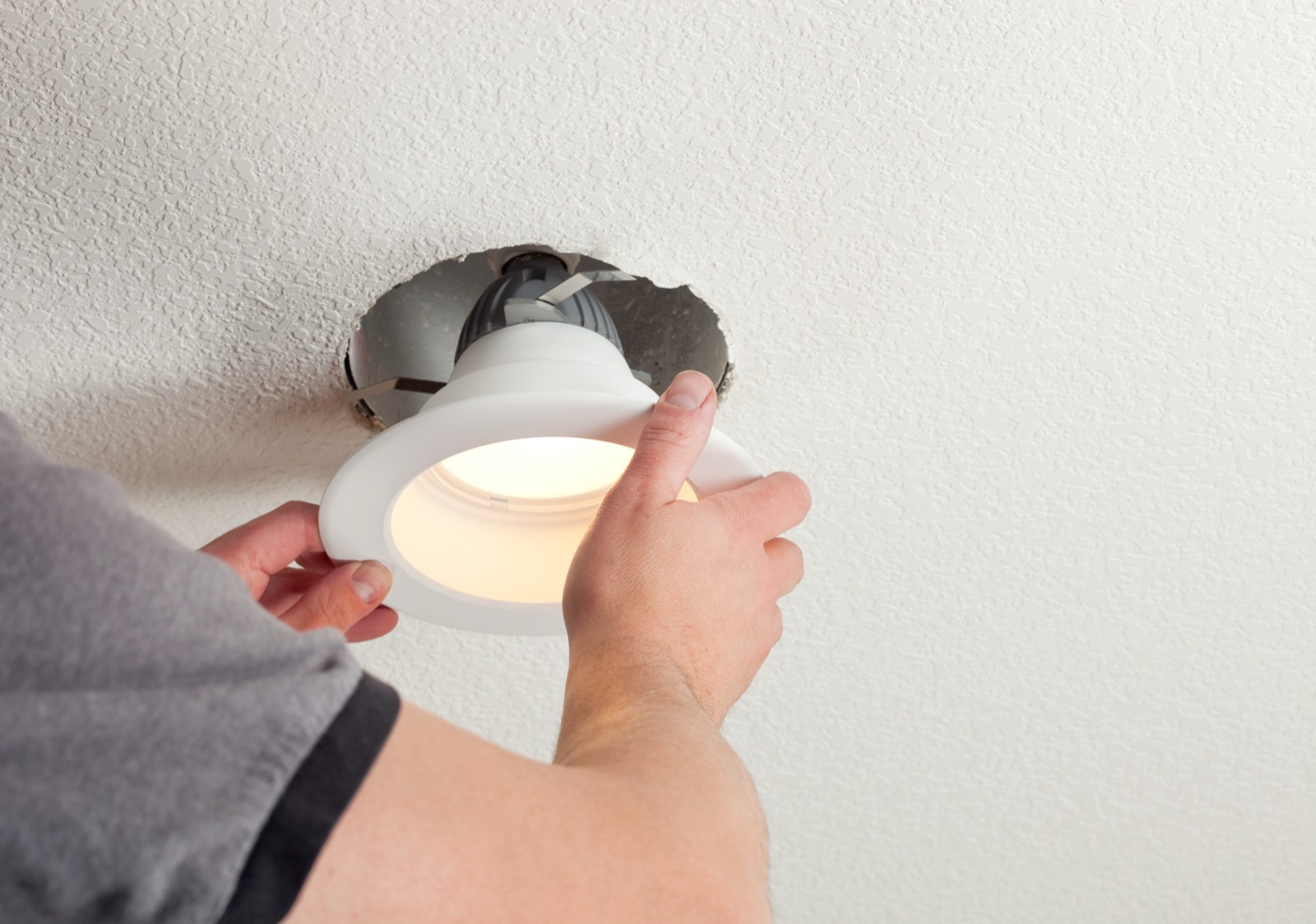
Display lighting has to balance product visibility with energy-efficient operation and heat control. Cannabis retail displays often use glass cases, wall shelving, menu screens and branded feature areas. The lighting should show product and packaging clearly without creating hot display zones, glare at the counter or unnecessary load on the cooling system.
Back-room equipment also matters. Safes, staff desks, inventory areas, network equipment, cleaning storage, label printers and secure doors all need planned receptacle and data locations. If equipment is moved after inspection, extension cords and power bars become the weak point.
This page is about licensed cannabis retail stores, not cultivation or processing facilities. Grow operations involve horticultural lighting, large HVAC loads, extraction hazards and industrial controls. A retail store needs dependable commercial electrical work, structured cabling and inspection-ready installation, not grow-room infrastructure. For the data side of the project, see our commercial data cabling service.
Code, permits and landlord rules decide what can be installed
Cannabis retail electrical work must satisfy the Ontario Electrical Safety Code, ESA notification requirements where applicable, the landlord’s base-building rules and the fire/life-safety requirements for the space. For cannabis retail electrical work, City Power Electrical Services operates as a Licensed Electrical Contractor, ECRA/ESA #7015314, with ESA permits and inspections handled wherever required.
The electrical scope usually includes new receptacles, lighting, switching, dedicated circuits, data pathways, emergency and exit lighting adjustments, panel work and connections for security power supplies. New 120V and 240V wiring, panel changes, lighting modifications and dedicated circuits are not casual handyman work. They need correct breaker sizing, conductor sizing, box fill, bonding, support, access and labelling.
Low-voltage systems still need discipline. Camera, alarm, access-control and network cabling should be separated and routed properly around line-voltage wiring, lighting drivers and ceiling equipment. Poor routing can create service problems later, especially when a camera drops offline, a POS terminal fails during a sale or a door controller loses power.
Ontario Fire Code and building requirements can affect emergency lighting, exit signs, fire alarm devices and door hardware. If the store is in a plaza, mall or mixed-use building, the landlord may also control shutdown windows, ceiling access, fire alarm tie-ins, conduit type, coring, panel access and after-hours work. We coordinate the electrical side with the general contractor, landlord and other trades so the installation supports approval instead of delaying it.
ESA inspection focuses on the electrical installation, not your retail licence. Inspectors may look at panel directories, grounding and bonding, conductor protection, device boxes, GFCI protection where required, overcurrent protection, lighting connections, junction-box access and workmanship. Retail compliance for cannabis is a separate business requirement, but the electrical work should support it by giving security, POS and access systems the power and pathways they need.
If you are comparing cannabis retail with other commercial fitouts, our commercial electrical contractor page explains the broader tenant-improvement process. Cannabis stores share some retail concerns with grocery and convenience-style layouts, but the security and access-control planning is usually tighter than a standard storefront.
The project runs best when electrical rough-in follows the security and millwork plan
A cannabis retail buildout should start with drawings, equipment lists and a walkthrough. We review the panel, available capacity, ceiling type, wall construction, storefront conditions, landlord requirements and the proposed layout for counters, displays, safe areas, network equipment and security devices.
The first practical step is locating the electrical room or panel and the network/security hub. From there, we plan routes to POS stations, cameras, door devices, menu screens, exterior signs, display lighting and back-room equipment. If there are finished ceilings, concrete walls or demising-wall restrictions, we identify them before pricing rather than discovering them mid-project.
Typical sequencing looks like this:
- Site review, drawings and written estimate
- Coordination with the general contractor, landlord and security/POS vendors
- ESA notification where required
- Rough-in for power, lighting, switching, data pathways and low-voltage routes
- Inspection before walls or ceilings are closed, where applicable
- Fixture, device, panel and equipment terminations
- Labelling, testing, cleanup and final inspection steps
Security and POS vendors should be brought in early. We can install pathways, boxes, receptacles and structured cabling, but the final device requirements often come from the camera, alarm, access-control and POS providers. A camera that needs PoE, a keypad that needs local power, or a door strike that needs a dedicated power supply changes the rough-in.
After-hours work is often useful in malls, plazas and occupied retail strips. Landlords may limit noisy work, service shutdowns, ceiling access or fire alarm coordination to specific windows. City Power offers 24/7 emergency service and can schedule commercial work around access rules when the project requires it.
Before turnover, the store should have labelled circuits, accessible junction boxes, tested data drops, working emergency/exit lighting where included in scope and a clean electrical room. Full cleanup is part of our work. For retail layouts with similar customer-facing lighting and checkout planning, our page on electrical contractors for grocery stores may also be useful, though cannabis stores have different security and access-control priorities.
Cost and timeline depend on the condition of the unit, not just the square footage
Cannabis retail electrical work is quoted in writing after a site visit. The price depends on the base-building service, panel capacity, ceiling access, number of POS stations, number of camera and data locations, lighting design, emergency/exit lighting scope, landlord requirements and how much of the existing wiring can safely remain.
The data portion is easier to benchmark than the full fitout. In the GTA, a certified Cat6 drop typically costs $150–$250 including cable, jack, patch panel termination, and Fluke test certification; Cat6a runs slightly more. A cannabis store can add drops quickly once you count POS terminals, office desks, network gear, menu displays, cameras, Wi-Fi access points and back-room equipment.
The rest of the electrical scope is not a one-line square-foot price. A clean vanilla-shell unit with an accessible ceiling and usable panel is very different from a finished unit that needs demolition, service upgrades, new emergency lighting, exterior sign power, multiple counter cores and after-hours landlord supervision. We provide free written estimates so the owner, franchisor or general contractor can make decisions before committing.
Schedule depends on permit requirements, landlord approvals, inspection timing and trade sequencing. Rough-in can move quickly when drawings are ready and the space is open. Delays usually come from late millwork dimensions, camera locations changing after ceilings are closed, POS counters moving, missing landlord approvals, or discovering that the panel cannot support the added loads.
A practical approach is to lock these items early:
- Final counter, safe and display locations
- Camera, alarm and access-control device list
- POS and network equipment list
- Lighting fixture schedule and switching zones
- Landlord rules for shutdowns, coring, fire alarm and ceiling access
- ESA inspection milestones, where required
City Power Electrical Services serves Toronto and the GTA from our North York office at Sheppard and Don Mills. Sam founded and runs the company, and he is a licensed electrician with fifteen-plus years in the trade. For a cannabis retail buildout, we keep the scope practical: safe power, clean data pathways, efficient lighting, ESA compliance where required, and a store that is ready for your security and POS systems to operate reliably.
Want a licensed electrician to take a look?
Free written quote, usually the same day. ESA permits handled.
Common questions
Do cannabis retail stores need a licensed electrical contractor?
Yes. New circuits, lighting, receptacles, panel work and other line-voltage wiring must be done by a Licensed Electrical Contractor in Ontario, with ESA notification and inspection where required.
Can you install wiring for cameras, alarms and access control?
We can install the power, boxes, pathways and structured cabling needed for cameras, intrusion alarms, access control and network equipment. Device programming and monitoring are usually handled by the security vendor.
How much does cannabis retail electrical work cost?
The full electrical scope is quoted in writing after a site visit because it depends on the unit, panel capacity, lighting plan, security layout and landlord requirements. Certified Cat6 drops in the GTA typically cost $150–$250 each.
Is this the same as wiring a cannabis grow operation?
No. This page is for licensed retail stores. Cultivation and processing spaces involve very different loads, equipment and hazards, including horticultural lighting and industrial HVAC.