
Cost Guide
Outlet Installation Cost in Ontario
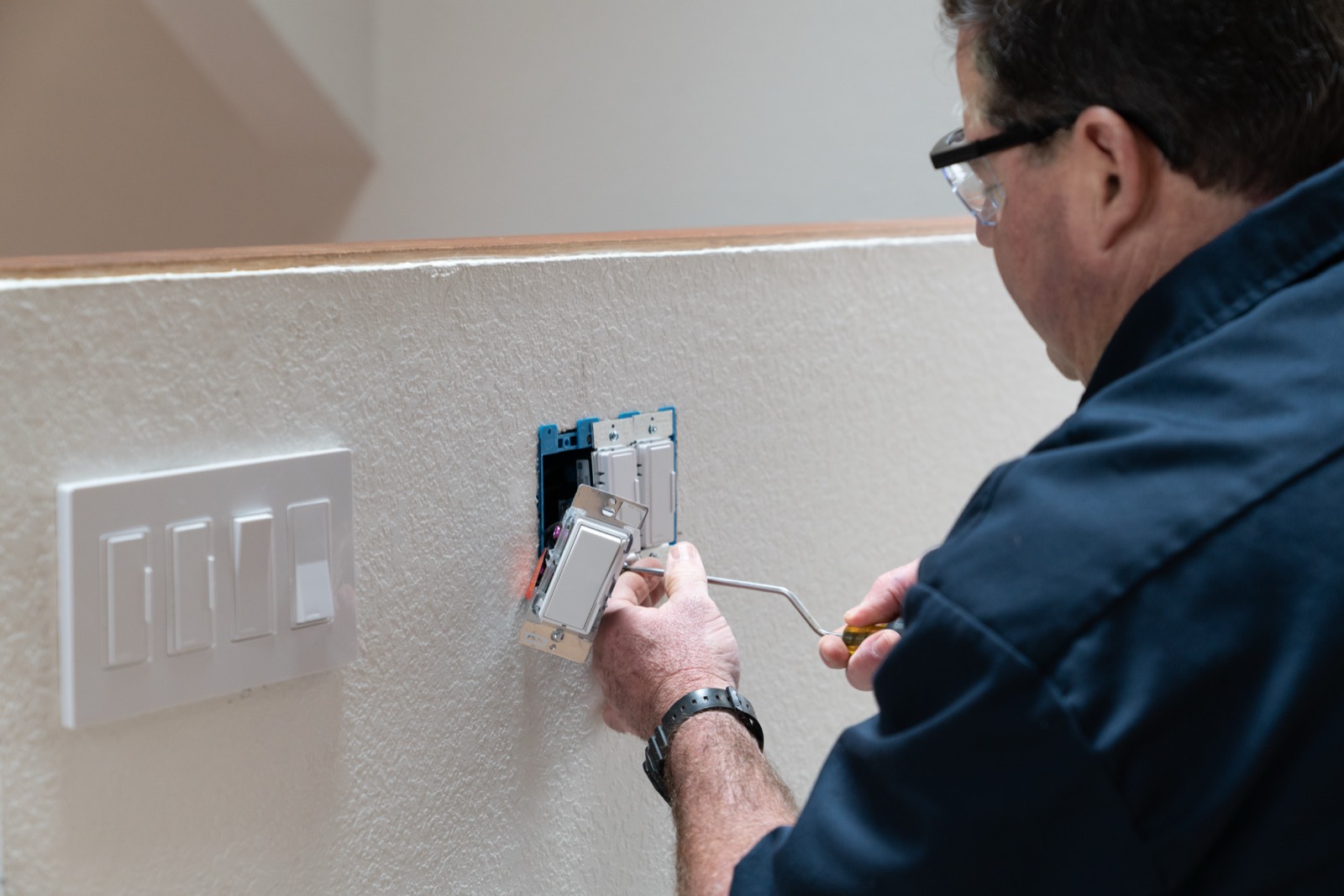
If the box and wiring are already in place, outlet replacement is a small service job. If you want an outlet where none exists, the cost depends on the route from the panel or nearest approved junction point, whether walls are finished, and whether an ESA notification is required.
City Power Electrical Services completes outlet installation work as a Licensed Electrical Contractor, ECRA/ESA #7015314. We replace outlets, add new receptacles, install GFCI protection, and correct unsafe wiring across Toronto and the GTA. For straightforward work, published price bands help. For fishing new cable through finished walls, exterior brick, kitchens, garages, or older homes, the honest answer is a written quote after a site visit.
Outlet installation in Ontario usually falls into two different jobs
The first job is replacement: the old receptacle is removed and a new device is installed in the same electrical box, using the existing cable. This is common when an outlet is cracked, loose, painted over, worn out, two-prong, not tamper-resistant, or no longer holds a plug tightly.
Standard outlet or switch replacement runs $80–$120 each, with volume pricing for whole-home refreshes. Small jobs like replacing an outlet run $120–$250 total, while larger projects are quoted flat-rate.
The second job is adding a new outlet on a new run. That means new cable, a new electrical box, and either a connection to an existing circuit with available capacity or a new breaker at the panel. This can be simple in an unfinished basement ceiling, but much more involved through finished plaster, tile backsplash, exterior walls, or condo concrete.
When the new outlet is really a dedicated circuit, a typical 20A dedicated circuit from the panel costs $250–$500 depending on the distance and finish of walls along the route. Heavier 30A–50A circuits run $400–$900. For a general-purpose new receptacle that is not a dedicated circuit, the price is quoted in writing after a site visit because access matters more than the device itself.
If you already know you need a circuit for a freezer, microwave, sump pump, tool, appliance, or other fixed load, read our dedicated circuit installation cost guide before comparing quotes.
Published outlet cost bands in Ontario
These are the approved price bands we can publish. All pricing assumes normal residential conditions in the GTA and is confirmed in writing before work starts.
| Outlet job | Typical price band | What it means |
|---|---|---|
| Standard outlet replacement | $80–$120 each, with volume pricing for whole-home refreshes | Replace an existing receptacle in an existing approved box with existing wiring |
| Small one-outlet service call | $120–$250 total | A small job such as replacing one outlet, subject to the service-call minimum |
| GFCI outlet installed | $120–$180 including parts | Install or replace a GFCI receptacle where the box and wiring are suitable |
| Specialty device | $120–$250 installed depending on the device | GFCI, USB-C combo outlets, smart dimmers, timers, and similar devices |
| New 20A dedicated circuit | $250–$500 depending on the distance and finish of walls along the route | New breaker, new cable run, and receptacle for a dedicated load |
| Outdoor weatherproof outlet | Quoted in writing after a site visit | Depends on wall type, GFCI protection, box, cover, cable route, and grounding |
| New general outlet on an existing circuit | Quoted in writing after a site visit | Depends on circuit capacity, fishing access, wall finish, box location, and code requirements |
Licensed electricians in Toronto charge $95–$150 per hour in 2026, with most service calls carrying a minimum charge of $150–$250. Most Toronto-area electricians charge a $150–$250 minimum that typically includes the first hour of work.
That minimum is why one outlet can feel expensive compared with a group of outlets. Once the electrician is already on site, replacing several worn receptacles, adding GFCI protection where needed, or swapping damaged plates is usually more efficient than booking separate visits.
For related small device work, see our switch installation cost in Ontario guide, or go directly to our switches and outlets service page to request a written estimate.
What is included in a proper outlet installation
A proper outlet job is more than changing the plastic face. We check the box, conductor condition, grounding, polarity, device rating, and whether the location needs special protection.
For a standard replacement, the work normally includes:
- Turning off and verifying the correct circuit
- Removing the old receptacle and plate
- Checking for damaged insulation, loose back-stab connections, overheating, or brittle conductors
- Confirming hot, neutral, and ground connections
- Installing the new outlet using proper terminal connections
- Testing for correct polarity and grounding
- Installing the cover plate and cleaning the work area
For GFCI work, we also test trip and reset operation. GFCI protection is commonly required in areas where shock risk is higher, such as bathrooms, exterior locations, garages, unfinished basement areas, and receptacles near water sources, depending on the exact location and circuit. If a downstream receptacle is protected by an upstream GFCI, it must be identified properly so the next person understands why it is protected.
For outdoor outlets, the installation is different from an indoor receptacle. A proper exterior receptacle may involve a weather-resistant device, an outdoor-rated box, gasket, in-use cover, GFCI protection, corrosion-resistant fittings, proper sealing at penetrations, and a cable route that is protected from damage. Brick, stucco, siding, and finished basement ceilings all change the labour.
A loose outdoor cover, unsealed wall penetration, or indoor-rated receptacle outside is not a small cosmetic issue. Water entry can corrode terminals, trip GFCIs, damage the box, and create shock risk. That is why exterior outlets are usually quoted after we see the wall, the panel, and the cable route.
ESA notification is usually about new wiring, not a simple like-for-like swap
In Ontario, electrical work is governed by the Ontario Electrical Safety Code and overseen by the Electrical Safety Authority. When new wiring or a new circuit is added, an ESA notification is generally required. That notification allows the work to be inspected where required and documented properly.
ESA notification fees typically run $100–$200 for common residential jobs like a panel upgrade or new circuit, scaling up with project scope. Fees for typical residential jobs run $100–$200 and are normally baked into your quote.
A simple like-for-like outlet replacement on an existing circuit may not be treated the same way as adding new wiring. But if the job includes a new cable run, a new breaker, a new dedicated circuit, or a significant wiring change, we plan for ESA notification where required. City Power permits every job with the ESA where required and has it inspected.
For a new outlet run, the ESA inspection may look at:
- Cable size and breaker rating
- Box fill and proper cable clamps
- Grounding and bonding continuity
- GFCI or AFCI protection where applicable
- Support and protection of cable in unfinished areas
- Correct device rating and cover type
- Whether splices are inside approved, accessible boxes
If the wall is still open, inspection is easier. If everything is finished, the route and access points matter. We explain that before cutting, drilling, or fishing cable.
If you are pricing outlet work because a home inspector flagged a concern, our electrical inspection cost guide explains when a broader safety report makes sense before doing piecemeal repairs.
What changes the number on an outlet quote
The biggest cost driver is access. An unfinished basement ceiling below the target wall is not the same job as fishing cable behind kitchen tile, through plaster and lath, or across a finished condo ceiling.
The circuit also matters. If the existing circuit is already heavily loaded, poorly labelled, shared with kitchen counter loads, or tied into older wiring, adding another receptacle may not be appropriate. In those cases, a new run from the panel can be safer and cleaner than extending an overloaded circuit.
Older homes can add surprises. We often see two-prong outlets with no equipment grounding conductor, mixed wiring methods, shallow boxes, aluminum branch wiring, brittle insulation, or old DIY splices hidden behind plates. Replacing the device alone does not fix a missing ground or unsafe splice. If we find aluminum wiring, damaged conductors, or knob-and-tube, the quote changes because the repair method changes.
The device type changes the price too. A basic duplex receptacle is different from a GFCI, USB-C combo outlet, smart receptacle, tamper-resistant device, or weather-resistant outdoor receptacle. Specialty devices are covered by the published range of $120–$250 installed depending on the device when the existing box and wiring are suitable.
Panel conditions can also affect the job. If there is no breaker space, if the panel is poorly labelled, if the grounding is questionable, or if a new circuit requires additional panel work, the outlet is no longer just an outlet. In some homes, adding circuits leads to a bigger conversation about a subpanel or service capacity. If that is the issue, our subpanel installation cost in Ontario guide is a better starting point.
Finally, protection requirements matter. A receptacle serving electronics may be paired with broader protection at the panel. A panel-mounted surge protector costs $400–$700 installed and shields every circuit in the house: HVAC boards, appliances, EV chargers, and electronics. If you are replacing outlets after repeated equipment failures, read our surge protector installation cost guide before assuming the outlet itself is the only problem.
How to get an accurate outlet quote
Send photos before the visit if you can. The most useful photos are the existing outlet with the cover on, the outlet with the cover removed if it is safe to do so without touching wiring, the surrounding wall, the electrical panel, the panel label, and the route between the panel and the new outlet location.
Tell us what will plug into the outlet. A phone charger, desk lamp, treadmill, freezer, microwave, sump pump, bidet seat, outdoor heater, and workshop tool are not the same electrical load. The appliance nameplate or manual often tells us whether a dedicated circuit is required.
Also tell us whether the wall is finished, whether there is basement or attic access, whether the home is a condo, and whether the outlet is near water, outdoors, in a garage, or in a kitchen. Those details affect GFCI protection, weatherproofing, cable route, and permission requirements.
For a simple replacement, we can often price from the published bands. For new wiring, outdoor work, older homes, or anything tied to a new circuit, we provide a free written estimate after confirming the site conditions. City Power serves Toronto and the GTA, offers 24/7 emergency service, obtains ESA permits where required, coordinates inspection, and cleans up when the work is complete.
To book outlet replacement, GFCI upgrades, USB-C receptacles, outdoor outlets, or a new run, call City Power Electrical Services at 416-837-4038 or request service through our switches and outlets page.
Want a licensed electrician to take a look?
Free written quote, usually the same day. ESA permits handled.