Cost Guide
Dedicated Circuit Installation Cost Ontario
A dedicated circuit is usually needed when an appliance, tool, HVAC unit, or fixed piece of equipment cannot safely share power with lights and outlets. In Ontario, the cost depends less on the device itself and more on the amperage, breaker type, cable route, panel capacity, and whether walls or ceilings need to be opened.
For a standard 120V appliance circuit, a typical 20A dedicated circuit from the panel costs $250–$500 depending on the distance and finish of walls along the route. Heavier 30A–50A circuits for dryers, ranges, hot tubs, EV chargers, and similar equipment run $400–$900. For dedicated circuit work in Ontario, Toronto licensed electrician rates in 2026 typically run $95–$150 per hour, and many visits start with a $150–$250 minimum service charge.
City Power installs dedicated appliance and equipment circuits across Toronto and the GTA. We provide free written estimates, file ESA notifications where required, and arrange inspection for permitted work.
The typical cost is $250–$500 for a 20A circuit and $400–$900 for heavier circuits
A dedicated circuit is not just “one more outlet.” It is a new breaker, a properly sized cable, a safe route from the panel to the equipment, correct termination at the device, and ESA notification where required.
| Circuit type | Common examples | Published cost band |
|---|---|---|
| 120V 15A or 20A dedicated circuit | Microwave, freezer, sump pump, workshop receptacle, small appliance circuit | A typical 20A dedicated circuit from the panel costs $250–$500 depending on the distance and finish of walls along the route |
| 240V 30A–50A circuit | Dryer, stove/range, larger workshop tool, air conditioner, hot tub, EV-ready outlet | Heavier 30A–50A circuits run $400–$900 |
| Long run through finished areas | Panel in basement, equipment on another floor, route through drywall or ceiling | Quoted in writing after a site visit |
| Panel is full or undersized | No breaker spaces, overloaded panel, load calculation does not allow the new equipment | Quoted in writing after a site visit; a subpanel installation or panel work may be needed |
| Equipment needs special connection | Disconnect, whip, hardwired junction box, GFCI breaker, manufacturer-specific wiring | Quoted in writing after a site visit |
The low end usually applies when the panel is nearby, there is a clear unfinished route, and the breaker type is straightforward. The higher end usually applies when the cable run is longer, the route crosses finished ceilings, the circuit needs a GFCI or AFCI breaker, or the termination is more involved than a standard receptacle.
If you are comparing this with a simple receptacle swap, the scope is different. A standard outlet replacement uses existing wiring. A dedicated circuit adds a new branch circuit from the panel. For device-only pricing, see our outlet installation cost guide.
Appliance circuits vary by load, voltage, and how the equipment is connected
The right circuit starts with the nameplate on the appliance or equipment. That label tells the electrician the voltage, amperage, phase, and sometimes the required breaker or maximum overcurrent protection. Guessing from the plug shape is not enough.
A few common examples:
- Microwave: Many over-the-range and built-in microwaves need a dedicated 120V circuit so the microwave does not trip a shared kitchen counter circuit when it starts under load.
- Freezer: A basement or garage freezer is often placed on its own 120V circuit to reduce nuisance tripping from other loads. Depending on location, GFCI protection may apply under the Ontario Electrical Safety Code.
- Dryer: Most electric dryers need a 240V circuit, commonly in the heavier circuit category. The receptacle type and cable size must match the dryer requirements and current code.
- Stove or range: A freestanding electric range usually needs a larger 240V circuit. The breaker, cable, receptacle, and range cord must all be compatible.
- Air conditioner: A central AC condenser or ductless outdoor unit may need a 240V dedicated circuit plus an outdoor disconnect within sight of the unit. The equipment label sets the required conductor and breaker sizing.
- Workshop circuit: A table saw, compressor, welder, dust collector, or garage heater may need a dedicated 120V or 240V circuit. Workshops also raise layout questions: receptacle location, GFCI protection, physical protection for exposed cable, and future tool loads.
A dedicated circuit can be hardwired, terminated in a receptacle, or connected through a disconnect. That detail matters. A hardwired AC condenser is not priced the same way as a single garage receptacle, even if the amperage is similar, because the outdoor disconnect, weather-rated fittings, and final whip add work.
Panel capacity, breaker type, and wire route drive the price
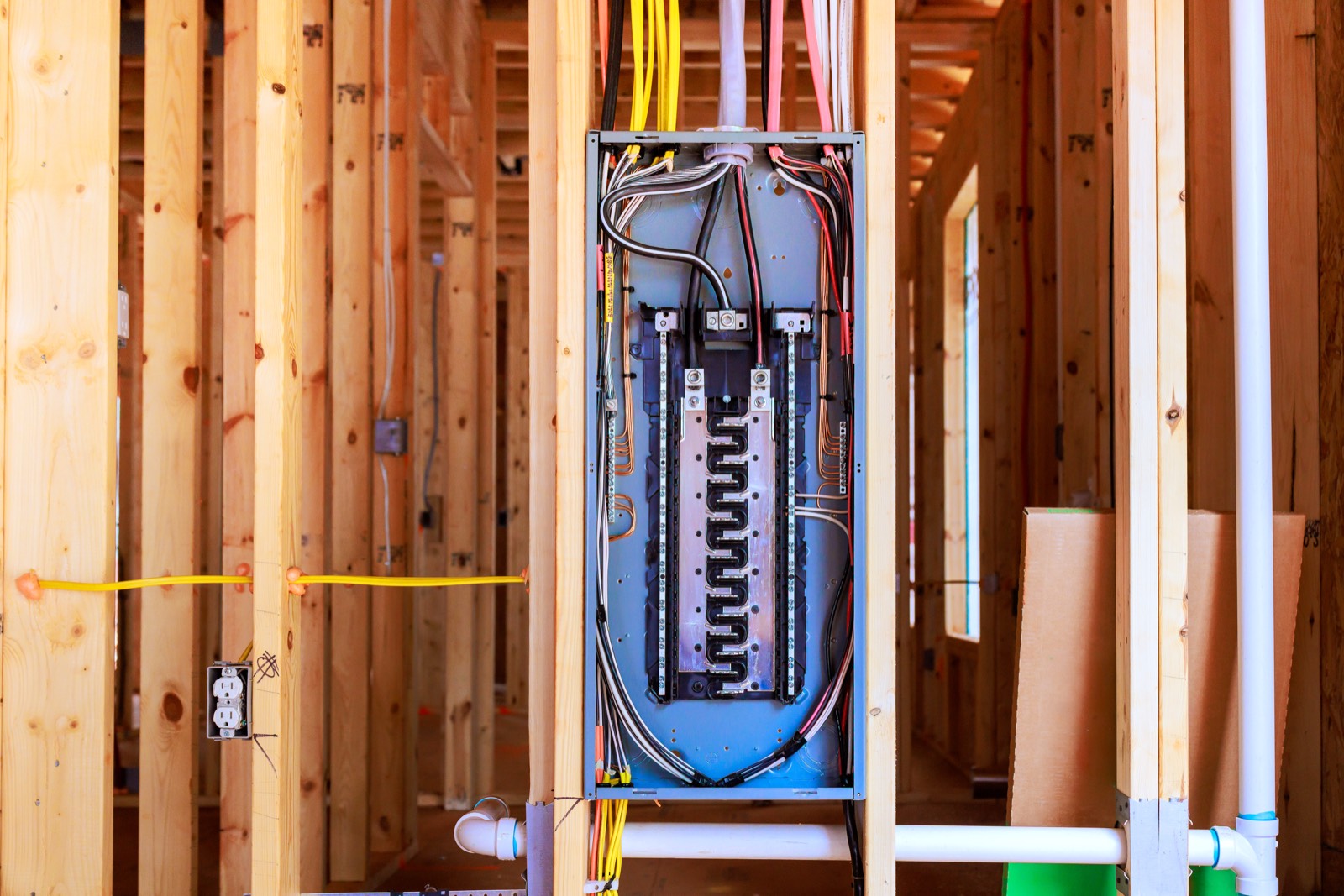
The panel is the first place we check. A new circuit needs both physical space and electrical capacity. Empty breaker spaces do not automatically mean the panel can accept another large load.
For a small 120V circuit, the load calculation may be simple. For a dryer, stove, air conditioner, large workshop tool, sauna, EV charger, or other 240V load, the electrician needs to consider the service size and the home’s existing loads. If the panel is already full, the answer might be a tandem breaker only if the panel is listed for it in that position. If not, the options may include rearranging circuits, adding a subpanel, or upgrading the service.
Breaker type also changes the number. A standard breaker is one thing. A GFCI breaker, AFCI breaker, or combination-function breaker costs more and may be required depending on the circuit location and use. Kitchens, garages, unfinished basements, outdoor equipment, and wet locations are common places where protection requirements affect the design.
The wire run is the other major cost driver. A short run across an unfinished basement ceiling is usually straightforward. A run from a basement panel to a second-floor microwave, an exterior AC location, or a detached workshop area can involve fishing through finished walls, drilling joists carefully, protecting cable from damage, sealing penetrations, and patch coordination.
For outdoor or garage equipment, the route may also need weatherproof boxes, conduit, burial-rated cable, or a disconnect. Those details are why photos help, but a site visit is still the best way to price anything beyond a simple nearby run.
ESA notification and inspection are part of doing it properly
In Ontario, new branch-circuit work normally requires an ESA notification by a licensed electrical contractor. The inspection is not a formality. It confirms that the work is installed to the Ontario Electrical Safety Code and that the circuit is safe to energize for its intended use.
For a dedicated circuit, the ESA inspector may check:
- Correct breaker size for the conductor and equipment
- Cable type and support along the route
- Box fill and secure terminations
- GFCI or AFCI protection where required
- Grounding and bonding continuity
- Receptacle type, polarity, and location
- Weather-rated fittings and covers for exterior equipment
- Disconnect location for HVAC and other fixed equipment
- Panel labelling and breaker compatibility
ESA notification fees typically run $100–$200 for common residential jobs like a panel upgrade or new circuit, scaling up with project scope. Fees for typical residential jobs run $100–$200 and are normally baked into your quote.
City Power Electrical Services installs dedicated circuits in Ontario as a Licensed Electrical Contractor, ECRA/ESA #7015314. Sam is a licensed electrician, and the company says fifteen-plus years in the trade. Every job is permitted with the ESA where required and inspected, and we include cleanup after the work.
If you are buying a home, adding several circuits, or unsure whether past work was done properly, a separate inspection may make sense before pricing the new work. For Ontario dedicated circuit projects, a full GTA electrical safety inspection typically costs $250–$400 and covers the panel, grounding, outlet and GFCI tests, detector checks, and knob-and-tube identification. See our electrical inspection cost guide for that scope.
What is included in a proper dedicated circuit quote
A proper quote should describe the circuit, not just the price. “Run power to freezer” is too vague. You want to know the amperage, voltage, breaker type, route, termination, and whether ESA is included.
For a typical dedicated circuit, the quote should cover:
- Load review for the appliance or equipment
- Panel check for breaker space and capacity
- Correct breaker matched to the panel and code requirement
- Proper conductor size and cable type
- Routing from the panel to the equipment location
- Receptacle, junction box, disconnect, or hardwired connection
- GFCI/AFCI protection where required
- ESA notification where required
- Labelling at the panel
- Testing under safe conditions
- Cleanup of the work area
For a stove, the quote should identify the range circuit and receptacle location. For a dryer, it should confirm the dryer receptacle type and whether the laundry location is ready. For an AC unit, it should account for the condenser location, disconnect, exterior wiring method, and coordination with the HVAC installer. For a workshop circuit, it should identify whether the load is continuous, whether the receptacle needs to be 120V or 240V, and whether future tools may require a different plan.
If you are installing sensitive electronics, a freezer you rely on, or a new appliance with electronic boards, it may also be worth considering whole-home surge protection. Yes — a panel-mounted surge protector costs $400–$700 installed and shields every circuit in the house: HVAC boards, appliances, EV chargers, and electronics. More detail is in our surge protector installation cost guide.
How to get an accurate written quote
The fastest accurate quote starts with the appliance information and the route. Before calling, gather the model number or a photo of the nameplate, the installation manual if you have it, a photo of your panel with the cover closed, and a photo showing the path from panel to equipment location.
For a microwave, show the cabinet or wall where it will be installed. For a freezer, show the exact outlet location you want. For a dryer or range, confirm whether the appliance is electric and whether the existing receptacle is missing, damaged, or the wrong type. For AC, send the condenser location and the panel location. For workshop circuits, list the tool amperage and plug configuration, not just the brand name.
We will usually need to confirm:
- Is the circuit 120V or 240V?
- What amperage does the appliance require?
- Is the panel full?
- Is the route unfinished, partly finished, or fully finished?
- Does the circuit need GFCI, AFCI, or a disconnect?
- Is this one circuit, or should several future loads be planned together?
Planning several loads together can save rework. If you are adding a garage freezer today but expect a compressor, heater, EV charger, or larger workshop tool later, say so before the first circuit is installed. Sometimes one well-planned subpanel is cleaner than several separate long runs from the main panel.
For a single typical 20A appliance circuit, use $250–$500 as the starting range. For heavier 30A–50A circuits, use $400–$900 as the starting range. If the route is long, the walls are finished, the panel is tight, or the equipment has special manufacturer requirements, the job should be quoted in writing after a site visit.
City Power’s office is at 1800 Sheppard Ave E in North York, and we serve Toronto and the GTA. Call 416-837-4038 for a free written estimate for a dedicated circuit, appliance circuit, workshop circuit, or HVAC power connection.
Want a licensed electrician to take a look?
Free written quote, usually the same day. ESA permits handled.