
Cost Guide
Switch Installation Cost in Ontario
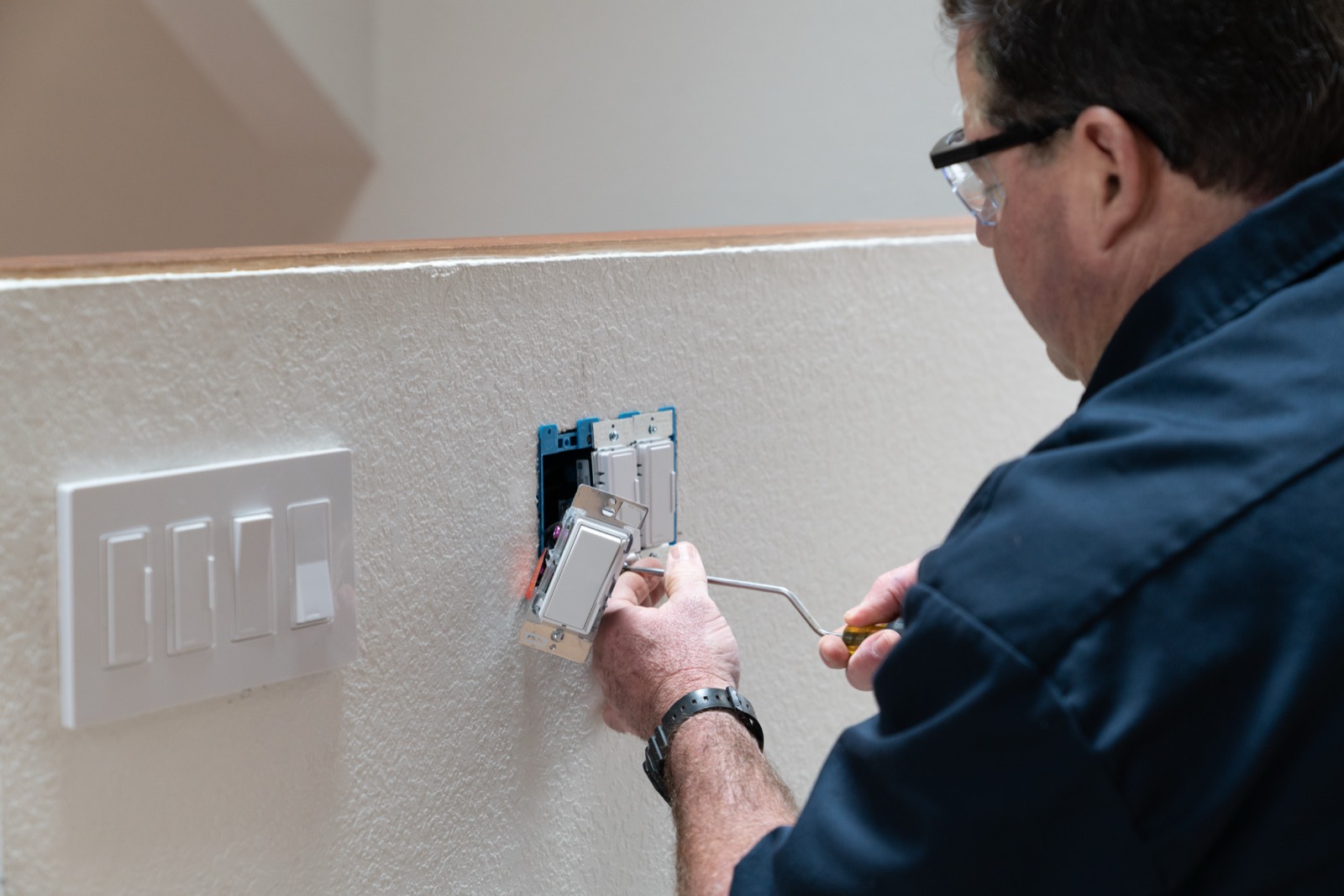
Most switch installation cost in Ontario comes down to the device type, the wiring already in the box, and whether the electrician is simply replacing a switch or adding new wiring.
For straightforward replacement work, standard outlet or switch replacement runs $80–$120 each, with volume pricing for whole-home refreshes. For upgraded devices, specialty devices — GFCI, USB-C combo outlets, smart dimmers, timers — range $120–$250 installed depending on the device. For connected lighting controls, smart dimmers and switches run $150–$250 each installed, including professional-grade devices like Lutron Caseta or Leviton Decora Smart.
Those numbers assume normal access and a switch box that is suitable for the device. If the switch leg is miswired, the box is overcrowded, there is no neutral conductor for a smart switch that needs one, or new cable must be fished through finished walls, the work is quoted in writing after a site visit.
City Power Electrical Services is licensed for electrical work in Ontario, ECRA/ESA #7015314. We serve Toronto and the GTA, and every job is permitted with the ESA where required and inspected.
Typical switch installation costs in Ontario
The lowest-cost switch job is a like-for-like replacement: one old single-pole switch out, one new standard switch in, using the existing wiring and box. The price changes when the electrician has to identify travellers in a three-way circuit, confirm a neutral for a smart switch, install a larger box, correct damaged conductors, or troubleshoot a light that was never wired properly.
| Switch work | Published price band | What usually drives the number |
|---|---|---|
| Standard single-pole switch replacement | $80–$120 each | Existing box and wiring are usable; no troubleshooting beyond normal testing |
| Standard three-way switch replacement | $80–$120 each when like-for-like; quoted in writing after a site visit if troubleshooting is needed | Correctly identifying common and traveller conductors, matching both switch locations, and testing from both ends |
| Basic dimmer replacement | $120–$250 installed depending on the device | Dimmer rating, LED compatibility, multi-gang heat derating, and whether the box has enough room |
| Timer switch installation | $120–$250 installed depending on the device | Neutral requirement, load type, location such as bath fan or exterior light, and programming setup |
| Smart switch or smart dimmer | $150–$250 each installed | Neutral-wire check, Wi-Fi or hub compatibility, line/load identification, box fill, and app setup basics |
| Main-floor smart switch package | $1,500–$2,800 for 8–12 smart switches with hub setup and app configuration | Number of switches, three-way locations, neutral availability, and device platform |
| New switch location or new switch leg | Quoted in writing after a site visit | Fishing cable, wall finish, attic or basement access, switching method, and ESA notification where required |
For switch installation work in Ontario, Toronto licensed electrician rates in 2026 typically run $95–$150 per hour, and most calls have a $150–$250 minimum. Most Toronto-area electricians charge a $150–$250 minimum that typically includes the first hour of work.
That minimum matters for small switch jobs. Replacing one switch may still trigger the service-call minimum, while replacing several switches in the same visit usually makes the per-device cost more efficient. If you are planning a broader device refresh, see our switches and outlets service or compare the similar pricing logic in our outlet installation cost guide.
Single-pole, three-way, dimmer, timer, and smart switches are not the same job
A single-pole switch controls one light or load from one location. It is the simplest scenario when the existing wiring is sound: power off, device removed, conductors inspected, new switch installed, cover plate fitted, and the circuit tested.
A three-way switch controls the same light from two locations, such as both ends of a hallway, a stair landing, or a kitchen with two entrances. The cost risk is not the switch itself; it is the wiring arrangement. The electrician must identify the common conductor and the two travellers, then confirm the light operates properly from both positions. If a previous DIY repair mixed up the common and traveller, the light may work only in one switch position, flicker, or behave unpredictably.
A dimmer adds load compatibility. Modern LED lamps need dimmers rated for LED loads, and not every older dimmer behaves well with every LED fixture. Symptoms of a mismatch include buzzing, shimmer, ghosting, lights that do not turn fully off, or a dimming range that drops out too early. In multi-gang boxes, dimmers can also have heat-rating considerations because the side fins or device spacing affect how much load the dimmer can safely control.
A timer switch is common for exterior lights, bathroom fans, garage lights, and utility rooms. Many electronic timers need a neutral conductor in the box. Older switch loops often bring only a hot feed and switched leg to the switch location, with the neutral staying at the light fixture. In that case, the timer may not be installable without rewiring or choosing a compatible device.
A smart switch has the same issue, often more critically. Many smart switches and smart dimmers require a neutral so the electronics can stay powered even when the light is off. Some products are designed for no-neutral installations, but they still have load limits and compatibility rules. Before recommending a device, we check the switch box, identify line and load, look for neutral conductors, and confirm the box has enough space for the device body and connectors.
What is included in a proper switch installation
A proper switch installation is not just swapping plastic parts. The electrician should make the circuit safe, verify the wiring, install the correct device, and leave the area clean.
For a normal replacement, the work typically includes:
- Shutting off and verifying power at the circuit before touching conductors
- Removing the old switch and checking for heat damage, brittle insulation, loose terminations, or cracked boxes
- Identifying line, load, travellers, ground, and neutral where relevant
- Confirming the new switch is rated for the load it controls
- Using approved connectors and proper terminal methods
- Bonding the device where required
- Fitting the cover plate cleanly so the device is secure and square
- Testing the switch in every operating position
- For dimmers, checking that the light dims smoothly without buzzing or flicker
- For smart switches, confirming basic operation and setup requirements
For City Power jobs, we provide free written estimates, complete full cleanup, and arrange ESA notification and inspection where required. Many like-for-like device replacements are simple service work, but new wiring, new circuits, or changes that fall under ESA notification requirements need to be handled properly.
If a switch problem is part of a larger circuit issue — for example, a kitchen light flickers when another load starts, or a bathroom fan and light were tied into a questionable junction — the switch price alone may not describe the job. In those cases, troubleshooting and correction are quoted based on what is found.
What changes the price from a simple replacement to a quoted job
The biggest price changes happen when the electrician has to do more than replace an accessible device.
No neutral in the switch box is the most common smart-switch surprise. If the smart device needs a neutral and the box does not have one, the options are to choose a compatible no-neutral device, rework the wiring, or run new cable. Fishing new wiring through finished walls is quoted in writing after a site visit.
Overcrowded or shallow boxes also matter. Smart switches and dimmers are deeper than basic toggle switches. If the existing metal or plastic box is too shallow, packed with splices, or not properly secured, the electrician may need to replace or extend the box. Box fill is not cosmetic; it affects heat, conductor bending space, and safe termination.
Three-way and multi-location switching can add time because both ends must be tested together. Some smart systems need companion switches or specific wiring layouts. Installing a smart dimmer at one location and leaving an incompatible mechanical switch at the other can cause nuisance behaviour.
Aluminum wiring requires approved methods. Homes from certain eras may have aluminum branch wiring. Standard copper-only devices and ordinary wirenuts are not the right answer. Aluminum remediation is a separate scope, and every connection method must be approved for the conductors involved.
The load may not be suitable for the device. A timer controlling a bathroom fan, a dimmer controlling low-voltage lighting, or a smart switch controlling a motor load all need device compatibility checks. Not every switch is rated for every load.
New switch locations are construction work. Adding a switch where none exists can involve cutting, fishing, patching coordination, attic or basement routing, and sometimes a new circuit. If the new switch is part of a lighting upgrade, compare the scope with our pot light installation cost guide or our dedicated circuit installation cost guide when the load needs its own breaker.
ESA, safety, and when not to DIY a switch
A standard switch may look simple, but the box can contain more than one circuit, shared neutrals, travellers, constant power, or conductors from different cable assemblies. Turning off the wall switch is not the same as turning off the circuit.
Call a licensed electrician instead of DIY if you see or suspect:
- Two or more cables in the box and you are not sure which is line, load, or traveller
- No ground or an old metal box with questionable bonding
- Aluminum conductors
- Heat marks, melted insulation, buzzing, crackling, or a warm switch
- A switch controlling exterior lighting, a fan, or a motor load with an electronic timer or smart control
- A smart switch that needs a neutral but the box does not appear to have one
- A three-way switch that stopped working properly after someone replaced one side
- Any plan to add new wiring, relocate a switch, or open finished walls
Ontario work must follow the Ontario Electrical Safety Code. ESA notification is required for many wiring changes, and the rules are enforced through Ontario’s electrical safety system. If you are unsure whether your switch project needs notification, the safe answer is to ask before the work starts.
For older homes, a switch replacement can also uncover larger issues: brittle cloth-insulated conductors, missing junction box covers, mixed wiring methods, or buried splices. If the concern is broader than one switch, a home electrical safety inspection may be more useful than replacing devices one at a time.
How to get an accurate switch installation quote
The best quote starts with the exact switch type, the number of locations, and photos of the existing devices and panel. A single smart dimmer in a new condo is a different job from ten mixed three-way switches in an older Toronto house.
Before requesting pricing, gather:
- How many switches you want replaced
- Whether each switch is single-pole, three-way, dimmer, timer, or smart
- What each switch controls: light, fan, exterior fixture, low-voltage lighting, or another load
- Whether the home has aluminum wiring or known older wiring
- Photos of the switch box with the cover plate removed, if safe to provide with power off
- The device brand or model you want installed, if already purchased
- Any symptoms: flicker, buzzing, heat, tripping breaker, or lights working only from one switch position
For simple replacement work, the published bands above are usually enough to plan your budget. For new switch locations, smart switches without neutrals, multi-way smart controls, or wiring corrections, City Power provides a free written estimate after reviewing the site conditions.
To book switch, dimmer, timer, or smart-switch work in Toronto or the GTA, call City Power Electrical Services at 416-837-4038 or start with our switches and outlets service page.
Want a licensed electrician to take a look?
Free written quote, usually the same day. ESA permits handled.