How-To
Find Homes Amperage
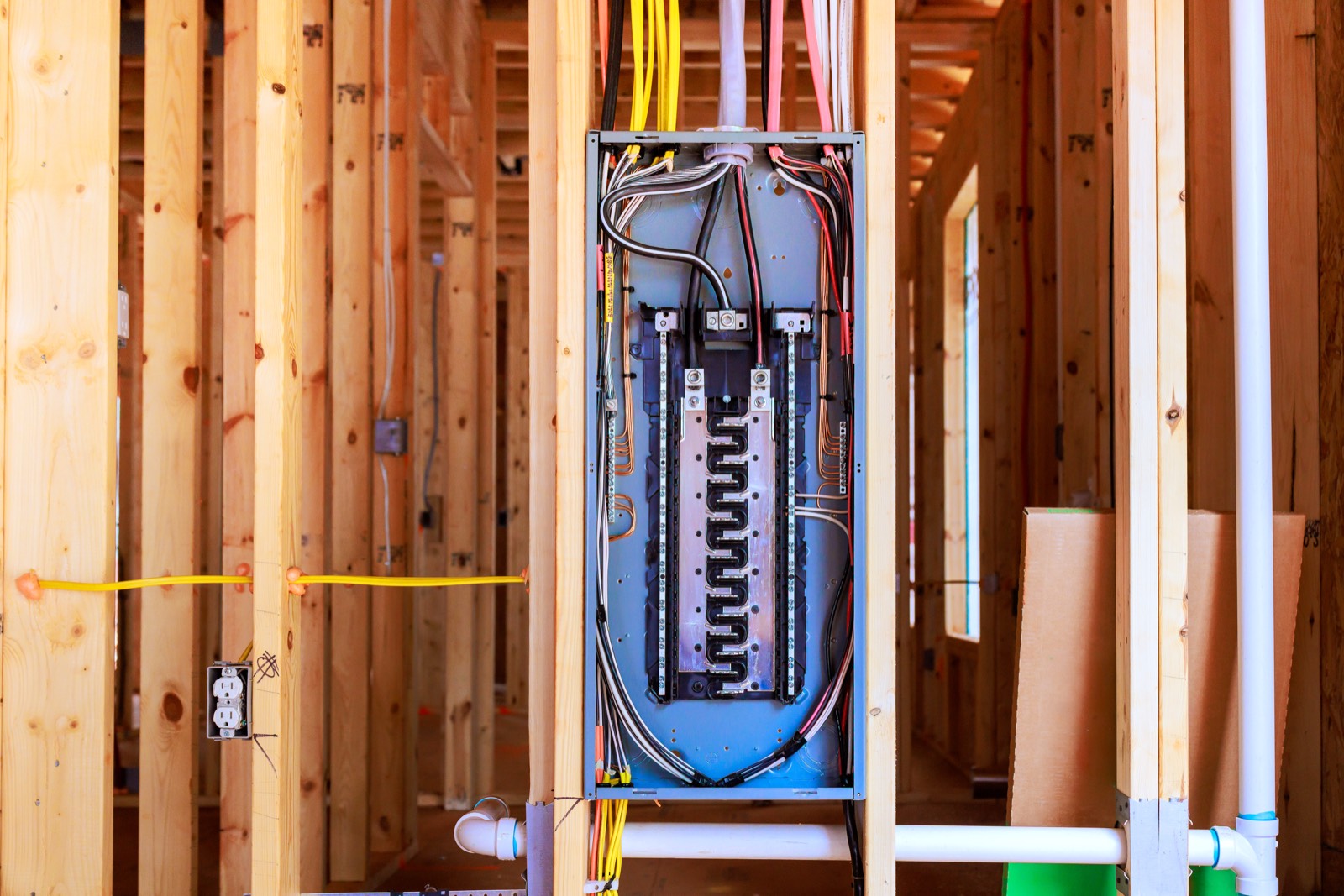
If you are trying to find homes amperage before adding an EV charger, central air, a hot tub, a basement renovation, or new kitchen equipment, start with the service rating—not the number of breakers in the panel.
Your home’s amperage is the maximum electrical service capacity available from the utility through the meter and main disconnect. In older Toronto and GTA homes, that may be 60A or 100A. Newer or upgraded homes are often 200A, but you should not assume that from the size of the house.
1. Start at the main breaker: the handle rating is the best homeowner clue
The fastest safe check is the number stamped on the main breaker handle. Open the panel door only. Do not remove the metal dead front cover, and do not touch anything inside the panel.
Look for the large breaker at the top or bottom of the panel. It may say 60, 100, 125, 150, or 200. That number is usually the service disconnect rating for the home.
A few important cautions:
- The main breaker rating is not the same as adding up all the small breakers. A panel can contain far more branch-circuit breaker ratings than the service size because not everything runs at once.
- A label that says the panel is rated for 200A does not prove the home has 200A service. The utility conductors, meter base, service mast, and main breaker all have to match.
- Some older panels have the main disconnect in a separate switch or fused cabinet beside the panel.
- In condos, townhomes, and some multi-unit buildings, the main disconnect may be in an electrical room, not inside the suite.
If you see a 100A main breaker, your home likely has 100A service. If you see screw-in fuses or cartridge fuses instead of breakers, the home may be older 60A or 100A service. If the main breaker is missing, unlabeled, double-lugged, damaged, warm, buzzing, or surrounded by scorch marks, stop and call a licensed electrician.
The main breaker is only a clue, but it is the clue most homeowners can check without tools.
2. Check the service equipment: the meter, mast, and panel tell the rest of the story
The full service rating depends on the entire service path, not just the panel door. A licensed electrician confirms the size by looking at the service entrance equipment from the utility connection to the main breaker.
Useful clues include:
| What you see | What it may suggest |
|---|---|
| Screw-in fuses or a small fuse cabinet | Often an older 60A or 100A service |
| Main breaker marked 100 | Usually 100A service, subject to equipment confirmation |
| Main breaker marked 200 | Usually 200A service if the meter base and conductors match |
| Large modern panel with many breaker spaces | More room for circuits, but not proof of higher service amperage |
| Separate main disconnect before the panel | The service size may be shown there instead of inside the panel |
| Overhead service mast with older weatherhead and small conduit | May need review before major load additions |
| Underground service with utility meter outside | Capacity still has to be confirmed at the meter and main equipment |
Do not open the meter base, pull the meter, remove the panel cover, or try to identify conductor size yourself. The service lugs can remain energized even when the main breaker is off. That is one of the most dangerous areas in a house electrical system.
For a clean homeowner record, take photos of:
- The main breaker handle.
- The full panel with the door open.
- Any label inside the panel door.
- The meter base outside.
- The overhead mast or underground service entry.
- Any separate disconnect or fused switch.
Those photos help an electrician screen the service before visiting. They also help when planning a panel upgrade, because the issue may be the panel only, the service entrance, the meter base, or utility coordination.
3. Compare the service size to the loads you want to add: amperage matters most when new 240V equipment is planned
Knowing the number is only useful if you compare it to what the home needs. A 100A service can be perfectly fine in a modest gas-heated home with standard appliances. The same 100A service can be tight in a house with electric heating, a hot tub, an EV charger, central air, a basement suite, or a large workshop.
Large loads that change the conversation include:
- Level 2 EV charging.
- Hot tubs and swim spas.
- Electric ranges, wall ovens, and cooktops.
- Electric dryers.
- Central air conditioning or heat pumps.
- Electric water heaters.
- Basement apartments with a kitchen and laundry.
- Saunas or high-output heaters.
- Detached garages with welders, compressors, or chargers.
This is where homeowners often make the wrong call. A spare breaker space does not mean there is spare service capacity. A subpanel adds breaker spaces; it does not add utility amperage. If the home already has a full 100A load profile, adding a subpanel will not make a large EV charger or hot tub safe by itself.
If you are only adding small circuits, the next step may be simple. If you are adding a major load, read the service rating as the start of the decision, not the end. For example, if your plan includes a garage workshop or future circuits, compare options with a subpanel installation cost guide, but still confirm the main service capacity first.
You should also look at condition, not just capacity. Rust, water staining below the meter, a panel packed with tandem breakers, abandoned cloth-insulated wiring, missing panel blanks, or unlabelled circuits are signs the home deserves a broader electrical review before new equipment is added. Our home electrical safety checklist covers the visual items a homeowner can note without opening equipment.
4. Stop when the clues conflict: a licensed load calculation decides uncertain cases
If the main breaker, panel label, and service equipment do not clearly agree, the right next step is a licensed load calculation. That is also the right step when the home is near capacity or you are planning a major addition.
A proper Ontario load calculation is not a guess based on square footage alone. The electrician looks at the connected loads and applies Ontario Electrical Safety Code demand rules. The calculation considers the service size, heating type, cooking equipment, laundry, air conditioning, EV charging, hot tub loads, basement suite loads, and any equipment that must run at the same time.
Common uncertain cases include:
- A 200A-rated panel fed by 100A service equipment.
- A 100A main breaker in a house with electric heat and new EV charging planned.
- A fuse panel where the cartridge fuse rating is unclear or has been altered.
- A panel with no main breaker visible inside the finished area.
- A renovated home where the panel was changed but the service entrance was not.
- A multi-unit or laneway setup where service capacity is shared.
The calculation also determines whether load management is possible. In some EV situations, a load-management device can prevent simultaneous overload by reducing or interrupting charger output when the house load is high. In other cases, especially with multiple large 240V loads, the clean answer is a service upgrade.
If you want a written condition report before buying, renovating, or negotiating, an inspection is separate from simply reading the main breaker. A professional inspection checks grounding and bonding, GFCI protection, detector wiring where visible, panel condition, unsafe modifications, and service concerns. See the electrical inspection cost guide if you need that broader report.
5. If the home is 60A or overloaded 100A: plan the upgrade before the new load
A 60A service is a common red flag in older homes. It may work for a limited historic load, but it is usually not a good platform for EV charging, a hot tub, electric heating additions, or a modern renovation. A 100A service can also be undersized once today’s loads are added.
The upgrade path depends on what is already there:
- From 60A fuse service, the service entrance and meter base often need replacement along with the panel.
- From 100A breakers, the work may involve a new 200A panel, meter base or service equipment changes, grounding and bonding updates, and utility disconnect/reconnect coordination.
- With overhead service, the mast, weatherhead, clearances, and point of attachment may need review.
- With underground service, utility capacity and the existing lateral may have to be confirmed.
- The work requires an ESA notification where required, inspection, and utility involvement for disconnect and reconnect.
For GTA budgeting, a 100A-to-200A upgrade commonly lands at $3,200–$4,500 with the ESA permit and inspection included. If the home is starting from a 60A fuse service, the usual range is $4,000–$6,000 because more service equipment normally has to be replaced. For the detailed version, read the 60 amp to 200 amp upgrade cost guide.
A typical upgrade day includes isolating the old service, replacing the panel and required service equipment, coordinating the utility reconnection, and having the ESA inspection process completed. The exact sequence depends on whether you are served by Toronto Hydro, Alectra, Hydro One, Elexicon, Oshawa Power, or another local distributor.
City Power Electrical Services is a Licensed Electrical Contractor, ECRA/ESA #7015314, and we provide free written estimates for Toronto and GTA homeowners who need their service capacity confirmed before adding major loads.
The practical rule is simple: you can safely look at the main breaker and exterior equipment, but do not open energized service gear. If the number is missing, the home is older, or the project adds a major 240V load, get a licensed load calculation before buying equipment or booking the renovation.
Want a licensed electrician to take a look?
Free written quote, usually the same day. ESA permits handled.