Cost Guide
Ceiling Fan Installation Cost Toronto
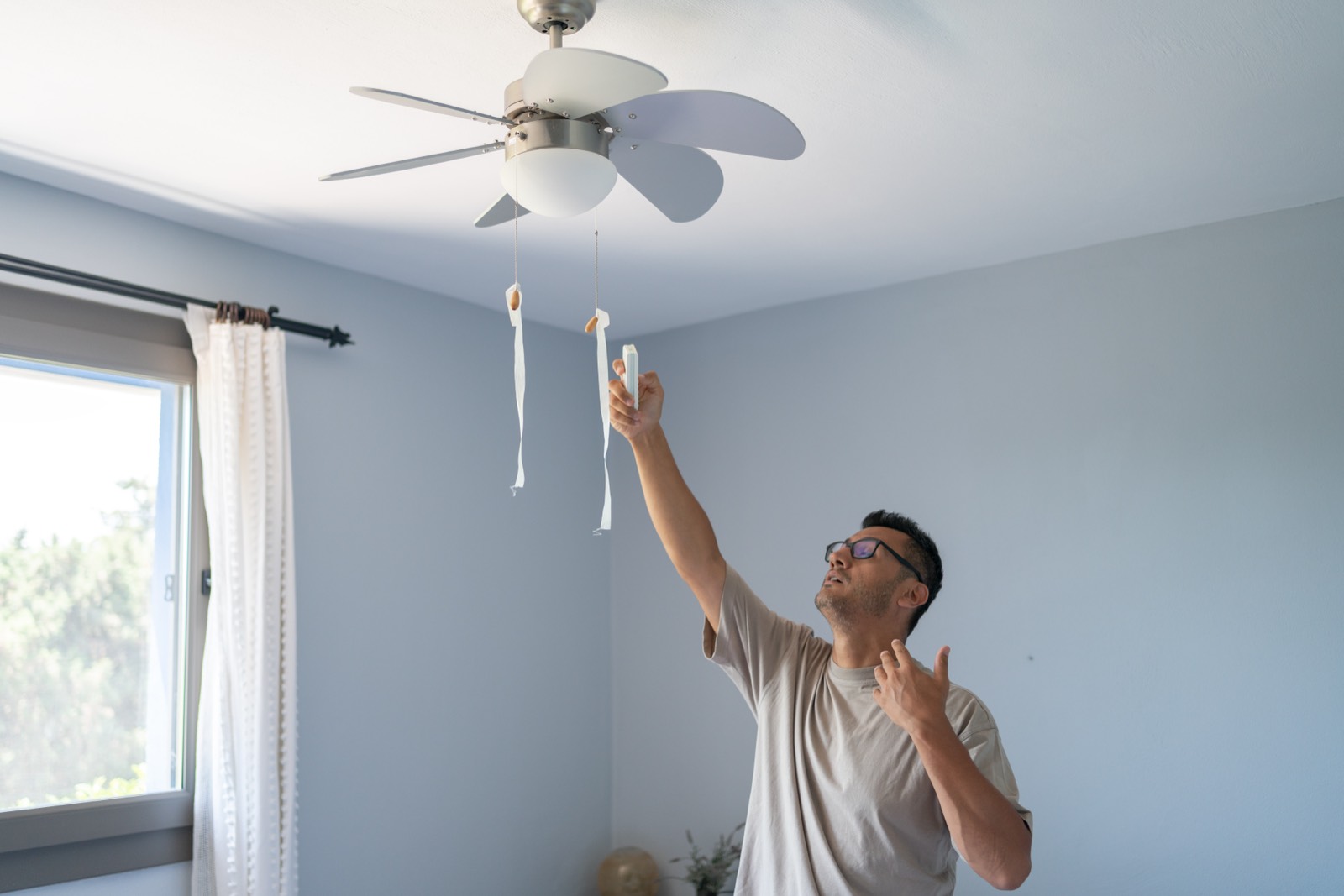
If you already have a safe, fan-rated ceiling box, ceiling fan installation in Toronto is usually a small electrical job. If the existing box is only rated for a light fixture, or there is no ceiling point at all, the job changes quickly: the electrician may need to install a fan-rated brace, fish new cable, add switching, and patch access points after inspection.
City Power Electrical Services provides ceiling fan installation in Toronto and the GTA, with free written estimates, ESA notification where required, and cleanup at the end of the job. Below are the published cost bands we can state, plus the site conditions that decide where your project lands.
The short answer: most ceiling fan installs fall into two pricing situations
Replacing an existing fixture with a ceiling fan runs $150–$300.
If we need to install a fan-rated box, new switch wiring, or a fan where no fixture exists, expect $300–$600.
Those ranges are in CAD and apply to typical Toronto and GTA residential work. The fan itself, ceiling height, wall finish, switch layout, attic access, concrete ceilings, and remote-control wiring can change the quote. Licensed electricians in Toronto charge $95–$150 per hour in 2026, with most service calls carrying a minimum charge of $150–$250, but ceiling fan work is often easier for homeowners to compare as a written flat quote.
A simple swap is not just screwing a new fan to the old light box. A ceiling fan is a moving load. It vibrates, starts and stops, and hangs more weight from the ceiling than a basic light fixture. The cost depends first on whether the ceiling outlet is properly rated to support a fan.
Ceiling fan installation cost table for Toronto homes
| Situation | Published price or quote approach | What usually drives it |
|---|---|---|
| Replace an existing light fixture with a ceiling fan | $150–$300 | Existing ceiling box is accessible and can be verified as fan-rated, wiring is in good condition, standard ceiling height, straightforward assembly |
| Replace an existing fan with a new fan | Quoted in writing after a site visit | Existing support may be usable, but we still check the box rating, hanger bracket, conductor condition, canopy space, and control wiring |
| Add a fan-rated box where a light exists | $300–$600 when a fan-rated box or new switch wiring is needed | Old box is not fan-rated, joist layout requires a brace, attic access may help, finished ceilings can add fishing time |
| Install a fan where no ceiling fixture exists | $300–$600 when a fan where no fixture exists is needed | New cable route from switch or panel area, ceiling access, wall fishing, switch box fill, and whether a neutral is present |
| Remote-control fan install | Quoted in writing after a site visit | Receiver space inside canopy, battery or wall control, separate fan/light control, smart control compatibility, and whether existing wiring supports the chosen control |
| High ceiling, sloped ceiling, or long downrod | Quoted in writing after a site visit | Ladder or scaffold access, downrod length, ceiling angle, fan weight, balancing time, and safe working area under the fan |
| Condo ceiling fan installation | Quoted in writing after a site visit | Concrete slab ceilings, building rules, existing electrical box type, fire separation, and whether new wiring is allowed by the condominium corporation |
For related small electrical work, see our guides to switch installation cost in Ontario and outlet installation cost in Ontario. A fan often becomes a switch-control issue when the homeowner wants separate control of the light and fan motor.
A fan-rated box is the safety issue that decides the job
A ceiling fan must be mounted to a box and support system rated for fan use. Under Ontario safety expectations, a standard plastic or shallow light box is not enough just because it held a light fixture for years.
A proper fan support may be:
- A listed fan-rated ceiling box fastened directly to framing
- A fan-rated brace installed between joists
- A manufacturer-approved hanger system for the fan and ceiling type
- A box that keeps all splices enclosed, accessible through the canopy, and properly bonded where required
This is why the cheapest-looking fan job can become unsafe if someone reuses the old light box without checking it. We often see light boxes held by small screws, old brittle plastic, or a bracket meant only for a lightweight fixture. A fan can loosen that over time, causing wobble, noise, damaged conductors, or a fixture that pulls away from the ceiling.
The electrician checks the box marking, how it is attached, the conductor condition, grounding or bonding, box fill, and whether the fan bracket can be installed exactly as the manufacturer requires. If an ESA notification is required for the scope, the inspection may look at the wiring method, box support, connections, bonding, and whether the installation follows the Ontario Electrical Safety Code and the fan manufacturer’s instructions.
A fan-rated box is not an upgrade for appearance. It is the part that keeps the fan attached to the building.
Existing fan, existing light, and new fan location are three different jobs
Replacing an existing fan is usually the most predictable version, but only if the original installer used a proper fan-rated support. We still verify it. Older fans can hide problems above the canopy: loose locknuts, overheated conductors from an old light kit, a missing bonding connection, or a receiver crammed into a box with no room.
Replacing a light fixture with a fan is different. The wiring may be usable, but the ceiling box may not be. If the light box is not fan-rated, we need to replace it or add a listed fan brace. In a top-floor bedroom with attic access, that can be simpler. In a finished main-floor ceiling with no access from above, the route and ceiling construction matter more.
Adding a fan where no fixture exists is a wiring job, not a fixture swap. The electrician has to decide where power comes from, how the switch will control the fan, and how to fish cable without unnecessary ceiling damage. Common choices include:
- A single wall switch feeding a fan with pull chains or a remote
- Separate fan and light controls, if the fan and wiring support it
- A smart fan control, if the switch box has the required conductors and space
- A remote receiver in the canopy, if the canopy has room and the fan is designed for it
If your room has no overhead fixture now, send photos of the ceiling, the nearest switch, the room above, and the panel area when asking for a quote. Those photos help us tell whether the job is likely closer to a standard new fan location or needs a site visit before pricing.
Remote controls, high ceilings, and condo ceilings can change the number
Remote-control fans are convenient, but they add details that matter electrically. Some fans use a receiver tucked inside the canopy. Some use a wall transmitter. Some need constant power at the ceiling and use the remote to control fan speed and light dimming. Others need separate switched conductors for fan and light functions.
The cost changes when the existing wiring does not match the control style you bought. For example, an older bedroom may have one switched conductor at the ceiling. That works for many remote fans, but not for every separate wall-control arrangement. If you want a fan motor on one control and the light on another, the electrician may need to fish additional cable or replace the switch box.
High ceilings also change the job. A long downrod must match the fan, the ceiling angle, and the hanger system. The fan must hang at the correct height for safe clearance, and it must be balanced so it does not wobble. Sloped ceilings may need an angle adapter from the fan manufacturer. Heavy fans may have support requirements beyond a basic retrofit brace.
Condo fan installations need a different conversation. Many Toronto condos have concrete ceilings with limited space to add boxes or fish new cable. The condominium corporation may also restrict ceiling penetrations, visible conduit, work hours, elevator use, or renovations affecting fire separations. In a condo, we quote after confirming the existing box, building rules, and whether the installation method is allowed.
If your real project is more like a heavy decorative fixture than a fan, compare our chandelier installation cost guide. If the fan is part of a ventilation problem in a bathroom, the cost structure is different; see bathroom exhaust fan installation cost.
What is included in a proper ceiling fan quote
A proper quote should say more than install fan. It should spell out the electrical assumptions.
For a straightforward fan installation, the work normally includes:
- Turning off and verifying the circuit before work starts
- Removing the existing light or fan
- Checking whether the ceiling box is fan-rated
- Installing the fan bracket and assembling the fan according to the manufacturer’s instructions
- Connecting conductors with approved connectors
- Confirming bonding or grounding where required
- Installing the canopy, blades, light kit, remote receiver, or wall control if included in the scope
- Testing fan speeds, light operation, direction switch, and remote functions
- Cleaning up the work area
If the box is not fan-rated, the quote should include the fan-rated box or brace and any required access work. If new switch wiring is needed, the quote should describe the route, whether holes are expected, and whether wall or ceiling repair is included. Electricians usually do not include drywall finishing or painting unless it is specifically written into the contract.
For jobs that require ESA notification, City Power handles the permit process where required and arranges inspection. City Power Electrical Services is a Licensed Electrical Contractor, ECRA/ESA #7015314, led by Sam, a licensed electrician with more than 15 years of hands-on experience.
How to get an accurate ceiling fan installation quote in Toronto
The fastest way to get an accurate written estimate is to send the right information before the visit. Useful photos include:
- The current ceiling fixture or fan
- The switch controlling it
- The fan box label, if visible after the old fixture is removed safely by an electrician
- The room and ceiling height
- The attic or room above, if there is access
- The fan model, downrod, remote kit, and wall control you plan to use
- The electrical panel, if new wiring may be needed
Do not remove a ceiling fixture yourself if you are not comfortable making the circuit safe and verifying it is off. Do not hang a fan from a box unless the box is clearly rated for fan support. If the fan wobbles, hums, smells hot, trips a breaker, flickers when changing speeds, or the canopy is pulling away from the ceiling, stop using it and call a licensed electrician.
For a typical Toronto home, the right question is not only what does ceiling fan installation cost. It is whether the fan will be supported correctly, wired to match the controls you want, and left safe for daily use.
To book the work, start with our ceiling fan installation service page. For other electrical pricing guides, visit the City Power blog.
Want a licensed electrician to take a look?
Free written quote, usually the same day. ESA permits handled.