Answered by a licensed electrician
Should I replace a Federal Pacific panel?
Quick answer
You should strongly consider replacing a Federal Pacific or Stab-Lok panel, but do not assume every labelled panel is the same without inspection. In the GTA, a 100A-to-200A panel upgrade typically lands at $3,200–$4,500 including the panel, labour, ESA notification, and inspection, and it should be assessed by a licensed electrical contractor before any breaker swaps.
Yes, replacement is often the right decision, but it should start with a licensed panel assessment.
A Federal Pacific, Federal Pioneer, or Stab-Lok name on the panel is a serious flag, not a DIY diagnosis. The practical question is not only “is this brand risky?” It is “what exact equipment is in this house, what condition is it in, can approved breakers still be used, and will an insurer accept it?”
We do not tell homeowners that every panel with a Federal Pacific or Stab-Lok label is automatically defective. Some panels have been sitting untouched for decades; others have damaged bus bars, mismatched breakers, heat marking, double-tapped conductors, missing filler plates, or overloaded circuits added during renovations. The inspection matters.
That said, many homeowners replace these panels because the combination of age, breaker availability, insurance questions, and modern load demands makes ongoing repair unattractive. If the house now has central air, an EV charger plan, a basement apartment, a hot tub, electric range, or multiple dedicated circuits, an older Stab-Lok panel may be the wrong foundation even before a specific defect is found.
City Power Electrical Services is a Licensed Electrical Contractor, ECRA/ESA #7015314, and we assess these panels in Toronto and the GTA with ESA notification where replacement is required.
Identify the panel by the label, breaker style, and condition — not by guessing from the cover.
You can look at the panel label, but you should not remove the dead front cover or pull breakers yourself. The useful identification points are usually visible only after safe access by a licensed electrician.
Common things we check include:
- The panel label: Federal Pacific, Federal Pioneer, Stab-Lok, or related model information.
- The breaker style: Stab-Lok breakers have a distinctive connection method and must match the panel approval.
- The main breaker or fuse rating: often 60A, 100A, or another service size.
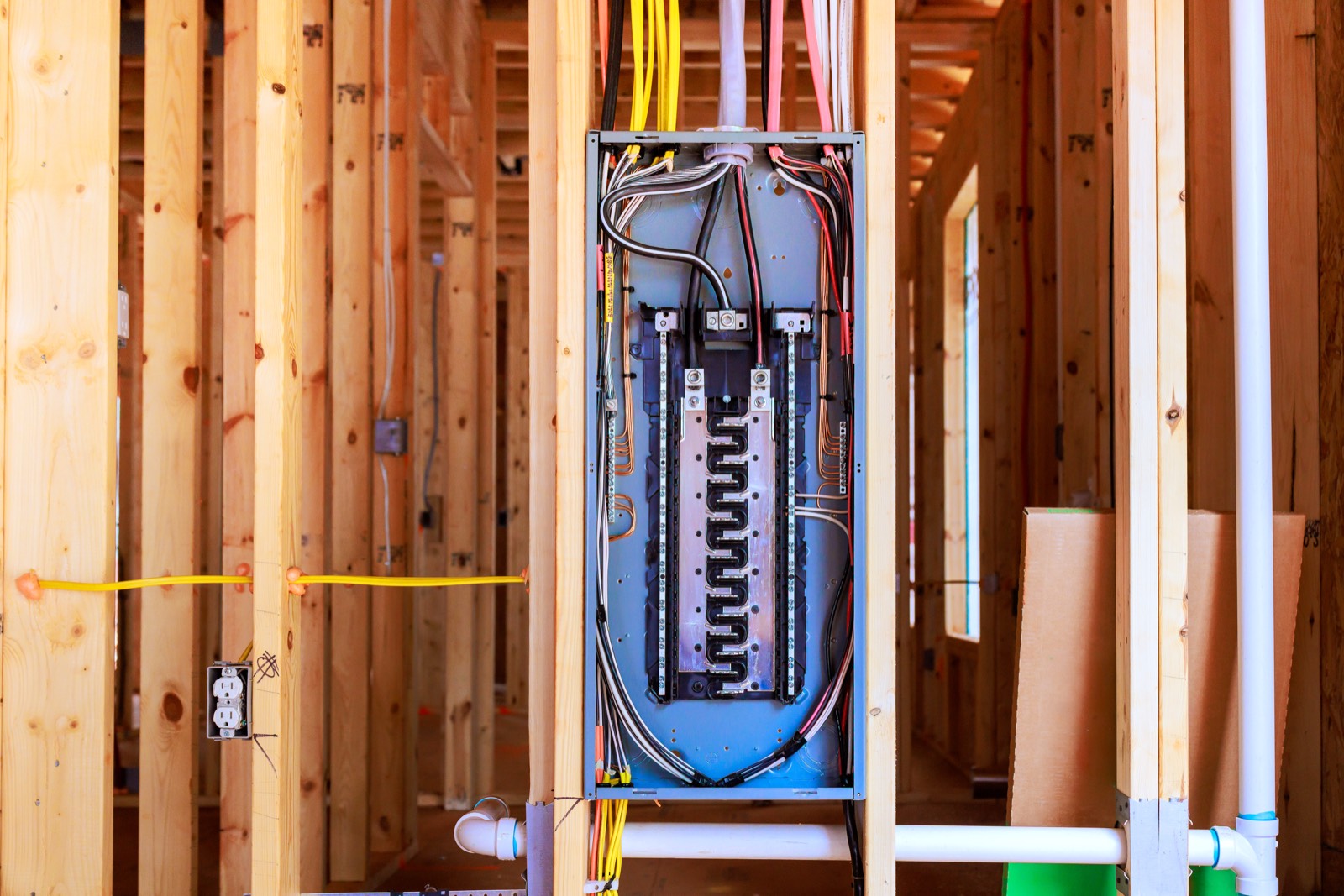
- The bus condition: pitting, arcing marks, corrosion, looseness, or heat damage.
- The breaker fit: breakers that rock, do not seat properly, or are not approved for the panel.
- The circuit count: crowded panels, tandem use, missing blanks, or circuits added without clear labelling.
- The service entrance: meter base, mast, grounding, bonding, and utility conductors.
A photo of the front cover is helpful for booking, but it is not enough to decide whether the panel can be safely repaired. The highest-risk details are behind the cover, inside the service equipment, and at the connection points.
If your panel is making active noise, has visible moisture, or shows heat damage, treat that as urgent rather than a routine replacement decision. We cover those specific symptoms separately in why an electrical panel is sizzling, why an electrical panel is hot, and why an electrical panel is wet.
Insurance, breaker availability, and modern loads are the usual reasons replacement wins over repair.
Even when a Stab-Lok panel appears to be working, the non-emergency reasons for replacing it can be strong. Insurance is often the first one. Some insurers ask about panel type during a new policy, renewal, or home purchase. They may request an electrical inspection, repairs, or replacement before binding coverage. We cannot speak for every insurer, so confirm their requirement in writing.
Breaker availability is another issue. A breaker is not just a switch that fits in a slot. It must be approved for that panel, sized for the conductor, suitable for the circuit, and installed according to the Ontario Electrical Safety Code and the manufacturer’s certification. Random used breakers, online parts, or “close enough” replacements are not a safe solution.
Modern load is the third reason. A panel that was acceptable for a smaller electrical lifestyle may be a poor match for today’s house. A load calculation matters before adding large equipment.
| Issue | Why it matters with Federal Pacific or Stab-Lok panels |
|---|---|
| Insurance concern | Some insurers may ask for inspection or replacement before coverage continues. |
| Breaker sourcing | Correct, approved breakers may be limited, expensive, or not worth investing in. |
| Added loads | EV chargers, hot tubs, finished basements, and electric appliances can exceed the practical panel capacity. |
| Inspection findings | Heat marking, loose breakers, corrosion, damaged bus bars, or double taps usually push the decision toward replacement. |
| Resale friction | Buyers and home inspectors often flag these panels, even when no immediate failure is visible. |
If your plan is to add circuits, do not treat the panel as a minor obstacle. The better question is whether the panel has safe capacity and suitable equipment for the new work. See whether you can add a circuit to your panel and whether a 100 amp panel can support an EV charger for the load side of the decision.
Do not swap breakers yourself; a panel replacement needs ESA notification and utility coordination.
A Federal Pacific or Stab-Lok concern should not be handled by buying a breaker and trying it yourself. Panel work exposes live service equipment, and the most dangerous parts may remain energized even when branch breakers are off. A breaker that physically clips in can still be wrong for the panel, conductor size, interrupting rating, or circuit type.
For replacement, the normal process is controlled and documented:
- Inspect the existing panel, service size, grounding, bonding, and connected loads.
- Complete a load calculation for the home and any planned additions.
- Decide whether the job is a panel change only or a service upgrade.
- File the ESA notification where required.
- Coordinate the utility disconnect and reconnect when service conductors are involved.
- Install the new panel, breakers, labelling, grounding and bonding updates, and any required arc-fault or GFCI protection for new work.
- Complete the ESA inspection and correct any defects if identified.
For a 100A-to-200A upgrade in the GTA, a realistic budget is $3,200–$4,500 when the scope includes the panel, labour, ESA notification, and inspection. If the home still has a 60A fuse service, the budget is usually higher — $4,000–$6,000 — because the service entrance and meter base commonly need replacement too.
Those figures assume a standard residential scope. If the panel must be moved, the meter location is changing, the service mast is deteriorated, there is extensive unpermitted wiring, or the utility requires additional work, the price should be quoted in writing after a site visit. You can compare the replacement route on our panel upgrade service page, and the permit side in whether panel replacements need permits.
Replace the panel sooner if inspection finds damage, limited capacity, or insurance pressure.
The clearest answer is this: if the panel is Stab-Lok and also shows physical defects, questionable breaker fit, insurance resistance, or insufficient capacity for planned loads, replacement is the responsible path. If the panel is in good physical condition and you are not adding load, a licensed assessment still matters because the decision affects safety, insurance, and resale.
A good assessment should leave you with a written explanation, not a vague scare. It should state the panel brand and rating, visible deficiencies, load concerns, whether existing breakers appear suitable, whether there are signs of overheating or corrosion, and whether an ESA-notified replacement is recommended.
Replacement is also a good time to fix the practical things homeowners live with every day: clear circuit labelling, enough breaker spaces, dedicated circuits for appliances, proper GFCI and AFCI protection where required for new work, whole-home surge protection if wanted, and a panel layout that can support future equipment.
If you are buying or selling a house, ask for the panel assessment before negotiation deadlines. If you are renovating, do it before walls close. If you are planning an EV charger, hot tub, basement kitchen, or heat pump, do the panel review before ordering equipment. The worst version of this job is discovering the panel problem after another contractor is already waiting for power.
Want a licensed electrician to take a look?
Free written quote, usually the same day. ESA permits handled.
People also ask
Is every Federal Pacific or Stab-Lok panel unsafe?
No one should diagnose every panel from the brand name alone. The concern is serious enough to justify a licensed assessment, but the decision depends on the exact panel, breaker condition, bus condition, service size, insurance requirements, and planned loads. Many homeowners still choose replacement because repair options and insurer acceptance can be limited.
Can I just replace the Stab-Lok breakers instead of the whole panel?
Sometimes a breaker can be replaced only if an approved breaker is available and the panel itself is in acceptable condition. That is not a homeowner job. The electrician must verify the breaker type, conductor size, circuit load, panel certification, and bus condition. If the bus is damaged or the equipment is obsolete, replacement is usually the better answer.
Will insurance make me replace a Federal Pacific panel?
Some insurers may ask for an electrical inspection, written confirmation, or replacement when they see Federal Pacific, Federal Pioneer, or Stab-Lok equipment. Requirements vary by insurer and policy, so ask for their position in writing. A licensed inspection report is often the first step before deciding whether replacement is mandatory.
How much does it cost to replace a Federal Pacific panel in the GTA?
If the project is a 100A-to-200A upgrade, expect about $3,200–$4,500 including the new panel, labour, ESA notification, and inspection. If the home has a 60A fuse service, the range is commonly $4,000–$6,000 because the meter base and service entrance often need replacement as well.