Answered by a licensed electrician
Can I add a circuit to my panel?
Quick answer
You can add a circuit to your panel only if there is approved breaker space and the service has enough capacity after a load calculation. Physical space is not enough. In Ontario, a new branch circuit normally needs an ESA notification and inspection. A typical 20A dedicated circuit costs $250–$500 depending on distance and wall access.
Yes, you can add a circuit if the panel has both space and capacity
Adding a circuit is common for a home office, freezer, microwave, sump pump, workshop receptacle, heat pump, dryer, hot tub, or EV charger. The answer is not just “is there an empty slot?” The panel has to pass two checks: physical breaker space and electrical capacity.
Physical space means the panel has a legal position for the breaker you want to install. Electrical capacity means the service, panel bus, main breaker, and calculated household load can support the added load without overloading the system.
Those are different issues. We often see panels with two empty spaces that still should not take a large new load because the home already has electric heat, a range, a dryer, air conditioning, a basement suite load, or EV charging demand. We also see panels that look “full” but can be made workable with a properly installed sub-panel or, in limited cases, approved tandem breakers.
A basic 15A or 20A circuit may be straightforward. A 240V appliance circuit is different. A charger, hot tub, range, dryer, garage heater, compressor, or welder can trigger a service load review because the breaker size is larger and the load may run for long periods.
For a normal new run, see our dedicated circuit installation service. If the circuit is for a specific appliance, the equipment nameplate matters more than a guess. The installer should size the breaker and conductor from the actual load, the installation instructions, and the Ontario Electrical Safety Code.
Empty breaker spaces do not always mean the panel can accept another circuit
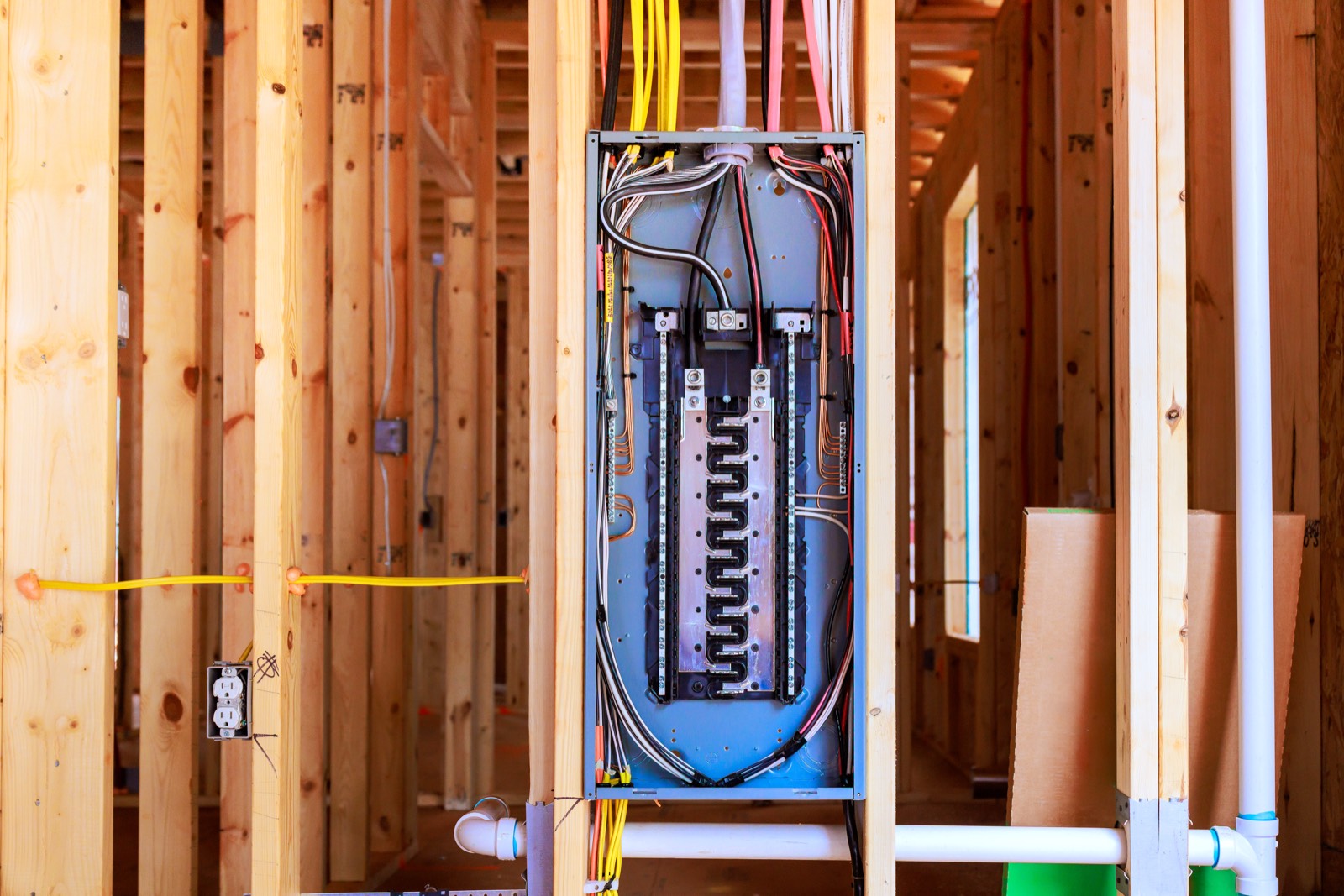
An empty slot is only useful if the panel label allows a breaker there, the breaker type is approved for that panel, and the bus is in good condition. Breakers are not universal parts. A breaker that “fits” physically can still be wrong for the panel and can create poor contact on the bus.
Before adding a circuit, an electrician checks:
- The panel rating, such as 100A or 200A service.
- The main breaker size and whether it matches the service equipment.
- The panel directory and label, including the maximum number of circuits allowed.
- Whether the panel allows tandem breakers, and in which positions.
- Whether there are already double-lugged neutrals or grounds that need correction.
- Whether the neutral bar, ground bar, bonding, and service conductors are properly arranged.
- Whether the panel has signs of overheating, corrosion, water entry, damaged breakers, or loose terminations.
This is why “I have a blank space” is not the same as “I can add a circuit.” The panel may be rated for a maximum number of circuits. It may have spaces blocked for a reason. It may be an older panel where only certain replacement breakers are permitted. It may have no room for the required 2-pole breaker. Or it may need AFCI or GFCI protection that takes a specific breaker type.
If the panel has any abnormal symptoms, deal with those before adding load. A panel that is noisy, wet, visibly damaged, or unusually hot needs diagnosis first, not another breaker. See the warning signs in why an electrical panel can feel hot and why a panel should not be wet.
A load calculation decides whether the service can handle the new circuit
A load calculation is the code-based way to decide whether the home has enough electrical capacity. It is not the same as adding up every breaker handle in the panel. Breaker totals almost always exceed the main breaker because not every load runs at full power at the same time.
The calculation looks at the home’s connected loads and applies the rules that fit the dwelling. The important items are usually the big loads:
| New circuit type | Why capacity matters |
|---|---|
| 15A or 20A receptacle circuit | Usually small, but still needs correct AFCI/GFCI protection and cable sizing. |
| Dryer, range, or large appliance | Often needs a 240V circuit and a 2-pole breaker. |
| EV charger | Can be a large continuous load, so panel capacity must be verified. |
| Hot tub or spa | Usually needs GFCI protection, outdoor-rated equipment, disconnect placement, and bonding review. |
| Workshop equipment | Motors can have starting current and may need dedicated circuits. |
| Electric heat or heat pump equipment | Heating loads can dominate the calculation, especially in additions and garages. |
A typical 20A dedicated circuit from the panel is often in the $250–$500 range when the route is reasonable. Larger 30A–50A runs are commonly $400–$900 before site-specific complications such as finished ceilings, long distances, trenching, or special disconnects. For appliance examples, compare the requirements in dryer circuit installation cost or hot tub circuit cost.
If the calculation shows the service is tight, there are options. Sometimes the right answer is a smaller circuit, a load-management device, moving loads to a sub-panel, or upgrading the service. Sometimes the answer is simply that the panel has enough headroom and the circuit can be added normally.
The key point: capacity is determined by the load calculation and equipment ratings, not by how tidy the panel looks.
Tandem breakers are allowed only when the panel is designed for them
A tandem breaker puts two 120V breaker handles in one full-size breaker space. It is useful in some panels, but it is not a universal fix for a full panel.
Tandems have three common limits:
- The panel must be listed and labelled to accept them.
- They may be allowed only in specific positions, not anywhere in the panel.
- They do not create extra service capacity; they only create more branch circuit positions.
A tandem breaker can solve a space problem for two small 120V circuits. It does not make a 100A service behave like a 200A service. It also may not be appropriate where the circuit requires common trip, a 2-pole breaker, AFCI/GFCI functions that are not available in that format, or a multi-wire branch circuit arrangement that needs handle ties or common disconnecting.
If someone has filled a panel with tandems without checking the label, the panel may exceed its approved circuit count. That can become an ESA defect and can complicate insurance, renovation permits, and future sale inspections. It can also crowd the wiring space inside the panel, making terminations harder to inspect and maintain.
A sub-panel is often the cleaner answer when you need several new circuits in a garage, basement, kitchen renovation, workshop, or addition. The feeder to the sub-panel still needs capacity, correct breaker sizing, grounding and bonding, and ESA inspection. A smart panel or load-control setup may also be worth discussing for homes adding EV charging or backup power; see whether a smart electrical panel is worth it.
In Ontario, a new branch circuit normally needs ESA notification and inspection
Adding a new circuit is not just a handyman task. In Ontario, new branch circuit work normally requires an ESA notification and inspection. The notification is the permit process for electrical work. It documents the work and gives ESA the opportunity to inspect before it is concealed or put fully into service.
For a new circuit, the inspection may look at:
- Breaker type and amp rating.
- Conductor size and insulation rating.
- Cable routing, support, protection from damage, and box fill.
- Correct grounding and bonding.
- AFCI or GFCI protection where required.
- Weatherproof fittings and in-use covers outdoors.
- Disconnects for equipment that requires them.
- Labelling in the panel directory.
- Whether the circuit matches the equipment nameplate and installation instructions.
Finished walls change the plan. Fishing cable through a ceiling cavity is different from open framing in a basement renovation. Outdoor circuits add wet-location boxes, weatherproof covers, conduit or burial-rated cable where appropriate, and GFCI protection. Garage and workshop circuits may need more robust routing because cords, tools, storage, and vehicles increase the risk of damage.
City Power Electrical Services is a Licensed Electrical Contractor, ECRA/ESA #7015314, and we file ESA notifications where required for work we perform. We also provide free written estimates from our North York office base for Toronto and GTA homeowners.
Before you add a circuit, have the panel reviewed. The safe answer may be a simple breaker and cable run. It may be a sub-panel. It may be a service upgrade. What you should avoid is forcing in a breaker because there is a tempting empty slot, using an unapproved tandem, or connecting a large appliance without proving the panel can carry it.
Want a licensed electrician to take a look?
Free written quote, usually the same day. ESA permits handled.
People also ask
Can I add a breaker myself if there is an empty slot?
An empty slot does not prove the panel can accept another breaker. The breaker must be approved for that panel, the panel must have capacity, and the new circuit usually needs ESA notification in Ontario. A licensed electrician should check the panel label, load calculation, grounding, bonding, and required AFCI or GFCI protection before the circuit is energized.
Does adding a circuit mean I need a panel upgrade?
Not always. Many homes can add a 15A or 20A circuit without upgrading the service, especially if the route is simple and the load is small. Larger loads such as EV chargers, hot tubs, ranges, dryers, or electric heat need a load calculation. If the service is already tight, the answer may be load management, a sub-panel, or a panel upgrade.
Can tandem breakers make room for new circuits?
Sometimes, but only if the panel is labelled to accept tandem breakers in that exact position. Tandems add physical circuit positions; they do not add electrical capacity. They also may not suit 240V loads, circuits needing common trip, or certain AFCI/GFCI requirements. Installing unapproved tandems can create an ESA defect.
How much does it cost to add a circuit to a panel?
A typical 20A dedicated circuit from the panel is usually $250–$500, depending on distance and how difficult the wire route is. Heavier 30A–50A circuits are commonly $400–$900. Finished walls, outdoor wiring, trenching, disconnects, GFCI protection, and panel capacity issues can change the quote.