Answered by a licensed electrician
Why is my electrical panel hot?
Quick answer
A hot electrical panel usually means excessive load, a loose service or neutral lug, a failing breaker, or heat from equipment beside the panel. If the cover is too hot to keep your hand on, smells burnt, or shows arcing, stop using major loads and call for emergency help. A 100A-to-200A upgrade is typically $3,200–$4,500 in the GTA when capacity is the issue.
A hot panel is not a “watch it for a few days” problem. The panel is where every branch circuit, the main breaker, service conductors, grounding and neutral connections meet. Heat there can come from a simple overloaded service, but it can also come from a loose lug or damaged bus connection that gets worse each time current flows.
Do not remove the panel cover to investigate. The main lugs in many residential panels can remain energized even when the main breaker is off. If there is smoke, flame, popping, or a burning plastic smell, leave the area and call emergency services. If the heat seems to be at the hydro meter, service mast, overhead wires, or underground service entry, call the utility emergency line as well.
A hot electrical panel is usually caused by load, resistance, a failing device, or outside heat
A panel gets hot when current is too high for the service, when a connection has high resistance, when a breaker or bus connection is failing, or when something nearby is heating the cabinet. The difference matters because the fix can range from tightening and replacing damaged components to a full panel upgrade.
Common causes include:
- Overloaded service: a 100A panel may be asked to supply an EV charger, electric range, dryer, hot tub, heat pump, basement suite, and normal household loads. The main breaker, bus and service conductors can run hotter during peak demand.
- Loose main lugs or neutral connections: a slightly loose conductor creates resistance. Resistance creates heat. Heat expands metal, which can loosen the connection further.
- Failing breakers: old, damaged, mismatched, or overheated breakers may not clamp properly to the bus bar or may run hot internally.
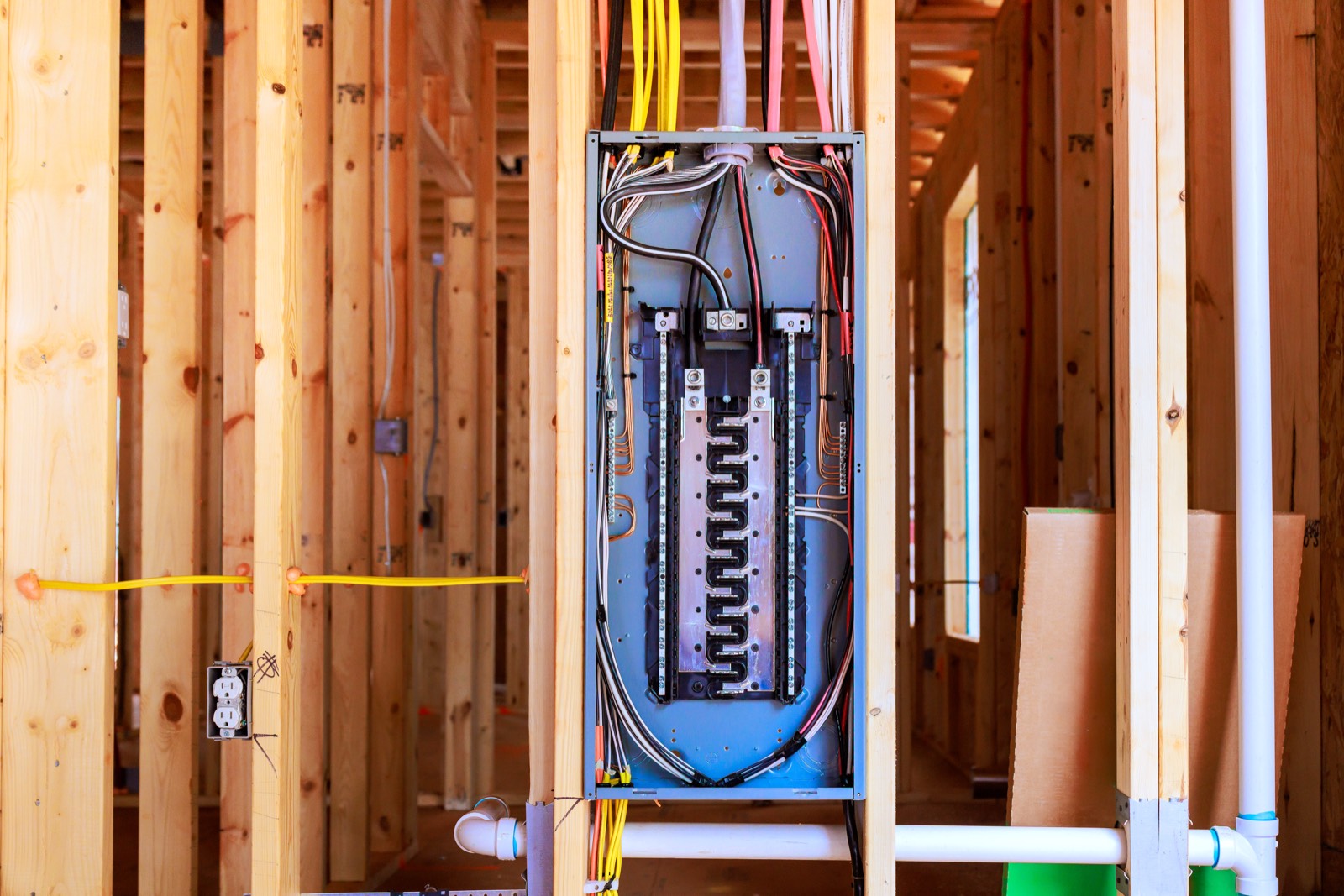
- Damaged bus bar: pitting, arcing marks, corrosion, or a poor breaker-to-bus connection can create localized heat behind the dead front cover.
- Overfilled or poorly modified panels: tandem breakers in the wrong positions, double-tapped terminals, or crowded neutral bars can create unsafe conditions.
- Heat from nearby equipment: a furnace plenum, boiler piping, radiator, dryer duct, server rack, or south-facing mechanical room can warm the panel cabinet even if the electrical connections are sound.
A slightly warm panel door during heavy use is not the same as a hot panel. The warning sign is unusual heat: the cover is hot to the touch, the heat is concentrated in one area, lights flicker under load, breakers trip repeatedly, or the panel smells like burnt insulation. If the panel is also making a frying, crackling, or arcing sound, read why a panel may be sizzling and treat it as an emergency.
Call the utility for heat at the service equipment, and call an electrician for heat inside the panel
Call the utility emergency line when the heat appears to involve utility-owned service equipment. Call a licensed electrical contractor when the heat is at the panel, breakers, branch circuits, or customer-owned service equipment. If there is fire, smoke, or an immediate shock risk, call 911 first.
| What you notice | Who to call first | Why |
|---|---|---|
| Hydro meter is hot, cracked, buzzing, smoking, or smells burnt | Utility emergency line, then electrician | The meter and incoming service may need utility isolation before repair |
| Overhead service wires, mast, or service attachment look damaged | Utility emergency line | The utility may need to de-energize or repair the supply side |
| Panel cover is hot, breakers are hot, or there is a burnt smell at the panel | Licensed electrician, emergency service if severe | The fault is likely in the panel, breakers, terminations, or load |
| Water is entering the panel or meter base | Utility if meter/service is involved, electrician for the panel | Water and energized service equipment are a serious shock and fire risk |
| The whole house lost power but neighbours have power | Utility and electrician depending on meter/panel symptoms | It could be supply-side or a main service problem |
In Toronto and the GTA, the utility might be Toronto Hydro, Alectra, Oakville Hydro, Burlington Hydro, Oshawa Power, Elexicon, Hydro One, or another local distributor. Their emergency dispatch handles the supply side. A licensed electrical contractor handles diagnosis, repair, ESA notification where required, and replacement on the customer side.
City Power Electrical Services is an ECRA/ESA Licensed Electrical Contractor, #7015314, based in North York; for a hot panel we can attend as an emergency call, assess whether the issue is utility-side or customer-side, and arrange ESA work where required.
Turn off major loads, keep away from the panel, and do not keep resetting breakers
The safest first step is to reduce load without opening the panel. Turn off large appliances at their normal controls if you can do it safely: EV charging, range or oven, dryer, hot tub, electric heater, air conditioner, workshop equipment, or basement suite loads. If the panel cools noticeably after large loads are off, that points toward overload or a weak connection that only heats under demand.
Do not do these things:
- Do not remove the dead front cover.
- Do not tighten lugs yourself.
- Do not spray water, cleaner, or fire extinguisher powder into the panel unless there is an active fire and you are following emergency instructions.
- Do not keep resetting a breaker that trips or feels abnormally hot.
- Do not tape a breaker, prop it on, or replace it with a larger breaker.
- Do not stand in water or touch the panel if the floor, wall, or cabinet is wet.
If the panel is wet, that becomes a different emergency because moisture can bridge energized parts and corrode service equipment. See what to do when an electrical panel is wet and keep clear until it is isolated.
Photos can help, but only from a safe distance. A useful photo shows the panel label, the surrounding mechanical room, the meter location, and any visible discolouration around the panel cover. Do not open anything for a better photo.
An electrician checks temperature, load, terminations, and the service size before recommending an upgrade
A proper diagnosis starts with confirming where the heat is coming from. The panel door can feel hot because the main breaker is overheating, because one breaker position is failing, because the neutral bar is loose, or because a boiler line is heating the wall beside it. Those are different repairs.
On site, an electrician may check:
- Panel surface temperature patterns: a thermal camera can show whether heat is concentrated at the main breaker, one branch breaker, the neutral bar, or the entire cabinet.
- Actual load: clamp meters can show current on service conductors and large branch circuits while major equipment is operating.
- Main breaker and bus condition: heat damage, pitting, melted plastic, discolouration, or loose breaker fit can make replacement necessary.
- Service rating: the panel label, conductor size, meter base, main breaker, and utility service determine whether the home is actually 60A, 100A, 125A, or 200A.
- Neutral and grounding: a loose or compromised neutral can create dangerous voltage imbalance and heat.
- Breaker compatibility: breakers must be approved for that panel, not just physically able to fit.
- Nearby heat sources: clearances, ducts, pipes, and mechanical equipment can affect the cabinet temperature.
If the service is overloaded, the answer is not simply “add a breaker” or “use a bigger breaker.” The load calculation must account for the home’s fixed equipment and likely demand. Homes with EV charging, electric cooking, electric dryer, heat pump backup, hot tub, basement apartment, or future battery storage often need a more careful service assessment. Our guide to what size electrical panel a house needs explains how these loads affect the decision.
Where capacity is the root problem, a 100A-to-200A upgrade is commonly assessed. In the GTA, that work usually falls in the $3,200–$4,500 range when it includes the new panel, labour, ESA notification, and inspection. If the home still has a 60A fuse service, the cost is usually higher because the service entrance and meter base often need to be replaced as part of the job.
If the panel has enough capacity but one area is overheating, the repair might be a breaker replacement, correcting a loose termination, replacing damaged conductors, or replacing a compromised panel interior. Any panel replacement, service upgrade, new service equipment, or significant circuit work must be done with ESA notification where required and inspected.
If heat is load-related, a 200A upgrade may solve the symptom and add future capacity
A service upgrade is the right fix when the panel is hot because the home has outgrown the service. It is not automatically the right fix for every hot panel. A loose main lug in a 200A panel is still dangerous. A failing breaker in a 100A panel might be repairable if the rest of the system is sound.
Signs that load is a likely factor include:
- The panel heats up when several large appliances run together.
- The main breaker area is warmer than the rest of the panel.
- Breakers trip during normal household use, not because of one faulty appliance.
- Lights dim when major loads start.
- The home has added EV charging, a hot tub, heat pump, basement kitchen, workshop, or electric heating since the panel was installed.
- The panel has no practical room left for code-compliant circuits.
A 200A upgrade is more than swapping the breaker box. It can involve utility coordination, meter base and service conductor verification, grounding and bonding upgrades, panel labelling, ESA notification, and inspection. Timing depends on utility disconnect/reconnect availability and site conditions; the practical sequence is covered in how long a panel upgrade takes.
If you are unsure whether heat is a one-time overload or a sign the service is at its limit, compare your symptoms with the signs you need a panel upgrade. For a hot panel, the priority is still safety first: reduce load, stay out of the panel, and have it checked before the next peak-demand day.
Want a licensed electrician to take a look?
Free written quote, usually the same day. ESA permits handled.
People also ask
Is it normal for an electrical panel to feel warm?
A little warmth can happen when large loads are running, but the panel cover should not feel hot, smell burnt, show discolouration, or have heat concentrated in one spot. If it is too hot to keep your hand on comfortably, treat it as abnormal and stop using major loads until a licensed electrician checks it.
Should I turn off the main breaker if my panel is hot?
Only do it if you can reach the main breaker safely, there is no smoke, water, arcing, or burning smell, and the panel cover is not dangerously hot. If there are emergency signs, keep away and call 911 or the utility as appropriate. Never remove the cover to reach anything inside.
Can an overloaded 100 amp panel cause heat?
Yes. A 100A service can run hot if the home now has loads it was not designed for, such as EV charging, a hot tub, electric cooking, a dryer, heat pump equipment, or a basement suite. An electrician should perform a load assessment before recommending a 200A upgrade or load-management option.
Does a hot panel always mean I need a new panel?
No. The cause might be a loose connection, failed breaker, damaged bus, water/corrosion issue, or heat from nearby mechanical equipment. Some problems are repairable, while damaged or overloaded service equipment may need replacement. The decision should come after temperature checks, load readings, and inspection of the panel components.