Answered by a licensed electrician
Why is my electrical panel wet?
Quick answer
A wet electrical panel is an emergency because water can energize the cabinet, corrode breakers, and start arcing inside the bus assembly. Stay away from it and call a licensed electrician. If replacement or a 100A-to-200A upgrade is needed, GTA work commonly falls around $3,200–$4,500 with ESA notification and inspection included.
Stay away from a wet panel and call for emergency service
If there is water on, in, or dripping above your electrical panel, do not open the cover, touch breakers, or try to dry it yourself. A panel is full of exposed live parts behind the dead front, and water can make the metal enclosure, screws, conduit, and nearby surfaces dangerous.
This is not the same as a damp wall or a minor household leak. Your panel is the point where many branch circuits leave the service equipment. If moisture reaches the bus bars, breaker clips, main lugs, neutral bar, or grounding parts, the risk is shock, arcing, equipment failure, and fire.
Do this first:
- Keep people away from the panel area, especially children and pets.
- Do not stand in water near the panel.
- Do not remove the panel cover.
- Do not reset breakers that have tripped after water exposure.
- If there is smoke, burning smell, visible arcing, or active flooding, call emergency services and the utility as appropriate.
- Call a licensed electrical contractor for an emergency inspection.
If the panel is sizzling, popping, or sparking, treat it as more urgent than a “wet panel” call and read why an electrical panel sizzling is an emergency. If the panel is dry but unusually warm, that points to a different fault pattern; see why an electrical panel gets hot.
City Power Electrical Services provides 24/7 emergency service in Toronto and the GTA, and as a Licensed Electrical Contractor, ECRA/ESA #7015314, we file ESA notifications where required before panel replacement or repair work.
Water usually gets into a panel from above, below, or through the service path
A wet electrical panel is usually caused by a building water problem, a service-entry problem, basement flooding, or condensation. The source matters because fixing the electrical damage without stopping the water path can leave the new equipment exposed to the same failure.
Common sources include:
| Source | What it looks like | Why it matters |
|---|---|---|
| Roof or wall leak | Drips from joists, drywall stains above the panel, rust on the top edge of the cabinet | Water may run down framing or cable sheaths directly into the panel opening |
| Service mast or conduit water | Moisture appears inside the panel near the service conductors or top conduit entry | Water can track along conductors from the weatherhead, meter base, or exterior conduit |
| Basement flooding | Water on the floor near the panel, sump failure, sewer backup, or foundation seepage | Standing water can energize surrounding metal and damage the lower part of the panel |
| Condensation | Dampness inside a cold basement or garage panel, often during humid weather | Repeated moisture cycles corrode breaker clips, screws, neutral bars, and labels |
| Corroded enclosure or fittings | Rust stains, greenish copper corrosion, swollen breaker labels, white residue | The damage may have been developing long before the panel looked wet |
A service conduit issue is especially important in Ontario homes with overhead service. If the weatherhead, service mast, drip loop, meter base, or conduit seal is compromised, rain can follow the service conductors into the meter and panel. That is not solved by wiping the panel dry. It may involve the electrician, the utility, and ESA-inspected service work.
Basement panels have another pattern: water may not fall directly onto the panel, but floodwater can reach the wall below it, the grounding electrode conductor, metal conduit, or stored items leaning against the cabinet. If water has risen high enough to contact the enclosure, breaker handles, cable entries, or bottom knockouts, the panel needs professional assessment before use.
Condensation is easier to underestimate. A panel on a cold exterior wall, in a damp mechanical room, or in a garage can collect moisture when warm humid air meets cold metal. Over time, that moisture can leave rust on the cabinet, create poor breaker contact pressure, and make labels unreadable. Corrosion is evidence of electrical aging, not just a housekeeping issue.
Drying the panel is not enough if breakers, bus bars, or lugs were exposed
Once electrical components have been wet, the question is not “is it dry now?” The question is whether the equipment is still mechanically tight, electrically sound, and approved for continued use. Many residential panels and breakers are not meant to be washed, soaked, or reused after water contamination.
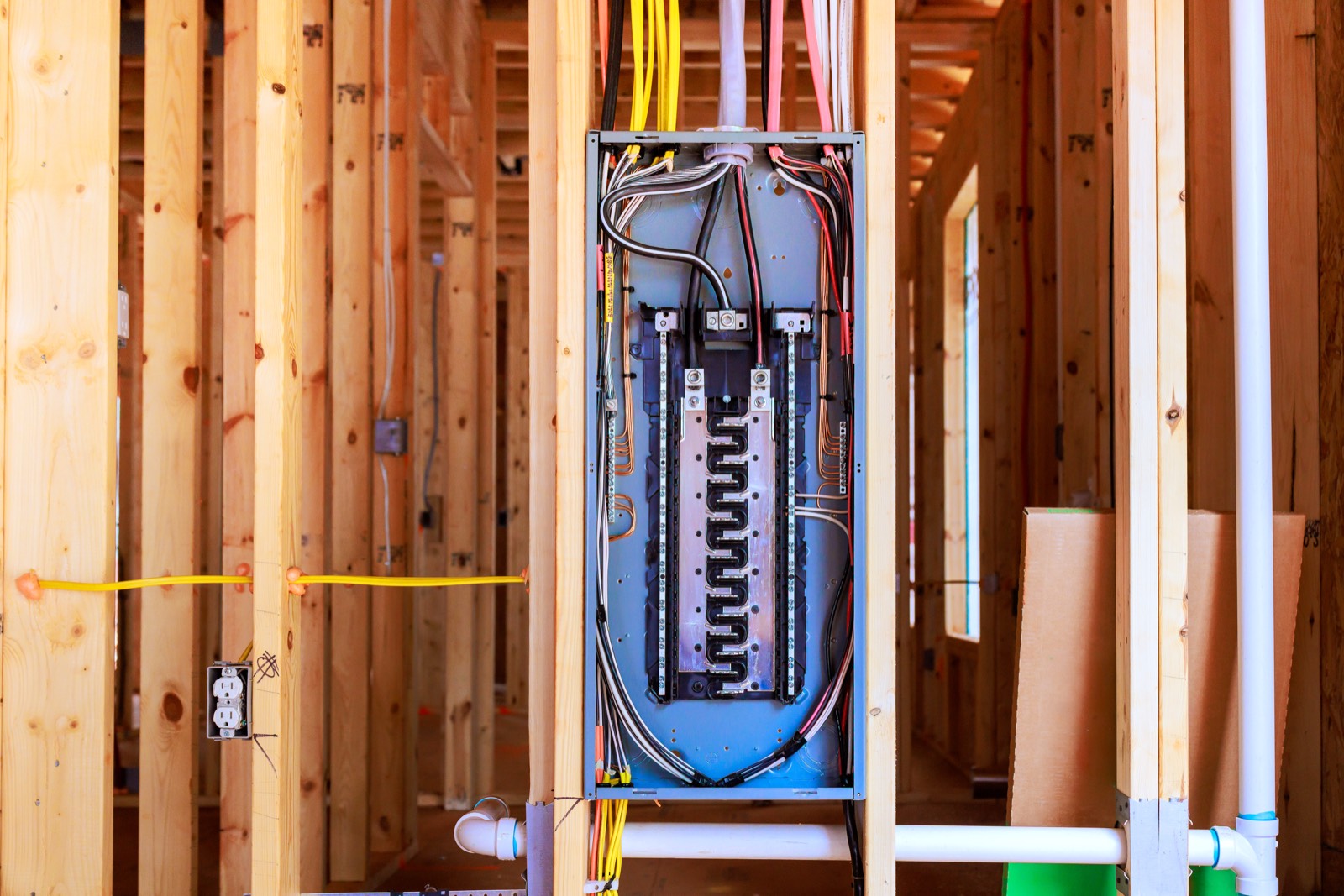
A licensed electrician will look for damage that is not visible from the outside, including:
- Rust on the panel enclosure, breaker frames, screws, and mounting rails.
- Corrosion on copper or aluminum conductors at lugs and neutral bars.
- Staining or mineral tracks where water travelled across insulating surfaces.
- Breakers that no longer seat tightly on the bus.
- Heat marks or pitting on breaker clips and bus stabs.
- Moisture inside cable jackets entering the top of the cabinet.
- Damaged labels, missing circuit identification, or illegible breaker ratings.
- Evidence that water entered the meter base or service raceway.
A breaker can appear normal from the handle side while its internal mechanism has been contaminated. The main breaker is also not a safe “test switch” after water exposure. If the panel has been energized while wet, arcing may have started and stopped without leaving dramatic burn marks on the cover.
This is why replacement is common when water has entered the live interior, especially if the panel is older, corroded, undersized, or already crowded. A standard 100A-to-200A upgrade in the GTA is commonly in the $3,200–$4,500 range when the panel, labour, ESA notification, and inspection are part of the job. If the existing service is a 60A fuse panel, the total is typically higher because the service entrance and meter base often need replacement too.
If the panel is only externally damp because of condensation, the fix may be less invasive: correct the moisture source, improve air sealing or ventilation, replace affected breakers if needed, and document that the interior is safe. But that decision should come after the cover is removed by a licensed electrician, not before.
For broader warning signs beyond water damage, see signs you need an electrical panel upgrade.
The inspection checks both the water path and the electrical damage
A proper wet-panel inspection has two parts: find how the water arrived, then decide what electrical equipment can safely remain. Skipping either half leads to repeat failures.
On the building side, the electrician will trace likely paths above, behind, and outside the panel. That can include the roofline, exterior wall penetrations, cable entries, meter base, service mast, conduit fittings, basement foundation wall, sump area, and plumbing lines. If the source is a roof leak or foundation leak, that repair may need a roofer, plumber, or waterproofing contractor before the electrical repair is finalized.
On the electrical side, the inspection usually includes:
- Removing the dead front only when conditions are safe.
- Checking for moisture trails from the top of the cabinet and service conductors.
- Inspecting the main breaker, branch breakers, bus assembly, neutral bar, ground bar, and lugs.
- Looking for rust, oxidation, pitting, overheating, and loose terminations.
- Confirming bonding and grounding are intact.
- Checking whether water reached branch circuit cables or conduits.
- Identifying any obsolete, overloaded, or damaged panel equipment.
- Determining whether ESA notification is required for repair or replacement.
If panel replacement is required, the work is not just a box swap. The electrician has to coordinate safe shutdown, remove and terminate circuits, verify conductor condition, install properly rated equipment, label circuits, and have the job inspected where required. If the service size changes, utility coordination may also be needed. For timing, see how long an electrical panel upgrade takes.
The ESA inspection is not a cosmetic check. The inspector is looking at whether the installation complies with the Ontario Electrical Safety Code, including service equipment, grounding and bonding, conductor terminations, breaker suitability, panel working space, and the parts of the repair that required notification. If the water source affected the meter base or service conductors, the utility may also be involved before power is restored.
Replacement is likely when there is corrosion, service water, or repeated moisture
If water entered the live interior, if there is visible corrosion, or if the source is the service entrance, expect replacement to be seriously considered. Drying a panel with a fan, towel, or space heater does not reverse corrosion, restore breaker calibration, or prove that bus connections are safe.
Replacement becomes more likely when:
- The panel has rust inside, not just on the outer cover.
- Breakers show staining, swelling, or loose fit.
- Water entered from the top through the service raceway.
- The main breaker or service lugs were exposed.
- The panel is an older fuse panel or already near capacity.
- There are signs of previous leaks or repeated condensation.
- The panel is in a location prone to flooding.
- The manufacturer’s equipment is obsolete or replacement breakers are not suitable.
If the panel location itself is the problem, moving it may be part of the discussion, especially where a basement wall repeatedly leaks or the working area is compromised. That is a separate scope from a standard replacement; see what it costs to move an electrical panel.
The safest path is simple: stay away, stop the water source, have the equipment inspected, and replace damaged parts before re-energizing. A wet panel is one of the situations where waiting for it to “dry out” can turn a repairable problem into a fire or shock hazard. If you are in Toronto or the GTA, panel upgrade and replacement service is the right route when the inspection shows the panel cannot remain in service.
Want a licensed electrician to take a look?
Free written quote, usually the same day. ESA permits handled.
People also ask
Can I turn off the main breaker if my electrical panel is wet?
Do not touch the main breaker if the panel, floor, wall, or surrounding metal is wet. The breaker handle and cabinet may be energized or contaminated. Stay clear and call emergency help. If power must be disconnected, a licensed electrician or the utility can determine the safe way to shut it down.
Is a little condensation inside an electrical panel dangerous?
Yes, it can be. Condensation may look minor, but repeated moisture cycles corrode breaker clips, neutral bars, screws, and bus connections. The panel should be opened only by a licensed electrician, the moisture source should be corrected, and any corroded or water-damaged components should be replaced.
Does a wet panel always need to be replaced?
Not always, but replacement is common when water reached the breakers, bus bars, main lugs, or service conductors. Surface dampness from nearby humidity may be repairable after inspection. Drying alone is not enough if there is corrosion, pitting, loose breaker fit, or evidence that energized parts were wet.
Who fixes water coming through the electrical service conduit?
An electrician diagnoses and repairs the electrical side, but the utility may need to disconnect or reconnect service equipment, and ESA inspection may be required. If the cause is a damaged weatherhead, mast, meter base, exterior conduit, or seal, the repair has to address the water path before the panel is re-energized.