
Answered by a licensed electrician
Can I sell a house with knob and tube wiring?
Quick answer
Yes, you can sell a house with knob and tube wiring in Ontario, but sale legality is separate from insurance and lender approval. Many buyers will need an insurer willing to bind coverage before closing. Full knob-and-tube replacement in a typical Toronto home often falls around $9,000–$15,000, depending on access and finishes.
Yes, you can sell it, but the sale, insurance, and mortgage are three different problems
A house with knob-and-tube wiring can be listed and sold in Ontario, but that does not mean every buyer can insure it, finance it, or close without conditions. Those are separate gates.
A real estate agreement deals with ownership transfer. The buyer’s insurer decides whether they will issue coverage. The lender usually requires proof of acceptable home insurance before funding the mortgage. If insurance is refused, limited, or conditional on repairs, the financing can become the real obstacle even if the buyer still wants the house.
For sellers, this matters before the listing goes live. If knob and tube is discovered after an offer, it often turns into a price reduction, holdback request, repair condition, or failed closing. If you know it is present, get it assessed early so you can price the house, disclose properly through your real estate and legal advisers, and decide whether replacement before listing makes sense.
Common deal paths look like this:
| Situation | What usually happens |
|---|---|
| Small abandoned sections only | Electrician documents what is inactive and what remains in service |
| Active knob and tube serving lights or receptacles | Buyer’s insurer may ask for replacement or a firm remediation plan |
| Mixed old wiring, ungrounded outlets, and older panel | Buyer may request a larger electrical allowance or inspection condition |
| Seller replaces before listing | Cleaner negotiation, ESA documentation, and fewer insurance surprises |
| Buyer takes it on after closing | Price, timing, insurance binder, and access for work must all line up |
This is not legal advice. Disclosure duties and contract wording should come from your real estate lawyer and realtor. Electrically, the safest first step is a licensed assessment, not opening walls or disturbing old wiring to see where it goes.
Disclosure is not the same as diagnosis; get the wiring identified before you negotiate
If you suspect knob and tube, confirm what is active, what has already been replaced, and what is only old abandoned material left in walls or ceilings. A buyer, insurer, or lender will treat those differently.
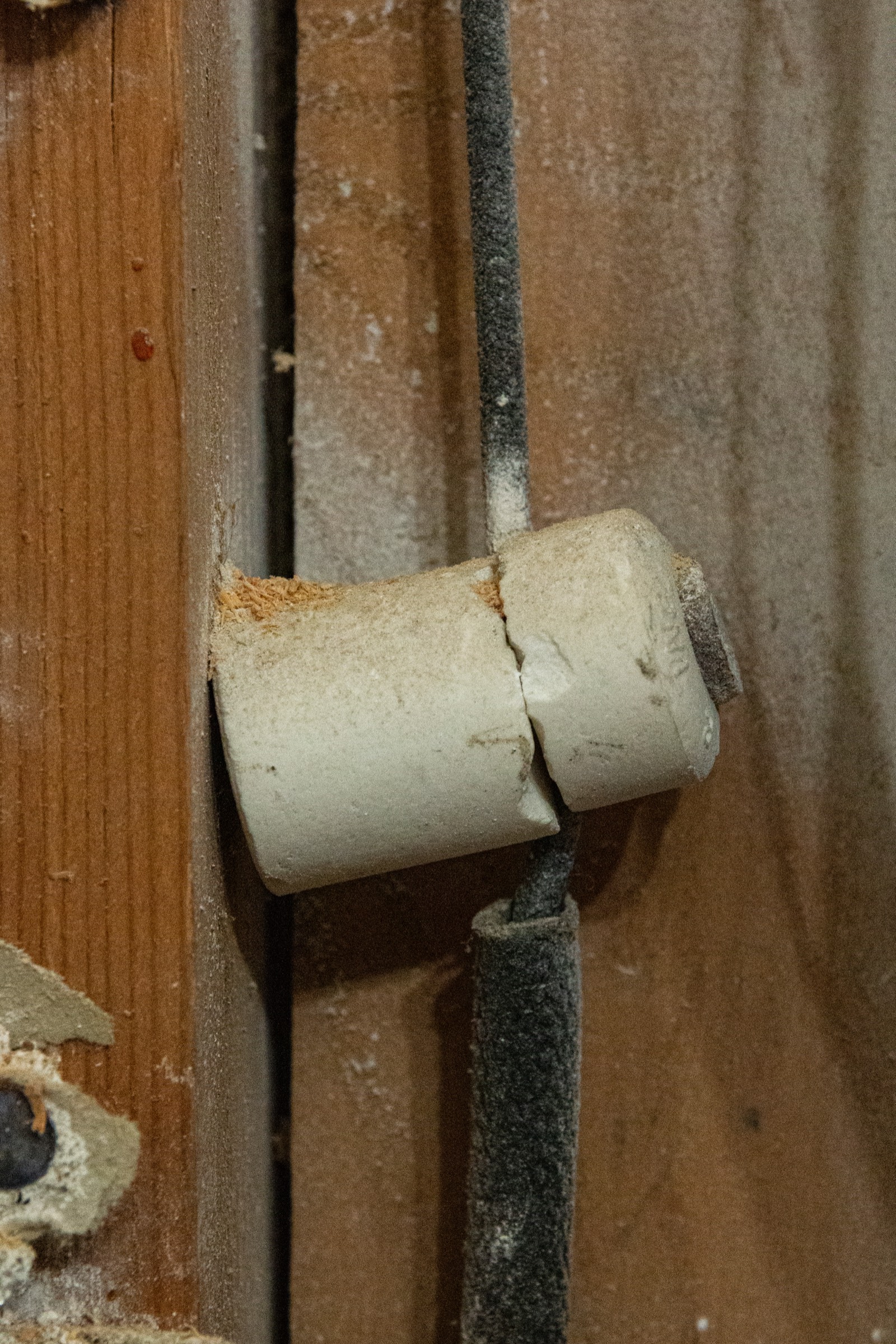
Knob-and-tube wiring is usually found in older Toronto and GTA homes. It has separate conductors run through ceramic knobs and tubes, no equipment bonding conductor, and often feeds original ceiling lights, upper-floor bedrooms, plaster-wall receptacles, or older switch loops. It may be mixed with newer cable in the same house after decades of renovations.
An electrical assessment should answer specific questions:
- Which circuits are still active knob and tube?
- Are any original circuits buried under insulation or altered by renovations?
- Are there ungrounded three-slot receptacles that look modern but are not actually bonded?
- Are junctions accessible in boxes, or are there hidden splices?
- Has newer wiring been tied into old wiring in unsafe ways?
- Does the panel schedule match what the circuits actually feed?
- Are there other deal issues, such as a 60 amp service, fuse panel, or missing grounding/bonding?
A home inspection may flag suspected knob and tube, but it is usually visual and limited. A licensed electrical inspection can trace circuits, test outlets, check the panel, and give a written scope. If you are not sure what you are seeing, start with how to identify knob-and-tube wiring before assuming the whole house needs replacement.
Do not pull on old cloth-insulated conductors, add devices, bury junctions, or remove sections yourself before closing. Disturbing brittle insulation can turn a negotiable condition into a live safety problem. It can also make documentation harder because no one can clearly tell what was present, active, or altered.
Insurance is often the deciding factor, not whether the house can legally be sold
The practical question is usually: will the buyer’s insurer cover the house at closing? Some insurers decline active knob and tube outright. Others may offer temporary coverage only if replacement is completed within a stated time. Some want an electrician’s report before they decide.
That is why a seller should not assume “it has been there for decades” will satisfy the buyer’s insurer. Insurance underwriting is about risk, documentation, and current condition. Knob and tube lacks a bonding conductor, was not designed around modern appliance loads, and may have been modified many times by previous owners.
For buyers, the key is to speak with insurance before waiving conditions. If the insurer needs an electrical report, get one in writing. If they require removal, confirm whether coverage starts immediately, whether there is a deadline, and whether proof of ESA-inspected work will be required after repairs.
Our knob and tube insurance guide for Ontario covers the insurance side in more detail, but the practical closing checklist is simple:
- Ask the insurer whether active knob and tube is acceptable.
- Find out whether they need a licensed electrician’s letter or full replacement.
- Confirm the timeline for repairs after closing, if any.
- Make sure the lender is satisfied with the insurance binder.
- Put repair responsibility clearly into the agreement if work is being done before closing.
If the house also has a very small service, the electrical issue may not be limited to knob and tube. Older homes with active knob and tube sometimes also have 60 amp service or fuse panels, which can raise separate insurance and capacity concerns. Compare that with buying a house with 60 amp service if both issues are present.
Partial replacement can help only when the remaining wiring is clearly inactive or acceptable
A partial replacement is sometimes enough for a sale, but only when the scope is clear and the documentation is credible. Replacing one visible run does not solve active knob and tube hidden in ceilings, second-floor walls, or old lighting circuits.
Partial work may make sense when a licensed electrician can prove the remaining old wiring is abandoned, or when only a limited area is active and the buyer’s insurer accepts a targeted scope. For example, replacing active bedroom and hallway lighting while documenting that old basement-visible sections are disconnected is very different from cutting out random accessible pieces.
Full replacement is usually cleaner when active knob and tube feeds multiple rooms, when plaster walls hide much of the route, or when the buyer needs clear insurance approval. In a typical Toronto house, full replacement commonly lands in the $9,000–$15,000 range, with access, finished walls, attic/basement routes, and panel condition driving the final number. See the Ontario knob-and-tube removal cost breakdown for the cost factors without guessing from room count alone.
The work is more than swapping wire. A proper replacement usually includes:
- New grounded branch circuits where old two-wire circuits were serving receptacles.
- New switch legs where old lighting loops were run without modern cable assemblies.
- Accessible junction boxes with proper covers.
- Arc-fault and GFCI protection where required by the current Ontario Electrical Safety Code for the new work.
- Panel labelling that matches the new circuits.
- ESA notification and inspection where required.
- Coordination with drywall, plaster, or painting repairs when finished surfaces must be opened.
City Power is a Licensed Electrical Contractor, ECRA/ESA #7015314, and for knob-and-tube replacement we file ESA notifications where required, arrange inspection, and provide a written scope so sellers, buyers, insurers, and lawyers are not relying on a verbal promise.
The best route before listing is assessment, written scope, then replacement if the deal needs it
Before listing, get enough information to choose a selling strategy. You do not always need to replace everything before the first showing, but you should not be surprised by the issue after an offer.
A practical seller sequence is:
- Walk the house with a licensed electrician before listing if knob and tube is suspected.
- Identify active, inactive, and already-replaced areas.
- Get a written scope separating safety-critical work from optional modernization.
- Ask your realtor and lawyer how the condition should be disclosed.
- Decide whether to replace before listing, price the house accordingly, or prepare a repair credit negotiation.
- Keep ESA and contractor documentation ready for buyers and insurers.
For buyers, the sequence is slightly different. Do not rely only on the listing statement or a quick basement look. Put electrical access and insurance timing into the condition period, then get the wiring assessed before waiving. If replacement is needed after closing, confirm access, budget, and whether you can insure the house during the work window.
Knob and tube is manageable when everyone knows what is active and what the insurer needs. It becomes expensive and stressful when it is discovered late, half-removed without documentation, or treated as a DIY project. If the goal is a clean closing, book a knob-and-tube assessment and replacement plan before the negotiation depends on guesswork. For related buyer questions, our electrical answers hub covers older-home issues that often come up at the same time.
Want a licensed electrician to take a look?
Free written quote, usually the same day. ESA permits handled.
People also ask
Do I have to remove knob and tube before selling in Ontario?
Not automatically. A house can be sold with knob and tube, but the buyer’s insurer or lender may make removal a condition of coverage or financing. Sellers should get the wiring assessed early, then speak with their realtor and lawyer about disclosure and whether replacement, a price adjustment, or a closing condition is the best route.
Will a buyer get a mortgage on a house with knob and tube?
Possibly, but mortgage funding normally depends on acceptable home insurance being in place for closing. If the insurer refuses active knob and tube or requires repairs first, the lender may not fund until that condition is resolved. Buyers should confirm insurance in writing before waiving financing or inspection conditions.
Can I replace only part of the knob and tube wiring?
Sometimes, but partial replacement only helps if a licensed electrician can clearly document what remains active and what is abandoned. Randomly removing visible sections is not enough. Insurers usually care about active knob and tube still feeding lights or receptacles, especially if it has been altered or hidden by renovations.
How much should sellers budget for knob and tube replacement?
For a typical Toronto home, full knob-and-tube replacement often falls around $9,000–$15,000. The final quote depends on access through basement and attic spaces, plaster or drywall repairs, how many circuits are active, and whether the panel also needs work. Get a written site-specific scope before setting a listing strategy.