Answered by a licensed electrician
How do I know if I have knob-and-tube wiring?
Quick answer
Look in your basement, attic, and unfinished spaces for the telltale signs: white ceramic knobs anchoring single wires to joists, ceramic tubes where wires pass through wood, and individual cloth- or rubber-insulated wires running separately rather than bundled in a cable. Other clues are two-prong outlets throughout, no ground wires, and a home built before about 1950. Confirming it matters because knob-and-tube affects insurance, safety, and home sales.
Knob-and-tube (K&T) was the standard wiring method in North American homes built before roughly 1950, and a surprising amount of it is still live in Toronto's older neighbourhoods. Identifying it matters: it affects your insurance, your safety, and what happens when you buy or sell. Here's how to spot it.
What to look for
K&T is easy to recognize once you know the parts. Head to the unfinished areas of your home — the basement ceiling, the attic, and any exposed joists — and look for:
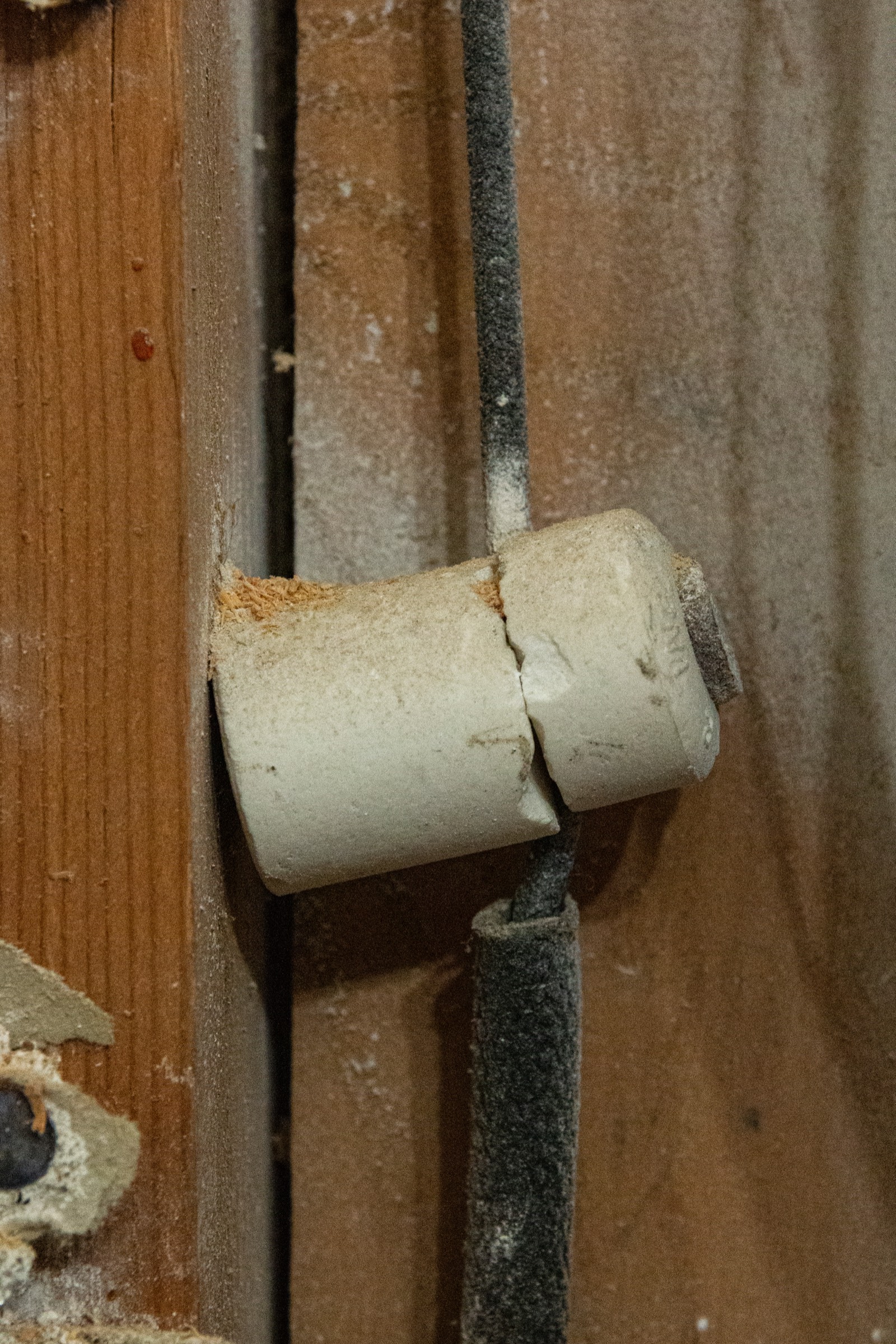
- Ceramic knobs: small white or off-white spool-shaped insulators nailed to the sides of joists and studs, holding single wires suspended in the air a short distance from the wood.
- Ceramic tubes: white tubes lining the holes where wires pass through joists, studs, or floor framing, protecting the wire from the wood.
- Single, separate conductors: unlike modern cable, which bundles hot, neutral, and ground inside one plastic sheath, K&T runs the hot and neutral as two individual wires spaced apart, with cloth or early rubber insulation.
If you see white ceramic hardware and lone wires strung through the framing, that's knob-and-tube.
Indirect clues elsewhere in the house
You won't always have access to open framing, so look for secondary signs: two-prong (ungrounded) outlets throughout the home, no ground wires at switches and outlets, cloth-covered wiring entering the panel, and an older fuse box rather than a modern breaker panel. A build date before about 1950 — common across older Toronto, Hamilton, and inner-GTA homes — raises the odds considerably. Often a home is partly updated: modern wiring downstairs, original K&T still feeding the upstairs or attic. For the home-buying angle, see is it safe to buy a house with aluminum wiring, which covers the same insurance and inspection issues.
Why confirming it matters
Knob-and-tube was sound engineering for its era, but three things make active K&T a liability today. It has no ground wire, so it can't safely handle modern electronics or protect against faults. Its insulation embrittles over a century and cracks when disturbed, exposing bare conductor. And it was designed to shed heat into open air — when later owners blow insulation into attics and walls over it, the wire can no longer cool and becomes a fire risk. On top of that, decades of overloading and amateur splices add up. The practical consequence many homeowners hit first is insurance: numerous Ontario insurers refuse coverage, surcharge heavily, or demand removal of active K&T.
What to do if you find it
Don't panic, but do get it assessed. A licensed electrician will determine how much is still live, whether it's been compromised, and whether you need targeted knob-and-tube replacement or a whole-home rewire. We provide written documentation suitable for your insurer, which often resolves coverage problems on its own. If you're buying a home and suspect K&T, an electrical inspection before closing tells you the real scope and cost. Call 416-837-4038 or request an assessment — we work throughout the GTA and know these older homes well.
Want a licensed electrician to take a look?
Free written quote, usually the same day. ESA permits handled.
People also ask
What does knob-and-tube wiring look like?
Two giveaways: white or off-white ceramic knobs (small spool-shaped insulators) nailed to joists and studs that suspend single wires in the air, and ceramic tubes lining the holes where wires pass through wood framing. The wires themselves are individual conductors with cloth or rubber insulation, run separately rather than grouped inside a modern plastic-sheathed cable.
Is knob-and-tube wiring safe?
It was safe when installed but is now a recognized hazard: it has no ground wire, its insulation embrittles and cracks with age, it overheats when buried in modern attic insulation, and it's often been overloaded or amateur-modified over decades. Many Ontario insurers will not cover, or will surcharge, a home with active knob-and-tube.
Can I have only part of my house on knob-and-tube?
Yes, and it's very common. Homes get partially updated over the years, so you might find modern wiring on the main floor and original knob-and-tube still feeding the second floor, attic circuits, or specific rooms. That's why a proper inspection checks every accessible area, not just one panel.