Code, permits & compliance
Knob and Tube Insurance Ontario
Ontario does not have a simple rule that every old knob-and-tube circuit must be removed just because it exists. In practice, insurers, lenders and buyers often require active knob-and-tube wiring to be replaced, decommissioned or documented by a licensed electrical contractor with ESA-permitted work where circuits are rewired.
The rule is risk-based: the code controls electrical work, while insurers decide coverage
Active knob-and-tube wiring is an insurance problem because it is old, usually ungrounded, and often has been altered many times since it was installed. The Ontario Electrical Safety Code governs how electrical work must be done today, and the Electrical Safety Authority administers notifications and inspections. Your insurance company separately decides whether the home is an acceptable risk.
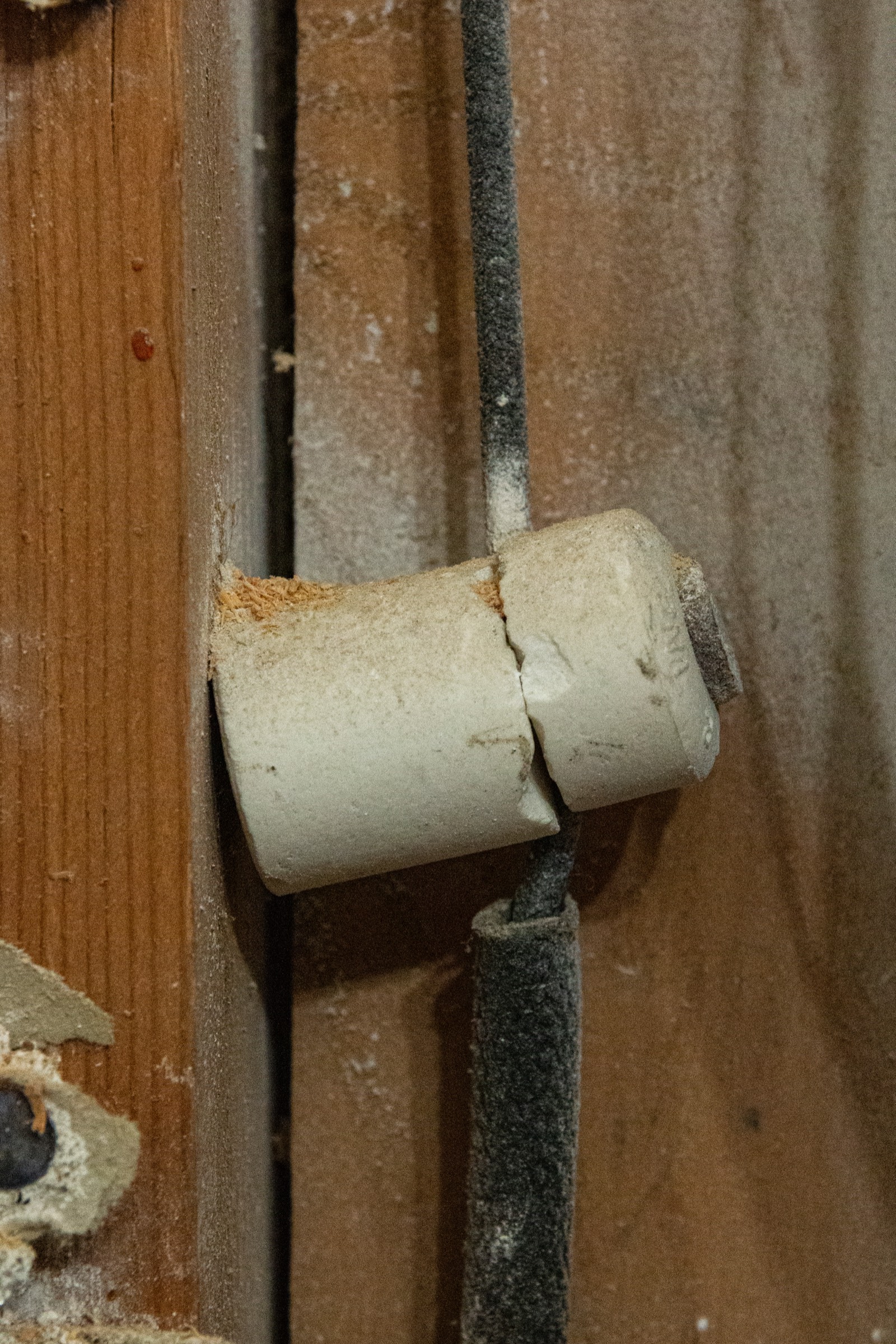
That difference matters. A house may still contain visible, disconnected porcelain knobs in a basement ceiling and not have active knob-and-tube supplying outlets. Another house may have original two-wire branch circuits still feeding bedrooms, lights and receptacles. Insurers care about the second situation.
The usual underwriting concerns are specific:
- No bonding conductor on the original two-wire circuits, so three-slot receptacles may give a false sense of grounding.
- Brittle cloth or rubber insulation, especially at fixtures where heat has cooked the conductors.
- Open-air wiring run through porcelain knobs and tubes, which was not designed to be buried under modern insulation.
- Unknown splices hidden above ceilings, in plaster walls, or outside approved junction boxes.
- Mixed old and new wiring where a newer cable has been tied into knob-and-tube instead of replacing the full circuit.
Insurers may decline coverage, add conditions, limit water or fire coverage, impose a deadline, or require proof that active knob-and-tube has been corrected. The exact decision is underwriting, not an ESA decision. But when correction involves replacing circuits, that work must follow the OESC and be filed with the ESA where required.
If you are not sure what is active, start with a proper identification step. Our guide on how to know if you have knob-and-tube wiring explains the visible signs, but confirmation usually requires opening devices, tracing circuits and testing.
What insurers usually require in practice is proof, not just a verbal promise
Most insurance requests fall into one of three categories: remove active knob-and-tube, replace only the active portions found, or document that old wiring is already decommissioned. Those are not the same scope.
Full removal means the active knob-and-tube branch circuits are replaced with modern cable, proper boxes, bonding where required, correctly rated breakers, and devices that match current code requirements for the areas served. For Ontario homeowners dealing with insurance requirements, replacing all knob-and-tube wiring in a typical Toronto house usually costs $9,000–$15,000, with the final price shaped by the home’s size, wall finishes, and access conditions. For a deeper cost discussion, see our knob-and-tube removal cost guide.
Partial replacement is narrower. It may be appropriate when only one or two active knob-and-tube circuits remain, or when a renovation exposes a limited area. The risk is that partial work can leave hidden active sections behind if the electrician does not trace the complete circuit. A bedroom light, hallway receptacle and attic junction may all be on the same old branch circuit even if they look unrelated from the panel.
Documenting decommissioned wiring is different again. Many older Toronto and GTA homes still have dead knobs, tubes and cut conductors in joist bays after previous renovations. If those conductors are not energized and no longer supply loads, the practical need may be documentation rather than demolition of every porcelain part. Insurers often want a written letter or report stating that the visible knob-and-tube is abandoned, with testing notes and photos where helpful.
Where circuits are rewired, City Power files the required ESA notification, completes the work to the OESC, and arranges inspection. Our knob-and-tube replacement service is built around that insurance documentation path: identify, replace or decommission, inspect, then provide paperwork the insurer can review.
The replacement work must be ESA-permitted when new circuits are installed
Replacing active knob-and-tube is not just a cosmetic upgrade; it is new electrical work. In Ontario, that normally means an ESA notification before the work proceeds and an inspection process before it is closed out. The notification is the electrical permit process used in Ontario.
A proper replacement scope deals with the whole circuit, not just the easiest visible section. In practice, that can include:
- Tracing the old branch circuit from the panel to every outlet, switch, light and splice it supplies.
- Replacing unsupported or concealed splices with approved junction boxes and covers.
- Installing modern cable through basements, attics, closets or wall cavities with protection where required.
- Replacing ungrounded three-slot receptacles or correcting them with code-compliant methods.
- Updating switch legs at ceiling fixtures where old two-wire drops are damaged by heat.
- Labelling the panel so the corrected circuits can be identified later.
The ESA inspector is not there to satisfy an insurance checklist; the inspector checks electrical compliance. That includes workmanship, conductor protection, box fill, grounding and bonding, device suitability, overcurrent protection, and whether the corrected installation matches the filed scope. If a circuit is extended or substantially replaced, related current-code requirements may also apply, such as protection for certain receptacle circuits. For broader permit mechanics, see the ESA notification process in Ontario.
The important point for homeowners is timing. Do not let drywall, built-ins, attic insulation or ceiling repairs cover the work before inspection access is resolved. Knob-and-tube replacement often runs through finished plaster homes, and hiding work too early can create delays or require reopening finishes.
Common mistakes are caught when the insurer, buyer or ESA asks for evidence
The biggest mistake is treating knob-and-tube as a visual nuisance instead of an active wiring system that must be traced. Cutting a visible old wire in the basement does not prove the upstairs portion is dead. Removing porcelain knobs from joists does not prove the circuit has been replaced. Installing new receptacles on the first floor does not prove the ceiling lights are no longer on knob-and-tube.
Other problems we often see include bootleg grounds, where a three-slot receptacle is made to appear grounded without a real bonding path; new cable spliced onto old conductors in a hidden cavity; and attic knob-and-tube covered by blown-in insulation. Those conditions are exactly why insurers are cautious. The visible panel may look tidy while the risky part is above a plaster ceiling.
Another mistake is assuming a general home inspection is enough. A home inspector may flag suspected knob-and-tube, but insurance correction usually needs electrical documentation from a qualified person, and rewiring work needs the ESA process. A lender or insurer may reject vague wording such as “appears updated” if it does not say whether active knob-and-tube remains.
Insurance deadlines can also create bad decisions. A homeowner may ask for a quick letter without allowing enough access for testing. A buyer may waive conditions and discover after closing that coverage requires correction. A seller may complete partial work but fail to keep the ESA paperwork. If you need formal proof after inspection, our guide to the ESA Certificate of Acceptance in Ontario explains what that document does and does not prove.
Knob-and-tube is also sometimes found alongside other underwriting concerns, such as a fuse panel, a 60 amp service, or aluminum branch wiring from a later renovation. Those are separate issues. If the insurer has flagged service size, read the 60 amp service home insurance guide so the scopes do not get mixed together.
At sale, mortgage, renewal or claim time, written proof is what matters
Knob-and-tube pressure usually appears at a transaction point. A buyer’s insurer may ask before issuing a binder. A mortgage lender may require confirmation that insurance is in place before closing. A renewal underwriter may send a deadline after reviewing an older-home questionnaire. After a fire or electrical claim, the insurer may investigate whether known wiring risks were disclosed or corrected.
Common proof requests include:
- A letter from a licensed electrical contractor stating whether active knob-and-tube remains.
- An ESA certificate or inspection record for replacement work that required notification.
- Photos of corrected wiring, junction boxes, panel labelling and abandoned old conductors.
- A paid invoice describing the actual scope, not just “electrical repairs.”
- A panel schedule showing which circuits were replaced.
For sellers, the cleanest path is to identify the issue before listing. If active knob-and-tube remains, price and timing can be managed openly. If old wiring is decommissioned, documentation can prevent a last-minute insurance objection. For buyers, do not rely on a listing phrase like “updated electrical” without confirming whether it includes the old lighting circuits, second-floor receptacles, attic runs and basement splices.
For homeowners under an insurance deadline, call the insurer and ask exactly what wording they require. Some want full removal of active knob-and-tube. Some accept partial replacement plus confirmation that no active knob-and-tube remains in accessible areas. Some require an ESA record for all rewired circuits. Get that in writing before work starts.
What to do next is identify, scope, permit and document the correction
The practical next step is an electrical assessment focused on active knob-and-tube, not a generic walkthrough. For knob and tube insurance work in Ontario, City Power Electrical Services operates as a Licensed Electrical Contractor, ECRA/ESA #7015314, led by Sam, a licensed electrician with more than 15 years of trade experience. We serve Toronto and the GTA from our North York office and provide free written estimates.
A proper insurance-response process looks like this:
- Review the insurer’s letter, deadline and required wording.
- Open and test representative devices, lights, attic runs and basement wiring.
- Separate active knob-and-tube from abandoned historical remnants.
- Quote replacement or decommissioning in writing.
- File the ESA notification where rewiring is required.
- Complete the work, clean up, and arrange inspection.
- Provide the invoice, inspection documentation and contractor letter the insurer can review.
If the home is being bought or sold, start early. Knob-and-tube correction can involve plaster access, attic work, panel changes, fixture rewiring and coordination with other trades. The electrical work is manageable, but the paperwork clock is often the stressful part.
For help with an insurer letter, closing condition or renewal deadline, call City Power at 416-837-4038. If the issue is urgent, we offer 24/7 emergency service, and every job is permitted with the ESA where required and inspected.
Want a licensed electrician to take a look?
Free written quote, usually the same day. ESA permits handled.
Authorities cited
- Electrical Safety Authority (ESA) — notifications, inspections and licensed electrical contractor requirements
- Ontario Electrical Safety Code (OESC) — wiring methods, grounding and branch-circuit replacement rule areas
- Financial Services Regulatory Authority of Ontario (FSRA) — Ontario home insurance underwriting and consumer insurance oversight
- ECRA licensing framework for electrical contractors in Ontario
Common questions
Can I get home insurance in Ontario with knob-and-tube wiring?
Sometimes, but it depends on the insurer and whether the knob-and-tube is active. Many insurers decline, surcharge, limit coverage, or give a deadline to replace or document it.
Does the ESA automatically require all knob-and-tube to be removed?
No. The OESC governs electrical work and safety, but insurance underwriting is separate. When active circuits are rewired or replaced, the work must be done to code and normally requires an ESA notification and inspection.
Is abandoned knob-and-tube the same as active knob-and-tube?
No. Abandoned wiring is not energized and does not supply loads. Active knob-and-tube still powers lights, outlets or switches. Insurers may accept documented decommissioned wiring, but they usually want clear written proof.
What paperwork should I keep after replacement?
Keep the licensed electrical contractor invoice, the ESA inspection record or certificate where applicable, photos if provided, and any letter confirming whether active knob-and-tube remains.