
Office Buildout
From startup spaces to corporate offices, we provide complete electrical services for new office buildouts and tenant improvements.
About office buildoutCommercial kitchen equipment wiring connects ovens, mixers, warmers, dishwashers and prep equipment safely for restaurants, cafés, bakeries and commissary kitchens. We help during openings, equipment upgrades, inspections and contractor-led buildouts.
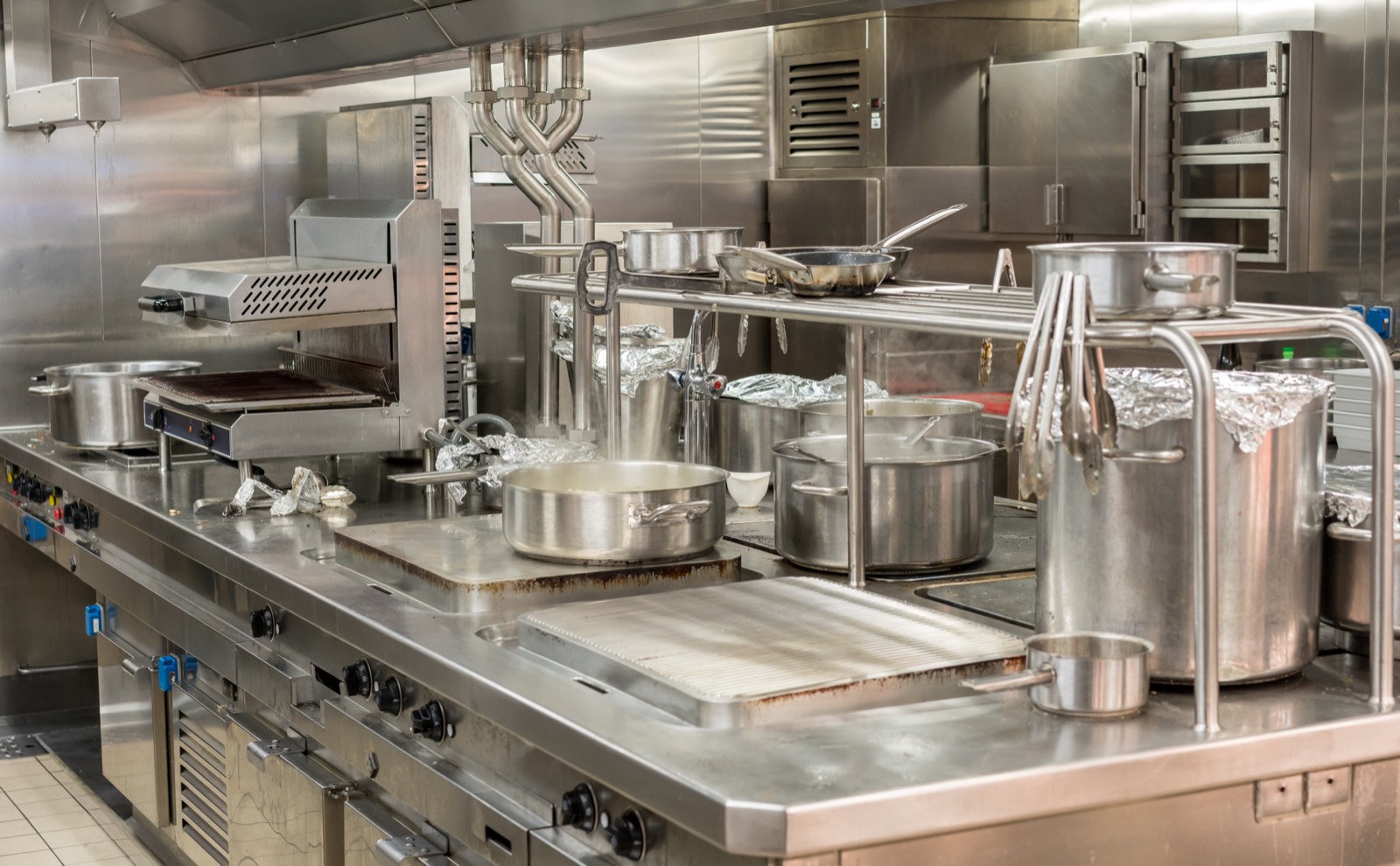
Restaurant equipment is not wired by guesswork. Every oven, mixer, dishwasher, warmer, booster heater or prep appliance has a nameplate that tells us the voltage, phase, amperage, minimum circuit ampacity and maximum overcurrent protection. That nameplate, plus the manufacturer’s installation instructions, drives the circuit size, breaker, conductor, disconnect and connection method.
In a working commercial kitchen, the difference between “it turns on” and “it is correctly wired” matters. A mixer may need a dedicated 120V receptacle with the right cord cap. A conveyor oven or combi oven may need a 208V or 240V hardwired connection. A dishwasher may involve a motor load, a heater load and control wiring supplied by the equipment vendor. Prep equipment can also arrive with different plug configurations than the space currently has.
Our scope commonly includes:
For full restaurant buildouts, this work usually fits inside a broader restaurant wiring project. For a single equipment change, it can often be handled as a focused site visit once the equipment data is available.
The best time to call is before the delivery truck arrives. Commercial kitchen equipment is heavy, tight to walls and often boxed in by stainless tables, hoods, gas lines, floor sinks and millwork. If the electrical connection is wrong, the installer may not be able to commission the unit, and moving it again can delay the opening.
We often see restaurant owners call for commercial kitchen equipment wiring when:
The key step is matching the electrical rough-in to the actual equipment submittal, not to an old floor plan. Restaurant equipment suppliers sometimes substitute models, and two similar appliances can have very different electrical requirements. A dishwasher with a booster heater, for example, can have a much larger load than a low-temperature unit supplied by a different vendor. A countertop appliance may look small but still require its own circuit.
We coordinate with equipment suppliers, general contractors, millwork teams, plumbers, gas fitters and hood contractors so the power lands in the right place. That includes mounting height, clearance from hot surfaces, whether the unit is cord-and-plug or hardwired, and access to the disconnect after the kitchen is finished.
If the issue is an existing circuit tripping, a failed connection or an unknown power problem, we may route the call through commercial electrical troubleshooting first. If the equipment has compressors or walk-in components, refrigeration electrical wiring may also be part of the scope. If the equipment includes starters, contactors or control panels, we can coordinate the power side with motor control wiring.
Commercial kitchen equipment wiring must comply with the Ontario Electrical Safety Code. Where required, we file the ESA notification, complete the wiring as a Licensed Electrical Contractor, and arrange inspection. City Power Electrical Services is an ECRA/ESA Licensed Electrical Contractor, #7015314.
For added equipment, the first technical question is capacity. A restaurant panel may already be carrying refrigeration, make-up air, exhaust, lighting, POS systems, dishwashing, small appliances and HVAC. Adding one more high-load appliance can overload a panel, unbalance a three-phase service or exceed the available spare breaker space.
A capacity review may include:
ESA inspection is not just paperwork. For this type of work, the inspector may look at conductor sizing, breaker rating, box fill, disconnect location, bonding, GFCI protection where required, cable protection and whether the installation follows the approved equipment instructions. In a kitchen, physical protection matters because carts, stainless tables, washdown, heat and cleaning chemicals are part of daily use.
We do not recommend reusing an existing circuit just because the old appliance worked on it. The old circuit may be undersized, shared with other loads, lacking required protection, or wired for a different voltage or phase. We also do not bypass equipment instructions to make a connection fit an existing receptacle. The equipment, the OESC and the site conditions determine the safe installation.
We start by asking for the equipment cut sheet or a clear photo of the nameplate. If drawings are available, we review the electrical schedule and kitchen layout. On site, we confirm the panel, route, ceiling or wall access, distance to the equipment, finished surfaces, working clearances and whether other trades need to move first.
After that, we provide a free written estimate. Small equipment connections can sometimes be priced from site conditions and equipment data. Larger kitchen changes, multiple circuits or panel work are quoted in writing after a site visit. Restaurant electrical in the GTA typically runs $20,000–$80,000 depending on kitchen equipment load, dining room lighting design, and whether the base building service needs upgrading. A single equipment wiring job is not priced from that band; it is quoted based on the actual equipment, route, access and permit requirements.
A typical workflow looks like this:
For restaurants that want fewer surprise failures after opening, we can roll equipment circuits into commercial preventive maintenance. That is separate from the initial wiring, but it helps catch loose terminations, heat damage, worn receptacles and overloaded plug strips before they shut down a prep line.
City Power serves Toronto and the GTA, including North York, Scarborough, Etobicoke, Mississauga, Brampton, Markham, Vaughan, Richmond Hill, Oakville, Burlington, Pickering, Ajax, Whitby, Oshawa and nearby communities. For any service that needs electrical work beyond equipment connections, our full electrical services menu shows related options.
Send the equipment cut sheet or a clear photo of the nameplate, plus the kitchen layout if you have one. We need voltage, phase, amperage, connection type and manufacturer instructions. A site visit confirms panel capacity, route, access and whether an ESA notification is required before we quote the work in writing.
Sometimes, but only if the existing circuit matches the equipment requirements and is safe for reuse. We check breaker size, conductor size, voltage, phase, grounding, GFCI requirements and whether the circuit is shared. If the old circuit was built for different equipment, we may need to install a dedicated circuit.
New circuits, altered wiring and many hardwired equipment connections require an ESA notification and inspection in Ontario. As a Licensed Electrical Contractor, City Power files the notification where required, completes the installation to the Ontario Electrical Safety Code and coordinates inspection. Simple plug-in equipment with no wiring change is different.
Most equipment wiring is quoted in writing after a site visit because cost depends on the equipment load, distance from the panel, finished surfaces, conduit route, breaker availability and ESA requirements. Full restaurant electrical in the GTA typically runs $20,000–$80,000, but a single equipment connection is priced from the actual scope.
From startup spaces to corporate offices, we provide complete electrical services for new office buildouts and tenant improvements.
About office buildout
Industrial and warehouse spaces need robust electrical systems.
About warehouse electricalFree estimates on all projects. Same-day service available across the GTA. Send the details and a licensed electrician replies the same day.
Or call 416-837-4038Free written quote
Tell us about the job and we reply the same day. For an emergency, call 416-837-4038 instead.
A licensed electrician answers every call, day or night.