
Office Buildout
From startup spaces to corporate offices, we provide complete electrical services for new office buildouts and tenant improvements.
About office buildoutCity Power installs commercial EV charging stations for workplaces, retail plazas, medical offices, restaurants, and customer parking areas that need safe Level 2 charging. We plan the electrical capacity, parking layout, permits, and inspection before equipment is installed.
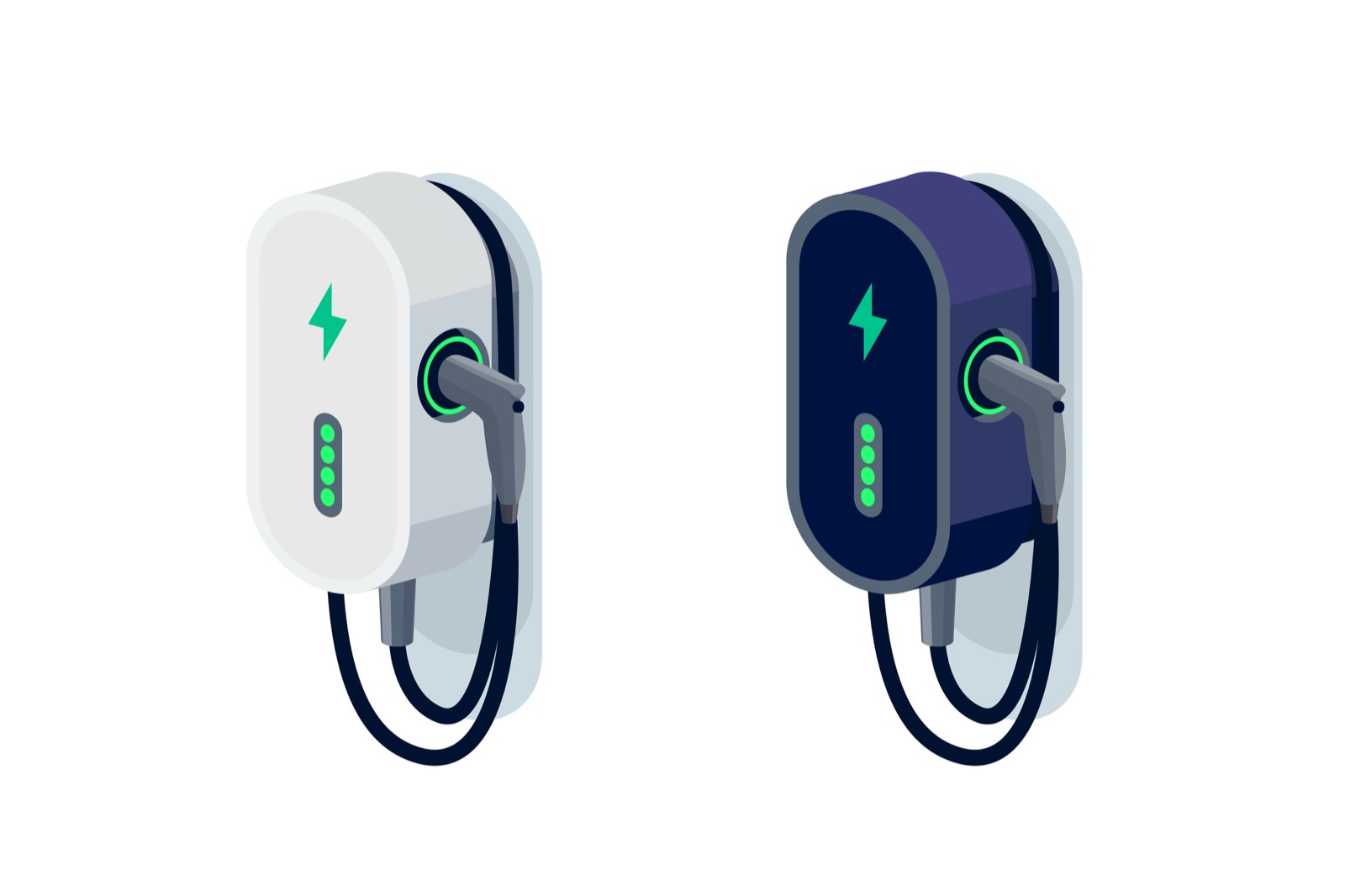
Commercial EV charging stations need a different approach than a single home charger. The first question is not the charger brand. It is whether the building service, panel, transformer, feeder, and parking layout can support the number of charging ports you want without creating nuisance trips, overheating, or a future capacity problem.
City Power Electrical Services is licensed to handle commercial EV charging station electrical work, ECRA/ESA #7015314. Sam, a licensed electrician with fifteen-plus years in the trade, runs the company. For commercial charging, we look at the whole path from the electrical room to the parking space: panel capacity, spare breaker space, conduit route, voltage, charger mounting, weather exposure, and how people will actually park and plug in.
A typical commercial scope can include:
We can also coordinate EV charging work with other building upgrades, such as commercial lighting installation, panel work, or ongoing commercial preventive maintenance, so the electrical room is not opened repeatedly for separate projects.
Commercial EV charging stations make sense when customers, staff, tenants, patients, or visitors are regularly parked long enough for Level 2 charging to be useful. This page is for businesses adding shared charging to a property, not for a single residential driveway charger and not for a dedicated fleet depot design.
Common situations include an office adding employee charging, a retail plaza wanting customer charging near the storefront, a medical or dental building serving longer appointments, a restaurant or hospitality site adding an amenity, or an industrial property offering staff charging in a designated row.
The parking layout matters as much as the electrical room. We look at whether the charger should be wall-mounted on the building, pedestal-mounted between spaces, protected by bollards, placed near accessible routes, or located away from snow storage and delivery paths. Cable length, trip hazards, curb height, wheel stops, line painting, and snow clearing all affect whether the installation works after the first winter.
If you already have a residential-style charger question, start with our EV charger installation service. If the issue is an existing charger tripping, losing power, showing fault codes, or failing after a storm, a commercial electrical troubleshooting visit may be the better first step.
Commercial EV charging work requires proper electrical design, ESA notification where required, and inspection. EV charging is a continuous load, so it cannot be treated like a casual receptacle added wherever there is an empty breaker. The Ontario Electrical Safety Code affects conductor sizing, overcurrent protection, grounding, bonding, outdoor wiring methods, disconnecting means, and equipment approval.
For outdoor parking, we plan for wet locations, physical damage, snow, salt, vehicle impact and service access. Conduit routes may need to cross landscaped areas, asphalt, concrete pads, curbs or underground services. Where trenching is involved, the route must be planned before digging so the charger location and electrical room path match the actual site conditions.
Utility coordination is needed when the charging load affects service capacity. In Toronto and the GTA, that can involve Toronto Hydro, Alectra, Oakville Hydro, Burlington Hydro, Oshawa Power, Elexicon, Hydro One or the local utility for the property. If the existing service has enough capacity, the job may stay inside the building electrical scope. If a service upgrade, transformer review, new meter arrangement or utility shutdown is involved, the schedule and approval path change.
ESA inspection gives the owner a documented electrical sign-off for the installed work. The inspector may check that the charger equipment is approved for use in Ontario, that conductors and breakers are sized correctly, that outdoor wiring is protected and weather-rated, that grounding and bonding are correct, and that the installation matches the filed notification. For broader inspection planning, see how often commercial buildings need electrical inspections in Ontario.
We begin with a site visit. We check the main electrical room, panels, available spaces, service size, existing large loads, likely conduit routes, parking stall layout, wall or pedestal locations, and any outdoor obstacles. For multi-tenant or managed properties, we also discuss ownership approvals, access hours, shutdown windows, charger access rules and whether the chargers will be free, restricted, or networked.
After the site review, we provide a free written estimate. Commercial EV charging stations are quoted in writing after a site visit because the cost depends on the number of ports, distance from the electrical room, trenching, pedestal bases, bollards, building construction, service capacity, charger model, networking requirements and utility involvement. We do not invent a one-size price for commercial parking lots.
Once approved, we schedule the work around the building. If trenching, asphalt cutting, concrete coring or parking closures are required, we identify those steps before installation starts. We file the ESA notification where required, install the wiring and equipment, arrange inspection, and clean up the work area when the job is complete.
City Power serves Toronto and the GTA from our North York office at 1800 Sheppard Ave E, near Fairview Mall at Sheppard and Don Mills. We work across Toronto, North York, Scarborough, Etobicoke, Mississauga, Brampton, Markham, Vaughan, Richmond Hill, Aurora, Newmarket, Oakville, Milton, Burlington, Hamilton, Pickering, Ajax, Whitby, Oshawa and Barrie. For urgent electrical issues outside the planned charger work, our emergency electrician service is available 24/7.
It depends on the existing service, panel capacity, transformer capacity, other building loads and whether the chargers use load management. We review the electrical room, connected loads and proposed charging locations before recommending the number of Level 2 ports. If capacity is tight, options may include staged installation, managed charging, panel changes or utility coordination.
Yes, new commercial EV charger wiring normally requires ESA notification and inspection where required. The installation must meet the Ontario Electrical Safety Code, including proper conductor sizing, overcurrent protection, grounding, bonding, approved equipment and outdoor wiring methods. City Power files the ESA notification where required and arranges inspection as part of the job.
Yes, but the layout has to be planned carefully. Outdoor EV chargers need weather-rated equipment, protected conduit routes, proper mounting, and vehicle-impact protection such as bollards where appropriate. We also look at trenching, snow storage, cable reach, wheel stops, accessible paths, line painting and whether the charger should be pedestal-mounted or attached to the building.
Commercial EV charging stations are quoted in writing after a site visit. Pricing depends on the number of charging ports, distance from the electrical room, trenching or coring, pedestal bases, bollards, charger model, networking, ESA inspection and whether utility coordination or service-capacity work is needed. City Power provides free written estimates before work begins.
From startup spaces to corporate offices, we provide complete electrical services for new office buildouts and tenant improvements.
About office buildout

Industrial and warehouse spaces need robust electrical systems.
About warehouse electricalFree estimates on all projects. Same-day service available across the GTA. Send the details and a licensed electrician replies the same day.
Or call 416-837-4038Free written quote
Tell us about the job and we reply the same day. For an emergency, call 416-837-4038 instead.
A licensed electrician answers every call, day or night.