Local
ULO Rate GTA EV Charging
ULO can make GTA home EV charging very cheap, but only if you actually charge overnight
Ontario’s Ultra-Low Overnight price plan is an optional Ontario Energy Board regulated electricity price plan for eligible residential customers. It is designed for homes that can shift a meaningful amount of electricity use into the overnight window.
For an EV owner in Toronto and the GTA, that usually means one thing: schedule the car to charge after you go to bed, then have it ready before the morning commute.
Most EV drivers do not need a full battery every night. They need the daily kilometres replaced. A Level 2 charger makes that easy because it can add a practical amount of range during the low-price overnight period, instead of slowly catching up over a weekend on a regular 120V outlet.
The key habit is simple:
- Plug in when you get home.
- Use the car app or charger app to delay charging.
- Aim the main charging session for the overnight window, typically 11 p.m. to 7 a.m.
- Avoid heavy weekday charging during the higher on-peak period under ULO.
That last point matters. ULO is not just “cheaper electricity.” It is cheaper at one time and more expensive at another. If your household can move EV charging, laundry, dishwasher loads, and battery storage charging into the overnight window, ULO can fit well. If someone routinely charges at dinner time on weekdays, it can backfire.
If you are still choosing equipment, our GTA EV charger installation service page explains the Level 2 installation side: circuit sizing, panel capacity, ESA notification, and the usual site conditions that affect cost.
The math works best when you compare kWh, not vague monthly bill guesses
The clean way to compare ULO, time-of-use, and tiered pricing is to use kilowatt-hours. Your EV battery and your electricity bill both speak in kWh.
Use this simple scenario: you need to put 75 kWh into the vehicle. That is roughly a full charge for many long-range EVs, though most owners charge smaller amounts more often.
| Scenario | What you are comparing | Energy charge example |
|---|---|---|
| ULO overnight | 75 kWh scheduled in the ultra-low overnight period | A full charge of a 75 kWh battery costs about $2.10 overnight |
| Regular time-of-use off-peak | 75 kWh charged during the regular off-peak period | The same full charge is about $5.70 |
| Tiered pricing | 75 kWh added to your household’s monthly kWh total | Multiply 75 kWh by the tier you are in; heavy EV charging can push more usage into the higher tier |
| ULO weekday on-peak | 75 kWh charged at the wrong time | This is the behaviour ULO is meant to discourage; avoid relying on weekday on-peak charging |
Those figures are the energy line only. Your full bill also includes delivery, regulatory charges, tax, and any fixed charges from your local utility. That is why two GTA households using the same provincial price plan can still see different all-in bills.
For average driving, the published Ontario EV charging comparison is still compelling: expect roughly $35–$60 per month for average driving of 1,500–2,000 km/month on overnight rates. Annualized, a driver covering 18,000 km/year pays roughly $450–$700 charging overnight at home. The same distance in a 9 L/100 km gas vehicle at $1.60/L costs about $2,600.
That gap is why many GTA EV owners start with the rate plan question, then move quickly to the charger question. If the car is plugged into a standard receptacle and cannot reliably recover enough range overnight, the cheap hours are not fully useful.
For a plain-English explanation of the rate structure itself, see what the Ontario ULO rate is. Before changing plans, confirm the current OEB cents/kWh rates and effective date on your utility account, because regulated prices can change.
Your GTA utility affects delivery charges, switching process, and service coordination
The provincial electricity price plans are regulated, but your local distribution company still matters. Toronto Hydro, Alectra, Hydro One, Elexicon, Oshawa Power, Oakville Hydro, and Burlington Hydro customers can all be on provincial price plans, yet see different delivery charges and account details.
That local utility also matters if your EV charger project exposes a service-capacity issue.
Examples we see across the GTA:
- A Toronto semi with a 100A service may have enough capacity for a managed Level 2 charger, or it may need a panel/service upgrade after a load calculation.
- A Mississauga or Brampton detached home on Alectra may have a larger panel but a long finished basement route from panel to garage.
- A Durham home under Elexicon or Oshawa Power may have easier garage access but still need ESA notification for the new 240V circuit.
- A rural-edge property under Hydro One may have a different service layout, longer driveway, detached garage, or overhead-to-underground routing issue.
- Oakville Hydro and Burlington Hydro customers may see different delivery-line economics even when the energy price plan is the same.
If you are not sure which utility serves your address, start with our GTA electrical utility map. It helps separate the utility question from the electrician question.
Changing your rate plan is usually handled through your electricity account, not by the electrician. The electrical work is separate: installing the EV circuit, charger, disconnect if required by the equipment, load-management device if needed, and filing the ESA notification where required.
For condos, the rate plan question can be more complicated. The charger may be on a common electrical service, a dedicated meter, a networked charging system, or a billing platform controlled by the condominium corporation. If that is your situation, read Condo EV Charging Toronto before assuming your suite’s electricity plan controls your parking-space charging cost.
A Level 2 charger lets you hit the cheap window without babysitting the car
ULO only helps if your car can take enough energy during the low-price hours. That is where Level 2 charging earns its keep.
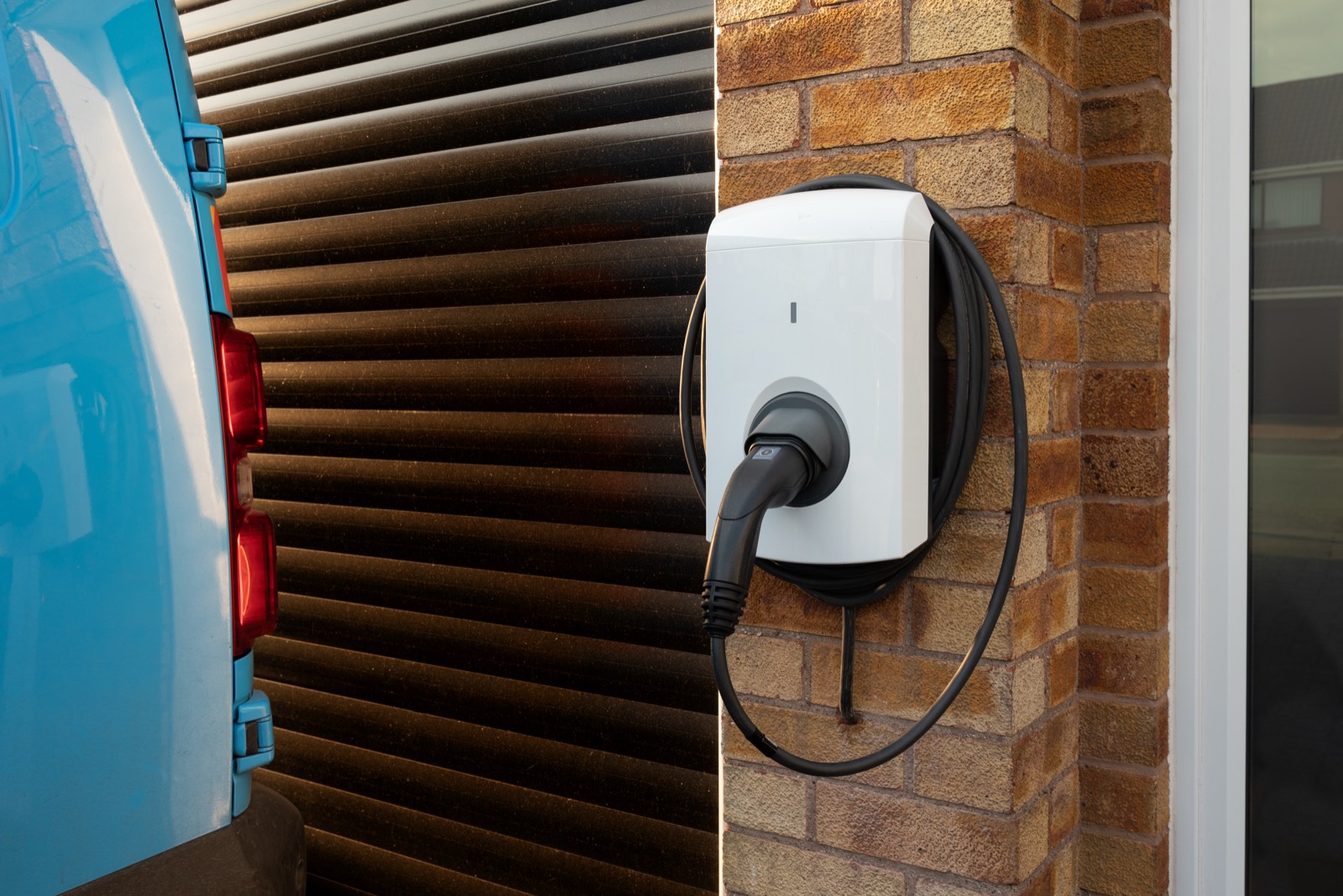
A Level 2 charger uses a 240V circuit. Depending on the vehicle, charger setting, and circuit capacity, it can add much more range overnight than a regular 120V cord. More importantly, it can be scheduled. You plug in at 6 p.m., but the charger or vehicle waits until the programmed start time.
The installation details matter:
- The panel needs enough capacity for the EV load under an Ontario Electrical Safety Code load calculation.
- The breaker, wire size, charger rating, and continuous-load setting must match.
- Finished garages and basement ceilings can affect the wire route.
- Outdoor chargers need weather-suitable equipment and terminations.
- Some homes are better served by a load-management device than by a full service upgrade.
- ESA notification and inspection apply where required.
For GTA drivers looking to charge during the ULO overnight window, a simple Level 2 install with the panel close by and room in the service is typically $800–$1,500 including labour, materials, and the ESA permit. If the wiring path is longer or finished walls need to be opened, the installation usually rises to $1,500–$3,500, with the EV charger unit adding another $500–$1,200. For most GTA homes setting up ULO-friendly EV charging, the full installed cost comes in around $1,500–$3,000.
When electrical capacity is limited, load management can often prevent a panel upgrade; if not, a 200A upgrade can be completed at the same time for $3,200–$4,500. The right answer depends on the existing panel, major loads, EV charging amperage, and whether future equipment is planned.
The scheduling side is usually handled in the vehicle app or charger app. Many homeowners set the car to finish charging by morning rather than start immediately. That way the vehicle uses the low-price hours without needing someone to walk into the garage at night.
If you are comparing charger hardware, our ChargePoint Home Flex installation guide for Toronto and the GTA covers one common adjustable-amperage option.
Before switching to ULO, check your household pattern and your electrical capacity
ULO is strongest when the EV is the largest flexible load in the house. It is weaker when the home has heavy weekday daytime or early-evening use that cannot move.
A practical GTA checklist:
- Do you have driveway or garage parking where a dedicated charger can be installed?
- Can the car sit plugged in for most of the 11 p.m. to 7 a.m. window?
- Do you commute enough that EV charging is a major part of your electricity use?
- Can you avoid weekday on-peak charging except when necessary?
- Is your panel 100A, 125A, or 200A, and what other large loads are present?
- Are you planning a second EV, heat pump, hot tub, basement apartment, or battery storage?
The wrong sequence is to switch rate plans, buy a charger, and only then discover that the panel is full or the garage route is difficult. The better sequence is to look at the bill, driving pattern, charger location, and panel together.
For GTA homeowners comparing ULO-rate EV charging options, City Power Electrical Services provides licensed electrical work from North York across Toronto and the GTA under ECRA/ESA #7015314. We provide free written estimates, file ESA notifications where required, arrange inspection, and clean up after the work.
If you want the ULO economics to work in real life, the charger has to be sized, permitted, and scheduled properly. Start with the rate comparison, then get the electrical installation quoted in writing after a site visit.
Want a licensed electrician to take a look?
Free written quote, usually the same day. ESA permits handled.