Comparison
Square D vs Siemens vs Eaton Panels
The short verdict: Square D, Siemens and Eaton can all be good panel choices when the panel is approved for use in Canada, sized correctly, installed by a licensed electrical contractor, and matched with the correct breakers. For most GTA homes, the better question is not “which brand is best?” It is “which approved panel gives this house enough capacity, enough breaker spaces, and easy future service?”
Brand matters, but it is only one part of a panel upgrade. A 200A panel with poor circuit planning is not better than a 200A panel that is neatly laid out, labelled, permitted, inspected, and leaves room for an EV charger, heat pump, basement renovation, hot tub, or future subpanel.
City Power Electrical Services installs panel upgrades in Toronto and the GTA under ECRA/ESA #7015314. Every panel job is permitted with the ESA where required and inspected.
Square D, Siemens and Eaton are all valid choices when the system is designed properly
Square D, Siemens and Eaton are established panel brands used in Ontario homes. None should be treated as a magic fix for an undersized service, overloaded panel, poor grounding, amateur wiring, or a utility service that cannot support the load.
Here is the practical comparison homeowners should use:
| Factor | Square D | Siemens | Eaton |
|---|---|---|---|
| Availability in the GTA | Common through electrical suppliers, with different product lines depending on stock | Common through electrical suppliers, with availability varying by panel size and breaker type | Common through electrical suppliers, with availability varying by panel size and breaker type |
| Breaker compatibility | Must use breakers approved and listed for that specific Square D panel line | Must use breakers approved and listed for that specific Siemens panel | Must use breakers approved and listed for that specific Eaton panel |
| Panel space | Depends on the exact model: main breaker size, number of full-size spaces, and whether tandem breakers are listed | Depends on the exact model and approved breaker configuration | Depends on the exact model and approved breaker configuration |
| Electrician preference | Often based on stock, layout, breaker handling, and future part availability | Often based on supplier access, layout, and familiarity | Often based on supplier access, layout, and familiarity |
| Best use case | When the selected model has the right capacity, spaces, and breaker availability for the home | Same: when the selected model fits the service and future circuits | Same: when the selected model fits the service and future circuits |
That is the honest answer. A properly selected Square D QO panel, Square D Homeline panel, Siemens panel, or Eaton panel can serve a GTA home well. The wrong model, wrong breaker, or wrong service size can create problems no matter whose name is on the door.
Breaker compatibility is not optional — breakers must match the panel listing
The biggest mistake in panel brand comparisons is assuming “a breaker that fits” is the same as “a breaker that is approved.” It is not.
In Ontario, the panel must be installed according to its approved labelling and manufacturer instructions. The breaker types allowed in that enclosure are listed on the panel label or documentation. If the label says a specific breaker family is approved, that is what belongs in the panel.
A breaker from another brand may physically clip onto the bus. That does not make it acceptable. The contact pressure, heat performance, trip characteristics, and fit are part of the tested assembly. Mixing unapproved breakers can lead to overheating, nuisance tripping, poor bus contact, failed inspection, and insurance trouble after an electrical event.
This matters even within the same manufacturer. Different panel lines can use different breaker families. For example, a Square D QO panel and a Square D Homeline panel are not the same panel line. The correct breaker is determined by the panel label, not by the logo on the front.
When we open an existing panel, we look for:
- Breakers that do not match the panel listing
- Tandem or slim breakers installed where the panel does not permit them
- Double-tapped conductors on breakers not rated for two wires
- Heat marks on breakers, bus bars, or neutral connections
- Missing filler plates or exposed openings
- Poor labelling that makes safe service harder
If the panel is staying, correcting breaker compatibility may be enough. If the panel is full, damaged, obsolete, or undersized for the home’s load, replacement is usually the cleaner path.
Panel space matters almost as much as amperage
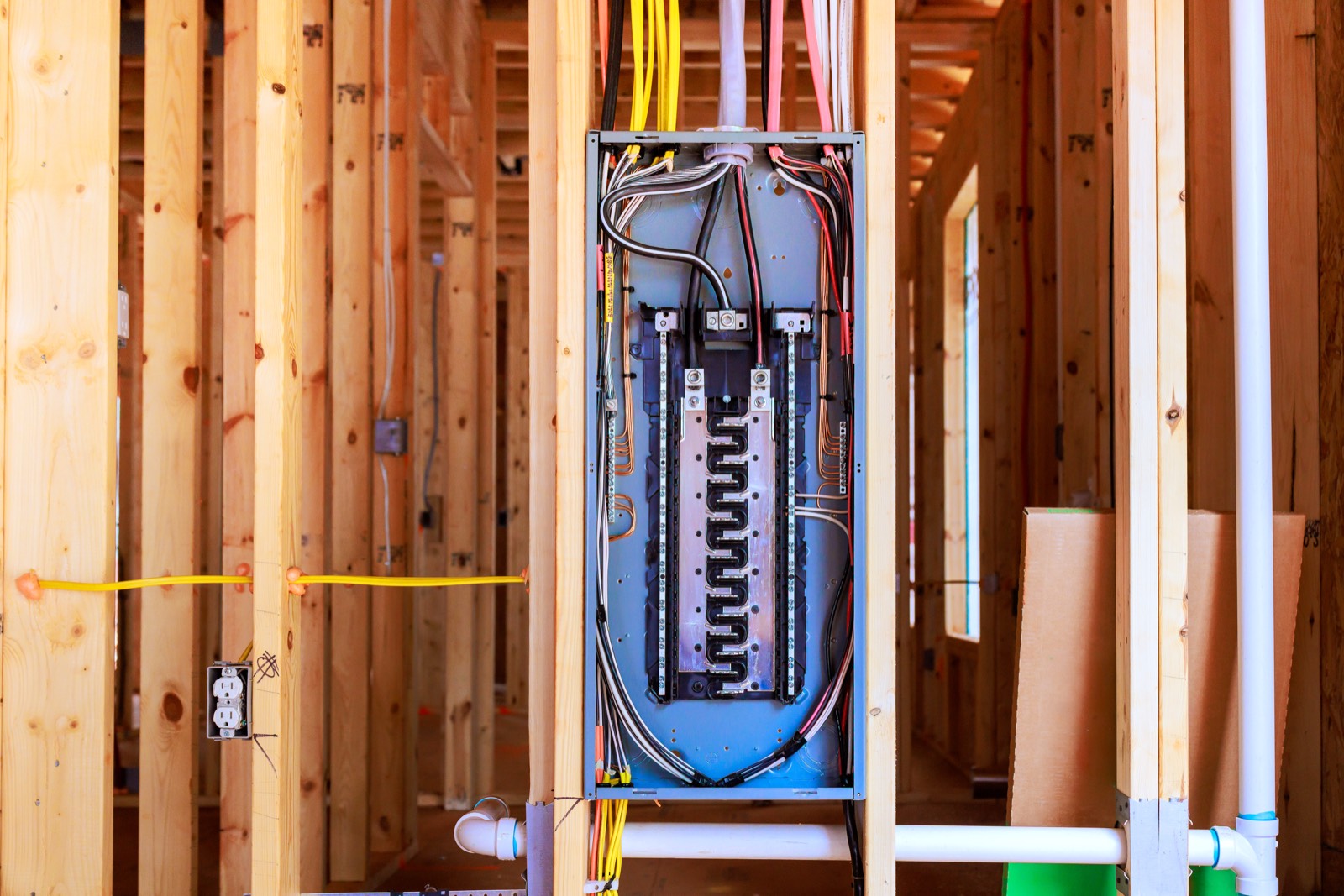
A 200A label does not tell the whole story. A panel also needs enough physical spaces and approved circuit positions for the house.
Modern GTA homes are adding more electrical loads: EV chargers, induction ranges, heat pumps, basement apartments, laundry equipment, sump pumps, home offices, networking gear, exterior receptacles, and dedicated kitchen circuits. Even if the service size is adequate, the panel can still be cramped.
This is where brand comparisons become model comparisons. One Square D, Siemens, or Eaton panel may have a different layout than another panel from the same manufacturer. The number of full-size breaker spaces, the maximum number of circuits, neutral bar space, grounding bar arrangement, and approved tandem positions all affect how cleanly the installation can be completed.
Tandem breakers are not a shortcut unless the panel specifically allows them in the intended positions. A tandem breaker installed in a non-listed location is not an acceptable way to “make room.” If a homeowner is already out of spaces, we would rather solve the panel layout properly than squeeze in another circuit and leave the next person with a puzzle.
For a typical upgrade, we plan around both today’s circuits and likely future work. That includes asking about:
- EV charger plans, even if the charger is not being installed yet
- Basement finishing or a future legal second suite
- Electric cooking, laundry, or water heating changes
- Hot tub, pool, garage, or workshop circuits
- Solar-ready wiring or battery storage planning
- Whether a subpanel would make service cleaner in a garage or addition
A good panel choice leaves safe, labelled room to work. That is worth more than choosing a brand by reputation alone.
Capacity and utility service drive the upgrade more than brand
If you are comparing Square D vs Siemens vs Eaton because your current panel is full, the real issue may be capacity, not brand.
In the GTA, moving from a 100A panel to a 200A Square D, Siemens, or Eaton panel usually costs $3,200–$4,500 with the panel, labour, ESA permit, and inspection included. If you’re replacing a 60A fuse panel with a modern Square D, Siemens, or Eaton setup, expect $4,000–$6,000 since the service entrance and meter base often have to be changed as well.
Those numbers are not determined only by the panel manufacturer. They are driven by the whole service:
- Existing service size and condition
- Whether the meter base, mast, service conductors, grounding, or bonding need work
- Utility disconnect and reconnect requirements
- Panel location and working clearance
- Whether circuits need extension, correction, or relabelling
- ESA notification and inspection scope
In Toronto and the GTA, the utility step can involve Toronto Hydro, Alectra, Oakville Hydro, Burlington Hydro, Oshawa Power, Elexicon, Hydro One, or another local distributor depending on the address. The electrician’s work and the utility’s work are connected, but they are not the same thing. A service upgrade has to be coordinated so the power can be safely disconnected, the new service equipment installed, and the service reconnected after the required steps.
The ESA inspection is also not a brand popularity check. The inspector is looking at whether the installation complies with the Ontario Electrical Safety Code, whether the service equipment is approved and installed properly, whether grounding and bonding are correct, whether breaker and conductor sizes match, and whether the installation is safe to energize.
That is why a panel upgrade should start with a load assessment and site visit, not a brand debate. For a clear scope, see our panel upgrade service.
When each panel brand can be the right choice
There are situations where one panel line may make more sense than another, but the reason is usually practical rather than dramatic.
Square D can be the right choice when the preferred panel line is readily available, the approved breaker family is easy to source, and the layout gives the home enough spaces. Some homeowners ask specifically for Square D because they are familiar with the name or because they want a matching approach for future work. That is fine, as long as the exact panel model fits the service design.
Siemens can be the right choice when the required panel and breaker combination is readily available through local suppliers and the layout suits the circuits being installed. Availability matters because future service is easier when standard breakers, filler plates, and accessories can be sourced without delay.
Eaton can be the right choice for the same reason: if the panel is approved, the breaker family is appropriate, and the layout works for the house, it belongs in the conversation. Eaton panels are commonly considered for residential replacements and upgrades where the selected model fits the service and future circuit plan.
Electrician preference usually comes down to what is reliable to source, straightforward to install cleanly, and easy to service later. A licensed electrician may prefer one line because the neutral bars are easier to dress neatly, the breaker stock is consistent at local suppliers, or the enclosure layout works better in tight mechanical rooms. Those are legitimate trade reasons. They are not the same as saying every home should use one brand.
The brand should support the design. It should not drive the design.
What we recommend for a GTA home
For most GTA homeowners, we recommend choosing the panel after the load calculation, site conditions, and future circuit plan are understood.
Our usual priority order is:
- Confirm the existing service capacity and whether the home needs 100A, 200A, or another approved solution.
- Check the utility service, meter base, service entrance, grounding, bonding, and panel location.
- Count existing circuits and identify corrections needed before moving them into a new panel.
- Plan future spaces for EV charging, renovations, outdoor equipment, and dedicated circuits.
- Select an approved Square D, Siemens, or Eaton panel with correct breakers and enough room to work cleanly.
- File the ESA notification where required and complete the installation for inspection.
If a homeowner already has a strong preference, we can discuss it during the estimate. If not, we will recommend a panel that is serviceable, available, code-compliant, and suitable for the home’s actual load.
The best panel upgrade is not the one with the loudest brand argument. It is the one that is properly sized, properly permitted, properly inspected, correctly labelled, and easy to maintain ten years from now.
For homeowners comparing options, the next step is a site visit and written quote. City Power provides free written estimates, handles ESA permitting where required, and completes full cleanup after the work.
Want a licensed electrician to take a look?
Free written quote, usually the same day. ESA permits handled.