Comparison
Hardwired vs Plug in EV Charger
Verdict: hardwired is usually the better permanent GTA home installation
For most homeowners installing a Level 2 charger in a garage, driveway, or carport, hardwired is the cleaner, tougher, and more future-ready choice. It removes the receptacle as a wear point, handles outdoor exposure better, and allows higher-output chargers where the panel and load calculation permit it.
A plug-in charger can still be the right answer when you genuinely need portability, are renting with permission, or want a charger that can be unplugged and moved later. The tradeoff is that the receptacle becomes part of the charging system. That means the outlet, box, cover, breaker, wire size, torque, and charger plug all have to be selected and installed correctly for continuous EV charging.
Either way, this is not just “adding an outlet.” In Ontario, a new EV charging circuit normally requires an ESA notification and inspection. City Power Electrical Services installs EV charger circuits under our ECRA/ESA licence, confirms panel capacity, files the ESA notification where required, and provides a written quote before the work starts. If you are deciding between connection types, book a licensed EV charger installation assessment before buying the charger.
Side-by-side: hardwired vs plug-in EV charger
Both types use the same basic idea: a dedicated 240V circuit from the panel to the charger location. The difference is how the charger connects at the wall.
| Decision point | Hardwired EV charger | Plug-in EV charger |
|---|---|---|
| Connection | Charger is wired directly to the branch circuit in a junction box or inside the unit | Charger plugs into a 240V receptacle, commonly a range-style EV receptacle |
| Best use | Permanent home charging, outdoor driveways, higher-output installations | Portability, temporary setups, some rental or move-soon situations |
| Weather exposure | Fewer exposed connection points; charger still must be outdoor-rated if installed outside | Receptacle, plug, in-use cover, and cord cap all face weather and physical wear |
| Receptacle wear | No receptacle blades to loosen from repeated heating and cooling | Receptacle can loosen or overheat if low-grade, poorly torqued, or frequently unplugged |
| Breaker sizing | Can support common higher-output chargers if the unit, wire, breaker, and load calculation allow | Limited by the receptacle rating and charger plug; you cannot exceed the receptacle’s continuous-load limit |
| Portability | Not portable without electrical work | Charger can be unplugged and moved, if the next location has a proper matching circuit |
| Appearance | Neater; no large receptacle and plug below the charger | More visible hardware at the wall |
| Inspection | ESA inspection applies to the new circuit where required | ESA inspection applies to the new circuit where required |
The key point is continuous load. EV charging can run for hours at a steady current. A connection that seems fine for a dryer or welder used intermittently may run hot when asked to carry EV charging current night after night. That is why breaker size, conductor size, terminal torque, device rating, and the charger’s programmed output all matter.
If your real comparison is a NEMA-style receptacle against a direct connection, read our deeper guide to NEMA 14-50 vs hardwired charger. This page focuses on the practical homeowner decision: permanent hardwired charger or plug-in charger.
Weather exposure: hardwired has fewer weak points outside
Outdoors, hardwired usually wins because there is less equipment exposed to rain, snow, salt, freeze-thaw cycles, and accidental bumps.
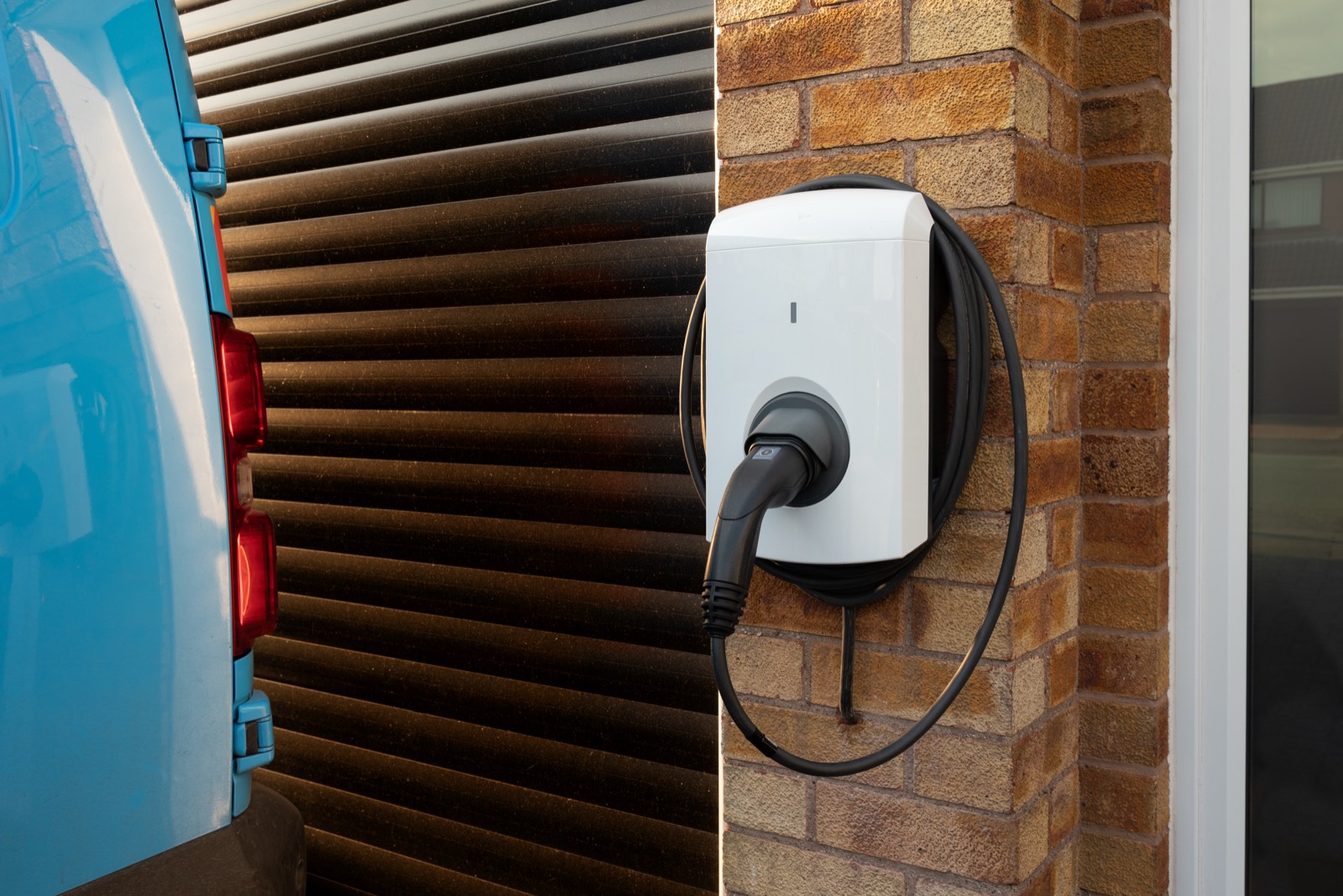
A proper outdoor EV charger still needs to be rated for the location and mounted according to the manufacturer’s instructions. The cable holster should keep the connector off the ground, the unit needs solid backing, and the wiring method has to suit the route: garage wall, exterior wall, conduit, unfinished basement ceiling, or trench to a detached garage.
With a plug-in charger outside, there is more to protect:
- The 240V receptacle must be suitable for the installation.
- The box and cover must protect the receptacle while the charger is plugged in.
- The plug must sit securely without strain from the charger cord.
- The receptacle must not be placed where it will be hit by shovels, bins, car doors, or snow-clearing tools.
- The breaker and any required GFCI protection must match the Ontario Electrical Safety Code and the charger instructions.
The failure mode we worry about is not usually dramatic on day one. It is slow heat. A loose blade contact, back-stressed plug, cheap receptacle, or under-torqued terminal can warm up every night. Over time, that heat can discolour the receptacle, soften insulation, damage the plug, or trip the breaker. Hardwiring removes one of those interfaces.
For an indoor garage, the weather difference is smaller, but not gone. Garages still see cold starts, road salt, humidity, and physical abuse. A plug-in unit can work well indoors if the receptacle is industrial-grade, properly installed, and not treated like a convenience outlet that gets unplugged every week.
Portability: plug-in only wins if you will actually move it
A plug-in EV charger is attractive because it feels flexible. You can unplug it, take it to another property, or bring it with you when you move. That matters for some owners.
Plug-in may be the better fit if:
- You rent and have written approval for the electrical work.
- You expect to move soon and want to keep the charger.
- You need a travel-capable unit for more than one properly wired location.
- The charger model you already own is plug-in only.
- The installation is inside a dry garage and the receptacle will not be unplugged regularly.
But portability is often overvalued. A Level 2 plug-in charger is only useful where there is a matching 240V receptacle on a correctly sized dedicated circuit. You cannot safely use random adapters, share a dryer receptacle casually, or plug into an unknown outlet without confirming the wiring, breaker, grounding, and receptacle rating.
Hardwired may be the better fit if:
- This is your main home charging location.
- The charger will be outside or in an open carport.
- You want the neatest installation.
- You want to reduce receptacle overheating risk.
- You may want a higher-output charger later.
- You want fewer parts for children, tenants, or visitors to touch.
For most GTA homes, the charger stays with the house longer than expected. Even if you sell, a properly installed hardwired charger can be a practical feature for the next owner. If you later change charger brands, an electrician can usually replace the unit using the existing circuit if the ratings and instructions line up.
If you are still deciding whether Level 1 is enough or Level 2 is worth the circuit, compare charging levels here: Level 1 vs Level 2 EV charger — which do I need?.
Breaker sizing: the charger output must match the circuit, not your wish list
Breaker sizing is where many EV installations go wrong. The number printed in charger advertising is not automatically what your home can support.
A Level 2 charger is a continuous load, so the circuit has to be sized for sustained charging, not a short burst. As a practical example, a charger set to 32A commonly uses a 40A circuit. A charger set to 40A commonly uses a 50A circuit. A 48A charger commonly needs a 60A circuit and is typically hardwired. You do not put a 48A continuous load on a 50A receptacle circuit.
The right size depends on four things:
- The charger’s maximum output and whether it can be programmed lower.
- The conductor size and wiring method.
- The breaker type required by code and by the charger manufacturer.
- The home’s load calculation and available panel capacity.
This is why a hardwired charger can be more flexible. Many wall chargers can be set to different outputs during commissioning. If your panel can only support a lower charging current today, the electrician may be able to configure the charger accordingly. If you upgrade the panel later, the charger and circuit design can be reviewed again.
A plug-in unit is constrained by the receptacle. The plug shape does not make the circuit safe by itself. A 240V receptacle must be matched to the correct breaker, wire size, box, and device rating. The charger must also be configured so it does not draw more than the circuit can continuously supply.
If you are comparing common charger outputs, our guide to 40 amp vs 48 amp EV charger explains why the faster option is not always the smarter one in a typical home.
ESA inspection and installation scope are the same seriousness either way
In Ontario, a new EV charger circuit is electrical work that normally requires an ESA notification and inspection. The inspector is not choosing your charger for you; they are checking that the installation complies with the Ontario Electrical Safety Code.
On a typical EV charger installation, the electrical scope may include:
- Load calculation for the existing service and panel.
- Checking for spare breaker spaces and compatible breakers.
- Running a dedicated branch circuit to the garage, driveway, or parking space.
- Installing conduit, cable, junction boxes, disconnecting means where required, or an EV-rated receptacle.
- Mounting the charger at a practical height and location.
- Setting the charger output to match the circuit.
- Labelling the breaker and charger as required.
- Filing the ESA notification where required and coordinating inspection.
For pricing, the published City Power ranges are: a straightforward Level 2 installation in the GTA — panel nearby, capacity available — runs $800–$1,500 for labour, materials, and the ESA permit. For either a hardwired or plug-in setup, longer cable runs or finished wall access can raise installation to $1,500–$3,500, with the EV charger adding another $500–$1,200. In most homes, the total cost for a hardwired or plug-in EV charger ends up around $1,500 to $3,000. When panel capacity is limited, load management can often prevent a service upgrade; if not, a 200A upgrade ($3,200–$4,500) can be completed along with the charger installation.
Those ranges are not a promise that one connection type is always cheaper. Plug-in installations can cost more if the receptacle location needs conduit, GFCI protection, an upgraded device, or weatherproofing. Hardwired installations can cost more if the charger location is difficult or the unit requires a larger circuit. The accurate answer comes from seeing the panel, the route, the parking location, and the charger model.
For a cost-focused breakdown, see EV charger installation cost in Canada. If you already have an installation date coming up, read EV charger install day: what to expect.
What we recommend for a GTA home
For a homeowner installing a permanent charger, we usually recommend hardwired Level 2 charging unless there is a clear reason to keep the charger portable.
Hardwired is the better default for Toronto and GTA houses because it suits outdoor parking, reduces receptacle wear, looks cleaner, and leaves more room for properly configured higher-output chargers. It also avoids the common mistake of treating a 240V receptacle like a simple appliance outlet when it is actually serving a long-duration EV load.
Choose plug-in if portability is a real requirement and the receptacle will be installed as part of a proper EV charging circuit, not borrowed from another appliance. Use a high-quality receptacle, protect it from weather and strain, and avoid repeated unplugging unless the equipment is designed and installed for that use.
Before buying the charger, confirm three things: your panel capacity, your parking location, and the charger’s connection options. City Power Electrical Services provides free written estimates, installs with ESA notification and inspection where required, and serves Toronto and the GTA from our North York office. Call 416-837-4038 or request a licensed EV charger installation assessment so the hardwired vs plug-in decision is based on your actual home, not a product page.
Want a licensed electrician to take a look?
Free written quote, usually the same day. ESA permits handled.