Answered by a licensed electrician
What amperage is best for EV charging?
Quick answer
For most Ontario homes, the best EV charging amperage is the lowest Level 2 setting that refills your normal driving overnight, often 32A or 40A. A 40A charger needs a 50A circuit because EV charging is treated as a continuous load, and a typical GTA installation is often $1,500–$3,000 all-in.
The best EV charging amperage is usually 32A or 40A, not automatically the maximum
The right amperage is the setting that charges your vehicle comfortably overnight without overloading the home service. For many GTA homes, that means a 32A or 40A Level 2 charger. A 48A charger can be useful, but only when the vehicle can accept it and the panel has enough spare capacity.
Think of amperage as charging speed. On a 240V circuit, more amps means more kilowatts, but the gain only matters if the car, panel and wiring all support it.
| Charger output | Approx. power at 240V | Common circuit size | Best fit |
|---|---|---|---|
| 16A | 3.8 kW | 20A | Plug-in hybrids, low daily mileage, tight panels |
| 24A | 5.8 kW | 30A | Smaller EVs, moderate commuting, limited spare capacity |
| 32A | 7.7 kW | 40A | Most overnight home charging needs |
| 40A | 9.6 kW | 50A | Faster overnight charging for larger batteries or longer commutes |
| 48A | 11.5 kW | 60A | Hardwired chargers, vehicles that can accept 48A, panels with capacity |
A 32A charger can add a meaningful amount of range while you sleep, and a 40A charger gives extra headroom for larger batteries or back-to-back driving days. Going from 40A to 48A is a smaller practical jump than many owners expect, especially if the vehicle’s onboard charger is limited below that.
Before buying the highest-rated charger, check the car’s AC acceptance rate. Some vehicles will not take 48A on Level 2 even if the wall unit can deliver it. If the car maxes out at 32A, installing a 60A circuit for a 48A setting will not make that vehicle charge faster.
If you are still choosing hardware, our home EV charger installation service can match the charger rating, breaker size, wiring method and ESA notification to the actual site instead of guessing from the box label.
Panel capacity decides the safe maximum, and EV charging is a continuous load
Your electrical panel decides what amperage is available after the home’s existing loads are counted. EV charging runs for hours, so it is not treated like a toaster or kettle that cycles briefly. Under Ontario Electrical Safety Code practice, the circuit must be sized for continuous charging load, which is why a 40A charger is normally placed on a 50A circuit and a 48A charger on a 60A circuit.
That is the first reason the “best” setting is not always the largest setting. A 100A service that already carries electric range, dryer, air conditioning, hot tub, basement suite loads or electric heating may not have room for a large charger at full output. A 200A service often has more headroom, but it still needs a load calculation; the panel label alone does not prove spare capacity.
The electrician checks:
- Main service size and whether the panel is 100A, 125A, 200A or another rating
- Existing large loads: range, dryer, heat pump, hot tub, sauna, pool equipment and electric heat
- Spare breaker spaces and whether tandem breakers are allowed in that panel
- Panel condition, grounding and bonding, conductor size and breaker compatibility
- Route length to the garage, driveway or exterior charger location
- Whether the charger will be hardwired or connected by an approved receptacle
If you are not sure what service size you have, start with the meter base, main breaker and panel labelling. Our guide to finding your home’s amperage explains the quick checks, but the final decision still comes from a proper load calculation.
A straightforward Level 2 installation with panel capacity nearby often lands in the $800–$1,500 range before the charger unit where site conditions are simple. Longer routes through finished areas commonly move the electrical work into the $1,500–$3,500 range, and many homeowners end up around $1,500–$3,000 all-in depending on charger choice and the run from the panel.
Driving pattern matters more than battery size on paper
Choose amperage around what you need to recover overnight, not the full battery size you might rarely use. A driver who uses 40–80 km per day usually needs far less charger than someone commuting across the GTA, doing rideshare work, or arriving home late and leaving early.
A practical way to choose:
- Short daily commute: 16A or 24A may be enough if the vehicle sits parked overnight.
- Typical household EV: 32A is often the sweet spot between speed, cost and panel load.
- Long commute or frequent evening trips: 40A gives more recovery during an overnight window.
- Two EV household: One higher-output charger, two load-sharing chargers, or scheduled charging may be better than simply installing the biggest single circuit.
- Work vehicle or unpredictable use: 40A or 48A can make sense if the service supports it and downtime is limited.
Charging schedule also matters in Ontario. If you can charge overnight, you may not need a very high amperage setting because the car has many low-demand hours to refill. Time-of-use and ultra-low-overnight planning can make a moderate charger feel fast enough while reducing operating cost. See our guide to the Ontario ULO rate for EV charging for the rate-planning side.
The mistake we often see is sizing the circuit for a once-a-year road trip rather than daily life. If you normally leave the house with the battery at your chosen charge limit every morning, the charger is doing its job. Public fast charging can cover rare long-distance exceptions; the home charger’s job is dependable daily recovery.
EVEMS can make a smaller service work without forcing a panel upgrade
An EV Energy Management System can allow Level 2 charging where service capacity is limited by automatically reducing or pausing EV charging when the house load is high. This is often the cleanest answer for a 100A service that cannot safely support a full-time 40A or 48A EV load.
EVEMS equipment monitors the main service or selected loads. When the range, dryer, heat pump or other large loads are active, it limits the charger. When the house demand drops, the charger resumes or increases output. The goal is to prevent the EV load from pushing the service beyond the calculated limit.
EVEMS is worth discussing when:
- The panel is otherwise in good condition but the load calculation is tight
- A 200A upgrade is physically difficult or costly because of meter, service entrance or utility work
- You want Level 2 charging now but may upgrade service later during a renovation
- The charger location is practical, but the main service does not have enough continuous-load capacity
- The vehicle can still recover enough charge overnight at a managed output
It is not a magic bypass around code. The EVEMS, charger, breaker, conductor size and installation method still have to be approved for the application, and the work needs ESA notification where required. The ESA inspection is there to confirm the installation matches the submitted scope, the conductor and breaker sizes are correct, the disconnecting means and labelling are proper, and the charger is installed according to its listing.
If capacity is genuinely not there, a panel or service upgrade may still be the better long-term answer, especially if you are adding a heat pump, second EV, basement suite, hot tub or future battery system. But EVEMS can be the difference between “no Level 2 charger on this service” and “yes, with controlled output.”
Hardwired chargers give the cleanest path to higher amperage
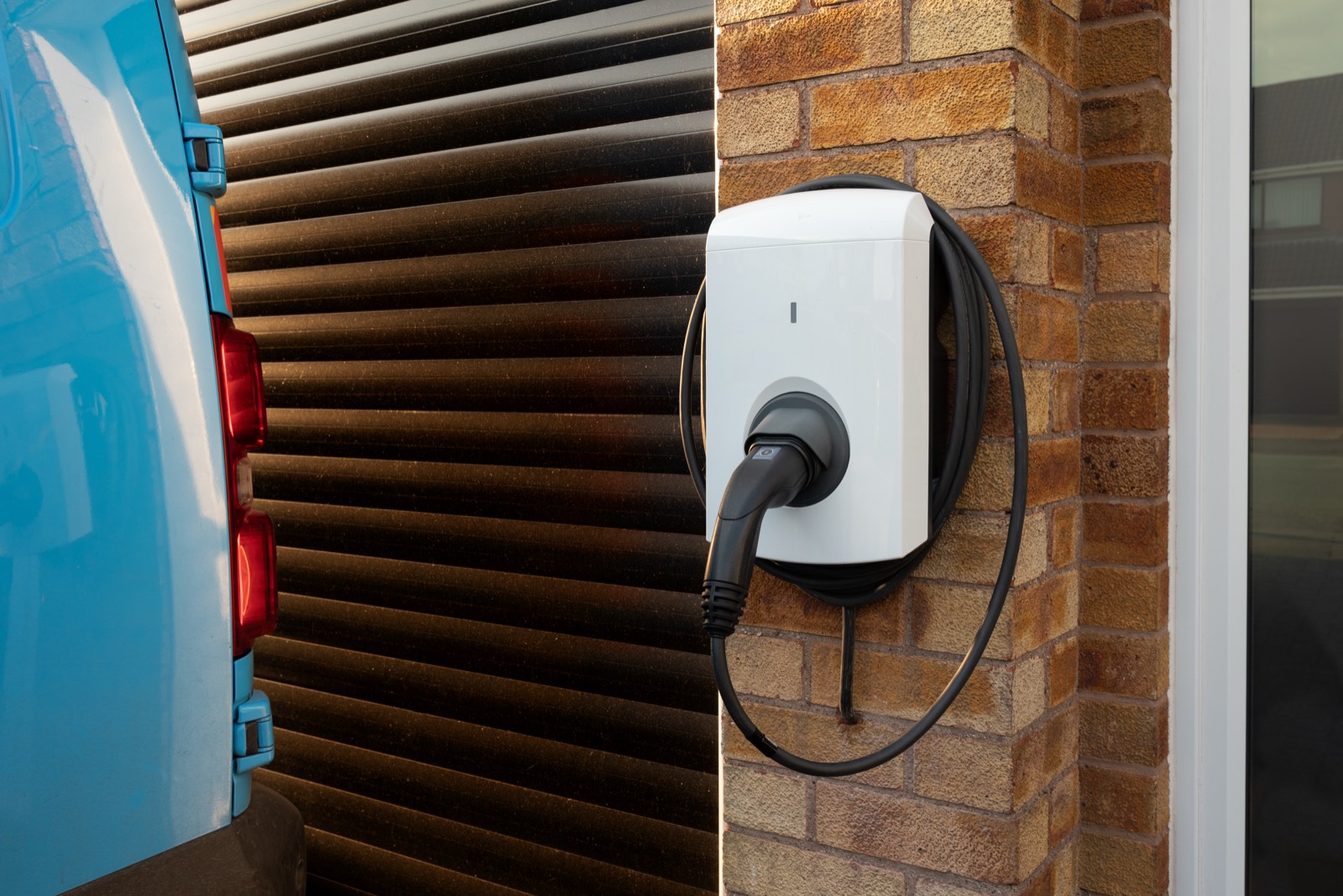
For 40A and 48A charging, hardwiring is often the stronger choice because it removes receptacle wear, plug fit issues and nuisance heat at the outlet. A NEMA 14-50 receptacle can be appropriate for some installations, but it needs the correct breaker, box, conductor, device rating and physical protection. Not every hardware-store receptacle is appropriate for daily high-load EV use.
Hardwired chargers also make it easier to set a fixed maximum output in the charger configuration. Many units allow commissioning at 16A, 24A, 32A, 40A or 48A, so the same charger model can be limited to match the approved circuit. That matters if the panel supports only 32A today but you may increase capacity later.
The charger location changes the amperage decision too. A detached garage, long driveway run, finished basement route or exterior wall installation may increase wire length, voltage drop considerations and labour. Outdoor chargers need weather-rated equipment and careful placement so the cable reaches the vehicle without becoming a trip hazard or being crushed by a garage door.
Before buying, compare the vehicle connector, cord length, outdoor rating, load-sharing support, app reliability and adjustable amperage settings. Our best EV chargers in Canada guide covers common home units and what to look for before installation.
If your charger has power but will not start, stops mid-charge or shows a fault, that is a troubleshooting issue rather than an amperage-selection issue; see why an EV charger is not charging for the diagnostic path.
City Power Electrical Services is a Licensed Electrical Contractor, ECRA/ESA #7015314, serving Toronto and the GTA from North York; for EV work, we provide a written estimate, file the ESA notification where required, and set the charger output to match the approved circuit and your real charging needs.
Want a licensed electrician to take a look?
Free written quote, usually the same day. ESA permits handled.
People also ask
Is 40 amps enough for home EV charging?
Yes, 40A is enough for many home EV owners because it delivers about 9.6 kW on a 240V circuit and can recover a large amount of daily driving overnight. It normally requires a 50A circuit because EV charging is continuous load. The vehicle’s onboard charger must also be able to accept 40A.
Is a 48 amp EV charger worth it?
A 48A charger is worth it when your vehicle can accept 48A, your service has capacity for a 60A circuit, and you regularly need faster overnight recovery. If the car is limited to 32A or 40A, a 48A wall unit will not charge it faster. It is usually hardwired rather than plugged into a receptacle.
Can I install an EV charger on a 100 amp panel?
Sometimes, but it depends on the load calculation, not just the panel label. A lightly loaded 100A service may support a smaller Level 2 charger, while a home with electric heat, hot tub, range, dryer and air conditioning may not. EVEMS can sometimes allow managed charging without immediately upgrading to 200A.
Should I choose a plug-in or hardwired EV charger?
Hardwired is usually better for higher-output daily charging because there is no receptacle connection to loosen or heat under repeated load. Plug-in chargers can make sense for lower amperage or portability, but the receptacle must be properly rated and installed. For 48A charging, hardwiring is normally required by the charger design.