Answered by a licensed electrician
Should I hardwire my EV charger?
Quick answer
Yes, hardwire a permanent Level 2 EV charger if you want the most durable connection, outdoor installation, or charging above 40A. EV charging is a continuous load, so a 50A circuit is normally limited to 40A charging; many 48A chargers need a hardwired 60A circuit and ESA-notified installation.
Hardwire is usually the better choice for a permanent Level 2 charger
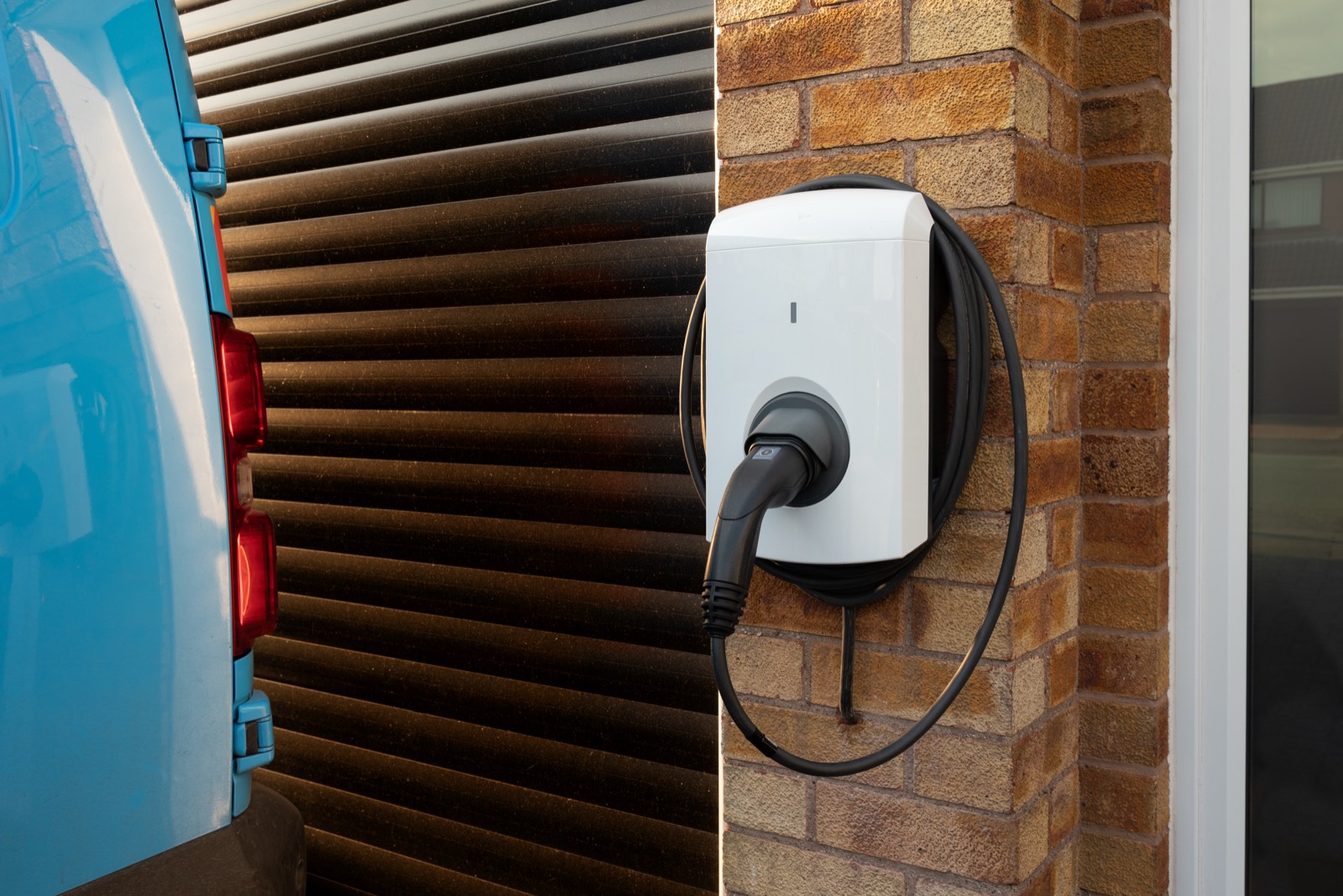
Hardwiring is the cleaner, tougher option when the charger is staying on the wall. There is no receptacle to loosen, no plug blades to heat up over years of daily use, and fewer exposed connection points in a garage or driveway.
A plug-in installation can still be correct. Many drivers use a NEMA 14-50 or NEMA 6-50 receptacle with a compatible EVSE. The key is that it must be a proper EV charging circuit, not a random dryer or welder outlet being reused because the plug happens to fit.
For late-stage buying, the practical difference is this: hardwire is best for a fixed charger you expect to use for years; a receptacle is best when you deliberately want portability or a removable charger.
| Choice | Best fit | Practical limit | Main risk if done poorly |
|---|---|---|---|
| Hardwired charger | Permanent wall charger, exterior wall, higher-output Level 2 | Often supports 48A charging when the charger and circuit are rated for it | Wrong breaker, undersized wiring, or no ESA notification |
| NEMA receptacle | Portable EVSE, moving soon, shared use between locations | Commonly 40A charging on a 50A circuit | Cheap receptacle, loose plug fit, heat at terminals |
| Level 1 cord | Low daily driving, temporary charging | Standard 120V charging speed | Overloaded old receptacle or extension cord use |
If you are installing a Tesla Wall Connector, ChargePoint Home Flex, Emporia, FLO Home, or similar wall unit, hardwire is usually the professional default unless the manufacturer and your use case point another way. See our EV charger installation service for the installation route we use in Toronto and the GTA.
A NEMA receptacle makes sense when portability matters
A plug-in charger is reasonable when you want to unplug the EVSE, take it with you, or avoid committing one wall charger to one parking spot. It is also common for some rental, condo, or temporary arrangements where a permanently mounted charger is not the right fit.
The receptacle still needs to be installed like EV equipment, not like a general convenience outlet. That usually means:
- A dedicated circuit from the panel to the EV location.
- A breaker sized to the charger setting and conductor ampacity.
- An industrial-grade receptacle, not a bargain device meant for occasional use.
- A box, cover, and fittings suitable for the location.
- Correct neutral use: a NEMA 14-50 has a neutral, while a NEMA 6-50 does not.
- ESA notification and inspection where required.
The weak point in many plug-in EV setups is not the charger. It is the receptacle. EV charging can run for hours at a high continuous load. A loose terminal, worn plug grip, or light-duty receptacle can create heat without tripping the breaker right away. If your plug, faceplate, or cord cap is getting warm, that becomes a safety question, not just a charging-speed question; see why an EV charger gets hot.
A receptacle is also more exposed to physical movement. Every unplugging cycle flexes the cord and plug. In a tight garage, the EVSE may hang from the receptacle instead of being properly supported. That is one reason we prefer hardwire for daily charging where the charger is permanently mounted anyway.
The circuit size is decided by the load calculation, not by the plug
You should not choose hardwire or plug-in first and then force the electrical system to match. The correct order is load calculation, charger output setting, breaker and conductor sizing, then connection method.
EV charging is treated as a continuous load. In plain terms, the circuit is not meant to run at its full breaker number for hours. A 50A EV circuit is commonly set for up to 40A charging. A 60A EV circuit is commonly used for up to 48A charging, if the charger is listed for it and the installation conditions allow it. Many 48A chargers are hardwire-only.
That is why two chargers that look similar on the wall can have different electrical requirements. One may be set at 32A on a 40A circuit. Another may be set at 40A on a 50A circuit. A higher-output unit may need a 60A circuit and hardwired connection. For more detail on the breaker side, read what size breaker an EV charger needs.
Panel capacity matters just as much. A 100A service may be fine for some EV chargers, especially with a lower charger setting or load-management device. It may not be fine if the home also has electric heat, a hot tub, range, dryer, basement suite loads, or other large equipment. The answer comes from the load calculation, not from guessing at unused breaker spaces. If capacity is tight, read whether an EV charger can run on a 100 amp panel.
ESA requirements apply either way. A hardwired charger and a NEMA EV receptacle are both electrical installations. The work must match the Ontario Electrical Safety Code, manufacturer instructions, and the actual panel capacity. The ESA inspection looks for the right circuit, overcurrent protection, conductor sizing, grounding and bonding, labelling, and safe routing. It is not just a paperwork step. If you are comparing quotes, confirm who files the ESA notification; see EV charger permit requirements in Ontario.
Outdoor chargers are usually better hardwired
Exterior installations strongly favour hardwiring because weather is hard on plugs and receptacles. Rain, snow, freeze-thaw cycles, road salt, UV exposure, and repeated cord movement all work against a plug-in connection.
A hardwired outdoor charger lets the wiring enter through the back or bottom of the unit using weather-rated fittings and a fixed raceway. There is no large 50A plug sitting behind an in-use cover, no receptacle contacts exposed when unplugged, and less chance of the charger being pulled partly out by cord tension.
For exterior work, the details matter:
- The charger must be approved for the location where it is mounted.
- Conduit, connectors, and boxes must be suitable for wet or damp conditions as applicable.
- The cable path must be protected from vehicle impact, shovels, and snow clearing.
- The charger height and cord reach should avoid laying the connector in slush.
- The circuit must be labelled and matched to the charger’s internal current setting.
A plug-in exterior charger is not automatically wrong, but it needs a weather-rated enclosure and a receptacle setup suitable for the environment. In practice, once you add the correct box, cover, support, and protection, hardwire is often simpler and more durable.
Condo and townhouse settings add another layer. You may need board approval, a parking-space agreement, load-management requirements, or utility coordination. Those issues do not decide hardwire versus plug by themselves, but they often push the design toward a fixed, labelled, inspected installation rather than a removable cord-and-receptacle setup.
Our practical recommendation: hardwire unless you have a clear reason not to
For most GTA homeowners installing a wall-mounted Level 2 charger, we recommend hardwiring. Choose a NEMA receptacle only when portability, manufacturer instructions, or property rules make the plug-in approach the better fit.
A clean EV charger installation usually follows this sequence:
- Confirm the vehicle, charger model, and desired charging speed.
- Check the panel, service size, spare capacity, grounding, and available breaker space.
- Complete the load calculation and decide whether load management or a panel upgrade is needed.
- Select the circuit size and charger current setting.
- Route the wiring with the least damage to finished walls.
- File the ESA notification where required and complete the inspection.
- Label the panel and show the homeowner the charger settings.
Cost depends on the run, access, wall finish, and panel capacity. A simple Level 2 installation with nearby panel capacity is often in the $800–$1,500 range for the electrical installation and ESA permit, while longer routes or finished-wall fishing can land around $1,500–$3,500 before any unusual panel work. The charger hardware itself commonly adds $500–$1,200, and many homeowners end up around $1,500–$3,000 all-in. For Tesla-specific details, see Tesla charger installation cost.
City Power Electrical Services is an ECRA/ESA Licensed Electrical Contractor, #7015314, based in North York and serving Toronto and the GTA; we provide free written estimates and install EV circuits with ESA notification and inspection where required.
Want a licensed electrician to take a look?
Free written quote, usually the same day. ESA permits handled.
People also ask
Is a hardwired EV charger safer than a NEMA 14-50 outlet?
Hardwired is generally more robust because it removes the plug and receptacle as heat and wear points. A NEMA 14-50 can still be safe if it is industrial-grade, correctly wired, on a dedicated circuit, and inspected. Problems usually come from loose terminals, cheap receptacles, or using an existing outlet not intended for daily EV charging.
Can I install a plug now and hardwire later?
Sometimes, but the wiring and breaker still have to match the final charger output. If you install a 50A receptacle circuit now, it may not support a future 48A hardwired charger without changes. Tell the electrician your likely next charger so the conduit route, conductor size, and panel capacity are planned properly.
Do I need an ESA permit for a hardwired EV charger in Ontario?
Yes, EV charger installations normally require an ESA notification when new wiring, a new circuit, or hardwired equipment is installed. A NEMA receptacle for EV charging is not a loophole; it is still electrical work. The Licensed Electrical Contractor should file the notification and arrange inspection where required.
Will hardwiring charge my EV faster?
Hardwiring can allow faster charging only when the charger, circuit, panel capacity, and load calculation support a higher current. For example, many plug-in setups are limited to 40A charging on a 50A circuit, while some hardwired chargers can run at 48A on a properly installed 60A circuit.