Answered by a licensed electrician
How much does a Tesla charger install cost?
Quick answer
A Tesla Wall Connector installation in the GTA usually lands between $1,500 and $3,000 all-in when the panel has capacity and the run is reasonable. Simple nearby-panel installs can be $800–$1,500, while long finished-wall runs can reach $1,500–$3,500 before the charger hardware. ESA notification and inspection are part of the job.
Most Tesla charger installs cost $1,500–$3,000 all-in in the GTA
Most homeowners budgeting for a Tesla Wall Connector should expect a finished installation in the $1,500–$3,000 range, assuming the electrical panel has enough capacity and the charger location is not unusually far from the panel.
A very straightforward Level 2 installation — panel close by, open garage wall, capacity available, short cable run — is often in the $800–$1,500 range for labour, materials, and the ESA notification. If the wire route is longer, the basement ceiling is finished, the charger is outside, or the cable has to be fished through walls, the electrical work commonly moves into the $1,500–$3,500 range. The charger itself adds $500–$1,200 if you have not already bought it.
For Tesla vehicles, the preferred permanent setup is usually a Tesla Wall Connector, hardwired on a dedicated 240V circuit. A NEMA 14-50 receptacle can work with the right mobile connector, but for a daily home charger we usually prefer hardwiring because there is no plug-and-receptacle connection heating up over years of high-current charging.
The installed price changes because the charger is only one part of the job. The real work is the dedicated circuit: breaker selection, wire size, routing, support, outdoor-rated fittings if needed, load calculation, ESA notification, and inspection.
Typical cost drivers look like this:
| Installation condition | What it means for cost |
|---|---|
| Panel beside garage | Shorter wire run, simpler labour, usually lowest cost |
| Finished basement between panel and garage | More fishing, access holes, and careful routing |
| Outdoor charger location | Weather-rated fittings, exterior mounting, and protection from damage |
| Detached garage | Trenching or existing feeder capacity may become the main cost issue |
| Full or older panel | Load calculation, breaker space, and possible service upgrade must be checked |
City Power Electrical Services installs EV chargers across Toronto and the GTA under ECRA/ESA licence #7015314, with written estimates and ESA notification where required. If you want a site-specific number, the right route is a written quote for Tesla and Level 2 EV charger installation, not a phone guess based only on the vehicle model.
Panel capacity is the biggest unknown in the quote
The charger price depends heavily on whether your existing service can safely carry the added EV load. A Tesla Wall Connector is not treated like a lamp or a convenience outlet; it is a large continuous load that may run for hours overnight.
A load calculation looks at the service size, existing loads, and what is already installed in the home. We check items such as:
- Main service size, often 100A or 200A in GTA homes
- Existing electric range, dryer, air conditioner, heat pump, hot tub, sauna, or electric heat
- Basement apartment equipment, second kitchen, or extra laundry loads
- Available breaker spaces and whether tandem breakers are allowed in that panel
- Panel condition, grounding, bonding, and whether the panel has signs of overheating or amateur changes
For EV charging, the circuit must be sized for continuous charging. As a common example, a Tesla Wall Connector set to deliver 48A charging requires a 60A circuit. If the home cannot support that, the charger can often be configured at a lower output, such as on a 40A or 50A circuit, while still giving useful overnight charging.
This is where many online cost estimates go wrong. The question is not only “Can a breaker fit?” It is “Can the service carry the calculated load safely, and will the installation pass ESA inspection?” A crowded panel with one empty space may still be the wrong place to add an EV charger if the calculated load is already too high.
If capacity is tight, there are usually three options. One is to set the charger to a lower amperage. Another is to install an approved load-management device so the charger backs off when the home load is high. The third is a service upgrade; a 100A-to-200A panel upgrade in the GTA is typically $3,200–$4,500 including the panel, labour, ESA permit, and inspection.
Breaker condition matters too. If the panel is old, damaged, or using obsolete breakers, the EV charger quote may include correction work before the new circuit can be added. For smaller panel issues, see our answer on breaker replacement cost, but EV charging should still be assessed as a complete load and circuit design, not just a breaker swap.
Charger location changes the labour, wire, and inspection details
A charger mounted close to the panel is cheaper than one across a finished house or outside on a driveway wall. Distance affects wire length, drilling, conduit, protection from physical damage, voltage drop, and the time needed to make the installation clean.
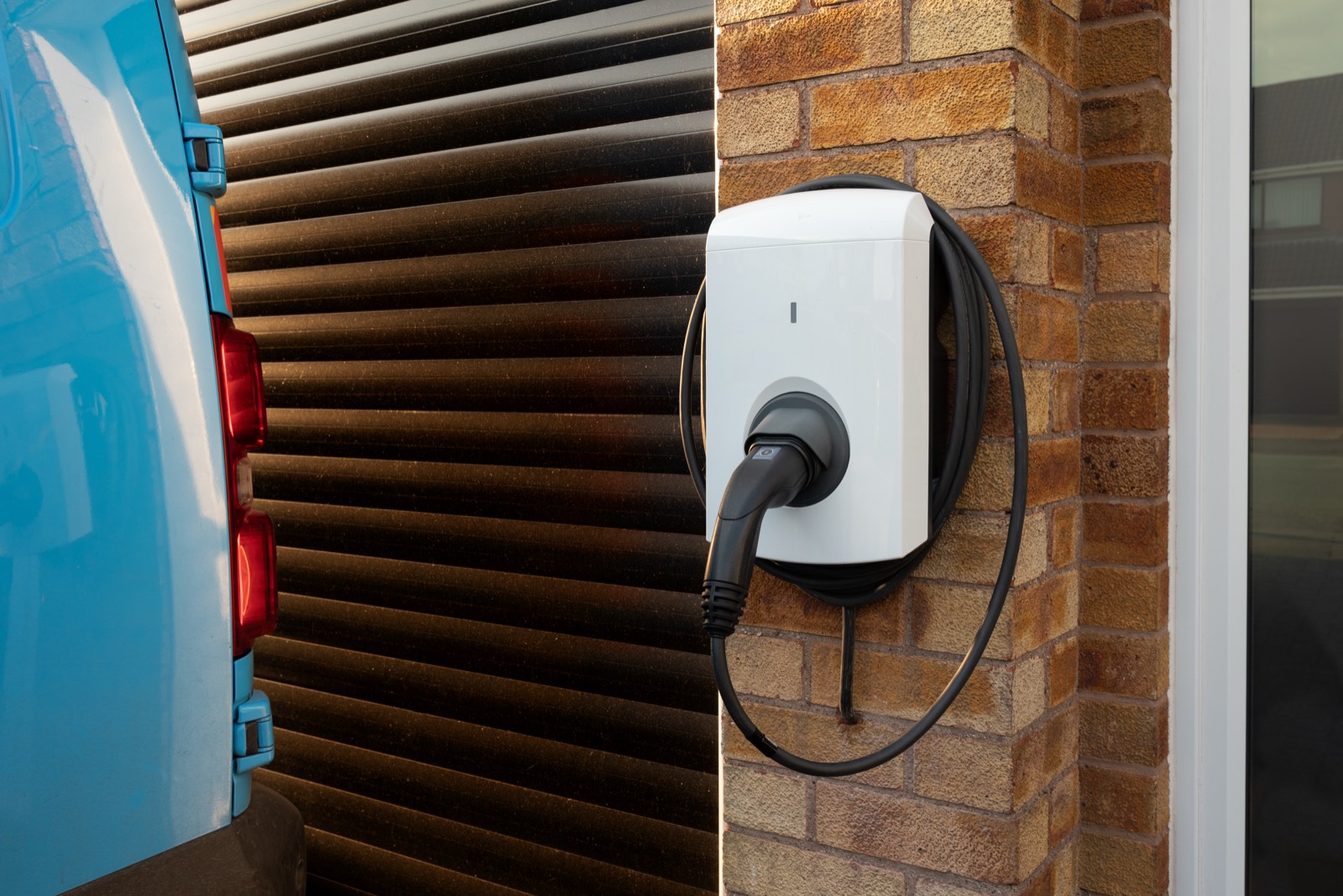
Indoor garage installations are usually the simplest. The charger can often be mounted on plywood, masonry, or a finished wall near the parking spot. The wire route may be visible in conduit or concealed if there is access above or below. We also look at where the Tesla charge port sits when parked, so the cable reaches without crossing a walkway or being stretched tight.
Outdoor mounting needs more planning. A Tesla Wall Connector can be installed outdoors when the installation follows the manufacturer’s rating and the electrical work uses suitable weatherproof methods. That usually means exterior-rated conduit or cable where required, sealed fittings, proper support, and a location protected from snow piles, vehicle impact, and constant cable strain.
Common location details that affect the estimate include:
- Which side of the driveway the Tesla parks on
- Whether the charger is inside the garage, on an exterior wall, or on a post
- Whether the panel is in the garage, basement, utility room, or finished area
- Whether conduit will be visible or the route must be concealed
- Whether the cable crosses a foundation wall, brick, stucco, or finished ceiling
- Whether the charger needs to share a wall with storage, garbage bins, or snow-clearing equipment
Detached garages are a separate discussion. If the garage already has a properly sized feeder and subpanel, an EV circuit may be possible from there. If the garage has only a small lighting-and-outlet feed, adding a Tesla charger may require a new feeder or trenching. That can move the project out of a standard charger quote and into a larger garage power scope.
The same logic applies to other large 240V loads. A dryer, range, hot tub, and EV charger are all dedicated circuits, but the route, load, and protection are different. If you are comparing scopes, our pages on dryer circuit installation cost and hot tub circuit cost show why amperage alone does not determine price.
ESA notification and inspection are part of a proper Tesla charger install
A new EV charger circuit in Ontario requires ESA notification where applicable, and the installation must be ready for inspection. This is not paperwork added after the fact; it affects how the circuit is designed, labelled, protected, and documented.
For a Tesla Wall Connector, the ESA inspection is generally concerned with the same practical issues that keep the installation safe for daily charging:
- Correct breaker size for the configured charger output
- Correct conductor size and wiring method for the circuit
- Proper grounding and bonding
- Suitable fittings and boxes for indoor or outdoor conditions
- Mechanical protection where cable or conduit could be damaged
- Charger mounted securely at a practical height and location
- Panel directory updated so the EV circuit is clearly identified
- Work completed by a licensed electrical contractor, not treated as handyman work
The inspection also protects you later. If you sell the home, make an insurance claim, or need warranty support on equipment, an unpermitted high-current EV circuit can become a problem. A Tesla charger is visible, valuable, and easy for an inspector to ask about.
Timeline is usually simple when the panel is ready and the route is accessible. Many standard installations can be completed in a single visit, with the ESA inspection following the authority’s scheduling process. More complicated jobs may need a first visit for assessment, a written quote, utility coordination if the service is changing, and then installation.
Do not install the Wall Connector first and ask an electrician to “just hook it up” if the wiring is already buried or hidden. The routing, conductor type, fastening, and box entry all need to be visible enough to verify. If defects are found after walls are closed, the correction can cost more than doing the circuit properly from the start.
The cheapest quote is not always the lowest-cost charger
The right Tesla charger quote should tell you the amperage, the route, the panel assumptions, whether the charger is included, and whether ESA notification is included. If those details are missing, two prices may not be quoting the same job.
A clear written estimate should answer:
- Is this for a Tesla Wall Connector or a receptacle?
- Is the charger hardware included or supplied by the homeowner?
- What breaker size and charging output are being proposed?
- Has a load calculation been done?
- Is load management included if the panel is tight?
- Is the run surface-mounted, concealed, underground, or outdoors?
- Is ESA notification and inspection included?
- Are drywall repairs, trenching, or utility work excluded?
For many homes, the best value is not maximum amperage. A lower-output Wall Connector on an existing service can be the smarter choice if it gives you a full overnight charge without forcing a panel upgrade. For other homes — especially with two EVs, a heat pump, electric range, hot tub, or future battery storage — it can make sense to plan the service and panel properly now.
If you are also considering backup power, compare the EV load with battery plans early. A home battery has its own capacity, backup gateway, and circuit decisions; see Powerwall installation cost if you are trying to plan the electrical room once instead of revisiting it twice.
The practical next step is to send panel photos, charger location photos, and the distance between them, then book a site visit if the route or capacity is not obvious. We can then quote the Tesla charger installation in writing and identify whether it is a simple Level 2 circuit, a managed-load installation, or a panel upgrade conversation.
Want a licensed electrician to take a look?
Free written quote, usually the same day. ESA permits handled.
People also ask
Is the Tesla Wall Connector included in the installation cost?
Sometimes, but it should be stated clearly on the quote. The electrical installation and ESA notification are separate from the charger hardware. If you have not purchased the Wall Connector yet, budget for the charger itself as part of the total; charger hardware commonly adds $500–$1,200 depending on the model and supply.
Do I need a 200 amp panel for a Tesla charger?
Not always. Many 100A homes can still charge a Tesla if the load calculation works, the charger is set to an appropriate output, or an approved load-management device is used. If the home already has major electric loads and little capacity left, a 200A upgrade may be the safer long-term answer.
Is a hardwired Tesla Wall Connector better than a NEMA 14-50 outlet?
For daily charging, we usually prefer a hardwired Tesla Wall Connector. It removes the plug-and-receptacle connection, can be set to the circuit size, and is a cleaner permanent installation. A NEMA 14-50 can be useful for portability, but it still needs a properly installed dedicated 240V circuit and ESA notification.
Can a Tesla charger be installed outside in Ontario winter?
Yes, a Tesla Wall Connector can be installed outdoors when the equipment rating and wiring method are suitable for the location. The estimate should account for weatherproof fittings, exterior conduit or cable where required, secure mounting, snow and ice exposure, and protection from vehicle or shovel damage.