Answered by a licensed electrician
How much does breaker replacement cost?
Quick answer
Breaker replacement cost in the GTA usually starts with a $150–$250 service-call minimum for a simple compatible breaker swap. If the breaker is tripping because of a circuit fault, expect diagnostic labour at $95–$150 per hour, with the repair quoted in writing once the cause is found.
A simple breaker replacement usually starts at the service-call minimum
A straightforward breaker replacement is usually the lowest-cost panel visit: the electrician confirms the panel model, installs the correct listed breaker, checks the connection, and tests the circuit under load. In the GTA, the practical starting point is the service-call minimum of $150–$250, with licensed electrician labour benchmarked at $95–$150 per hour when extra time is needed.
That simple price picture only applies when all of these are true:
- The existing breaker has failed mechanically or will not hold properly, but the circuit itself tests normal.
- The panel accepts a currently available, approved replacement breaker.
- The bus bar where the breaker clips on is clean, tight, and undamaged.
- The wire size matches the breaker rating.
- There is no evidence of overheating, arcing, moisture, double-tapping, or amateur panel work.
The breaker has to match the panel, not just the amperage. A 15A breaker from the wrong manufacturer may physically clip in, but that does not make it approved for that panel. We check the panel label, breaker type, interrupting rating, wire size, and whether the space is designed for a full-size, tandem, AFCI, GFCI, or combination breaker.
City Power Electrical Services is a Licensed Electrical Contractor, ECRA/ESA #7015314, and we handle breaker and panel work with ESA notification where required, including written estimates before larger repairs.
The cost changes if the breaker is not the real problem
The main cost variable is diagnosis. A breaker that trips, feels loose, will not reset, or has scorch marks may be doing its job by reacting to a fault somewhere else. Replacing it without testing the circuit can leave the same hazard in place.
For a fault-finding visit, the labour benchmark is $95–$150 per hour, often with the $150–$250 minimum covering the first portion of the call. The final cost depends on whether the problem is inside the panel, in the branch circuit, or in a connected appliance.
Typical diagnostic steps include:
- Removing the panel cover and checking the breaker seating and bus connection.
- Testing the circuit with the load disconnected.
- Checking hot-to-neutral, hot-to-ground, and neutral-to-ground conditions.
- Looking for shared neutrals on AFCI or GFCI-protected circuits.
- Measuring load with a clamp meter when the circuit is operating.
- Opening the first few devices on the circuit if the fault appears downstream.
- Checking for loose backstabbed receptacles, damaged cable, or water-exposed boxes.
A breaker replacement is likely enough when the breaker itself is worn, cracked, physically loose, or no longer resets even after the circuit tests clean. It is not enough when the circuit is overloaded, shorted, grounded, or miswired.
Here is the practical difference:
| Situation | What you are paying for | Likely recommendation |
|---|---|---|
| Compatible breaker failed, circuit tests clean | Service call and replacement labour | Replace the breaker |
| Breaker trips only with a specific appliance | Diagnosis of appliance load and circuit capacity | Repair appliance issue or add the right circuit |
| Breaker trips with nothing plugged in | Fault tracing through cable, boxes, or devices | Repair the circuit before replacing parts |
| Breaker is loose at the panel | Panel and bus inspection | Replace breaker only if the bus is sound |
| Heat or burn marks at breaker position | Panel safety assessment | Panel repair or replacement may be needed |
If the issue is tied to a large appliance or dedicated load, the answer may be a new circuit rather than a breaker swap. Examples include dryer circuit installation, Tesla charger installation, or a hot tub circuit where the breaker, wire, GFCI protection, and load calculation all have to match.
Obsolete panels and damaged bus bars can turn a breaker job into a panel recommendation
Breaker replacement is not always safe or practical in an older panel. If the panel is obsolete, the correct breaker may be unavailable, or previous work may have left the bus damaged. In those cases, the safer recommendation can shift from breaker replacement to panel upgrade or replacement.
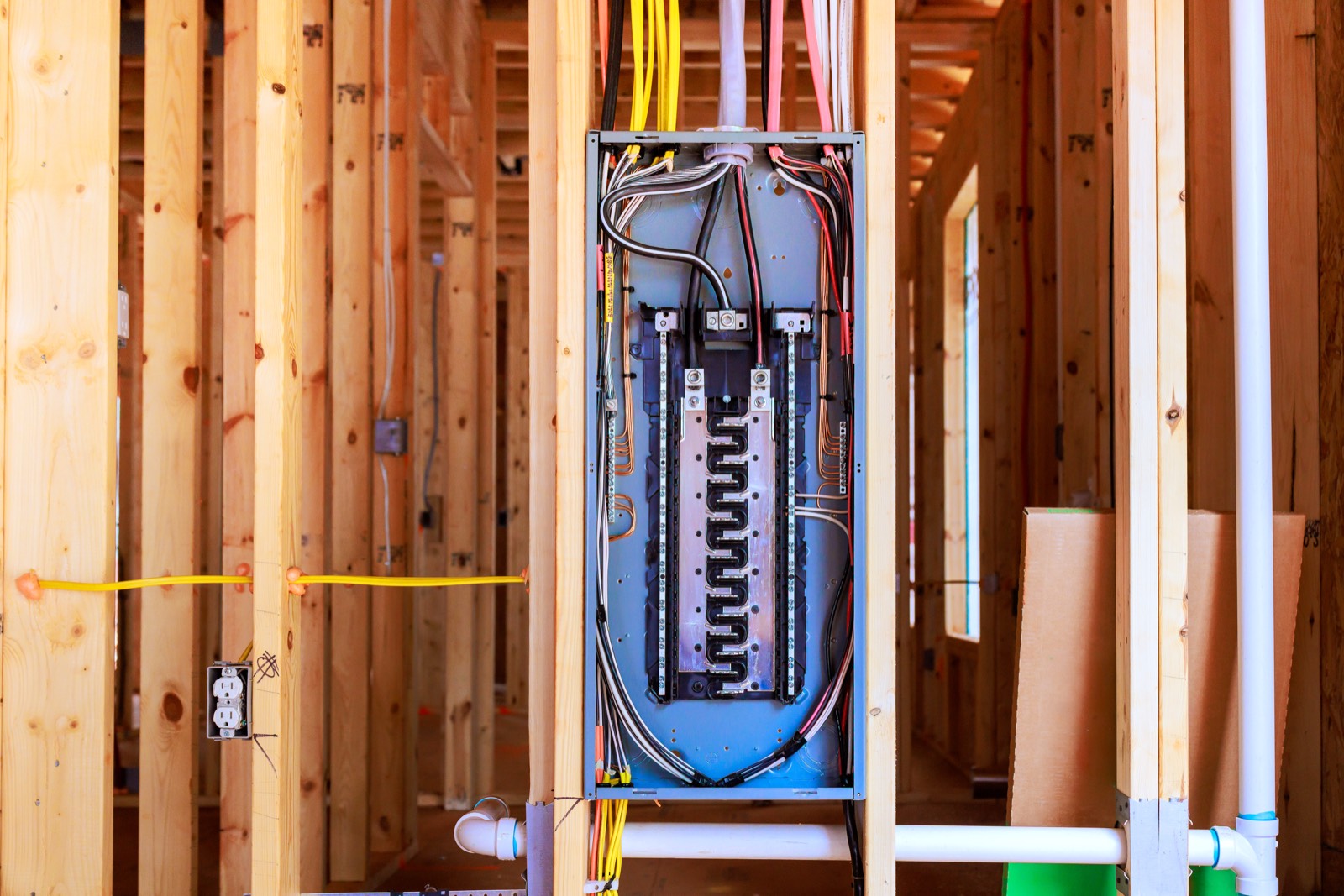
The bus bar matters because the breaker does not just sit in the panel — it clamps onto a live metal stab. If that contact is loose, pitted, overheated, or corroded, a new breaker can arc at the same point. That can create heat, nuisance tripping, melted plastic, and further damage to the panel interior.
Red flags that can change the scope include:
- Burn marks behind or beside the breaker.
- A breaker that rocks side to side or does not seat firmly.
- Discolouration on the bus stab.
- Melted plastic on the breaker body.
- A panel brand or model with limited approved replacement parts.
- Breakers from multiple manufacturers mixed into one panel.
- Tandem breakers installed where the panel label does not allow them.
- Double-tapped conductors under a breaker not rated for two wires.
- Rust, water staining, or evidence of past moisture inside the enclosure.
A panel recommendation does not mean every tripped breaker needs a new panel. It means the failure point is no longer just the breaker. If the panel cannot hold a breaker securely, cannot accept approved parts, or shows damage on the energized bus, replacing one breaker may be a short-term patch on an unsafe base.
For cost context, a 100A-to-200A panel upgrade in the GTA is commonly in the $3,200–$4,500 range including the panel, labour, ESA permit, and inspection. If the home is still on a 60A fuse service, the work often expands because the service entrance and meter base usually need replacement too; that type of upgrade is typically $4,000–$6,000.
ESA, code, and breaker compatibility affect the quote
The breaker must be approved for the panel and sized for the conductor it protects. A 20A breaker on wiring that is only suitable for 15A is not an upgrade; it removes protection from the wire. A larger breaker is only allowed when the entire circuit, device rating, and load calculation support it.
For a like-for-like service repair, the work may be limited to replacing a defective breaker and verifying the circuit. If the work becomes a new circuit, panel modification, service upgrade, or correction of unsafe wiring, ESA notification and inspection may be required. Where required, City Power includes the permit step in the written scope instead of leaving the homeowner to sort it out later.
What the electrician checks before quoting or completing the work:
- Breaker type: standard, AFCI, GFCI, dual-function, two-pole, or tandem.
- Panel label: approved breaker series, maximum spaces, and tandem locations.
- Wire size: the conductor must match the breaker rating.
- Load: the connected equipment must suit the circuit capacity.
- Terminations: wires must be landed under the correct lugs and torqued properly.
- Neutral and ground separation: especially important in sub-panels.
- Panel condition: no moisture, overheating, damaged bus, or missing fillers.
This is why a phone quote for “one breaker” can only go so far. If you can send a clear photo of the panel label, the breaker, and the panel directory, we can often tell whether it looks like a simple visit or something that needs a fuller panel assessment. The final price is still confirmed after inspection because the important parts are behind the dead front.
The safest next step is diagnosis before replacement
If a breaker trips once during an obvious overload, you can reset it once after unplugging the load. If it trips again, will not reset, smells burnt, buzzes, or shows heat marks, stop resetting it and book a licensed electrician. Repeated resetting can worsen a fault and damage the breaker or panel.
Before the visit, note:
- Which breaker is affected and what label is written on the panel directory.
- What was running when it tripped.
- Whether the breaker trips instantly or after several minutes.
- Whether any outlets, switches, or lights recently changed.
- Whether the panel has had water nearby, renovation dust, or recent utility work.
- Whether the breaker is standard, AFCI, GFCI, or has a test button.
For small device-related work, the same service-call economics often apply. If the issue turns out to be a failed receptacle or switch rather than the breaker, see typical pricing context for adding an outlet or replacing a light switch.
For breaker replacement cost, the honest answer is: a clean, compatible swap may fit the service minimum, but a tripping breaker is a symptom until proven otherwise. The right job is the one that confirms whether the breaker failed, the circuit failed, or the panel itself is no longer a safe place to install parts.
Want a licensed electrician to take a look?
Free written quote, usually the same day. ESA permits handled.
People also ask
Can I replace a breaker myself in Ontario?
Homeowners should not treat breaker replacement as a simple plug-in part swap. The panel contains live service equipment, and the breaker must be approved for that exact panel and sized to the wire. In Ontario, electrical work must meet the OESC, and ESA notification is required where the scope triggers it.
Is it cheaper to replace the breaker or fix the circuit?
Replacing the breaker is cheaper only when the breaker is actually defective and the circuit tests normal. If the breaker is tripping because of a short, ground fault, overload, loose connection, or damaged cable, the cost shifts to diagnosis at $95–$150 per hour plus the repair needed.
When does breaker replacement become panel replacement?
It becomes a panel conversation when the breaker will not seat securely, the bus bar is burned or pitted, compatible breakers are no longer available, or the panel has unsafe alterations. A damaged bus cannot be fixed by installing a new breaker on the same bad contact point.
Do I need an ESA inspection for one breaker?
It depends on the exact work. A like-for-like service repair may be treated differently than adding a circuit, changing breaker type, correcting unsafe wiring, or replacing the panel. If ESA notification is required, it should be filed by the electrical contractor and included in the written scope.