
Cost Guide
Service Mast Replacement Cost Ontario
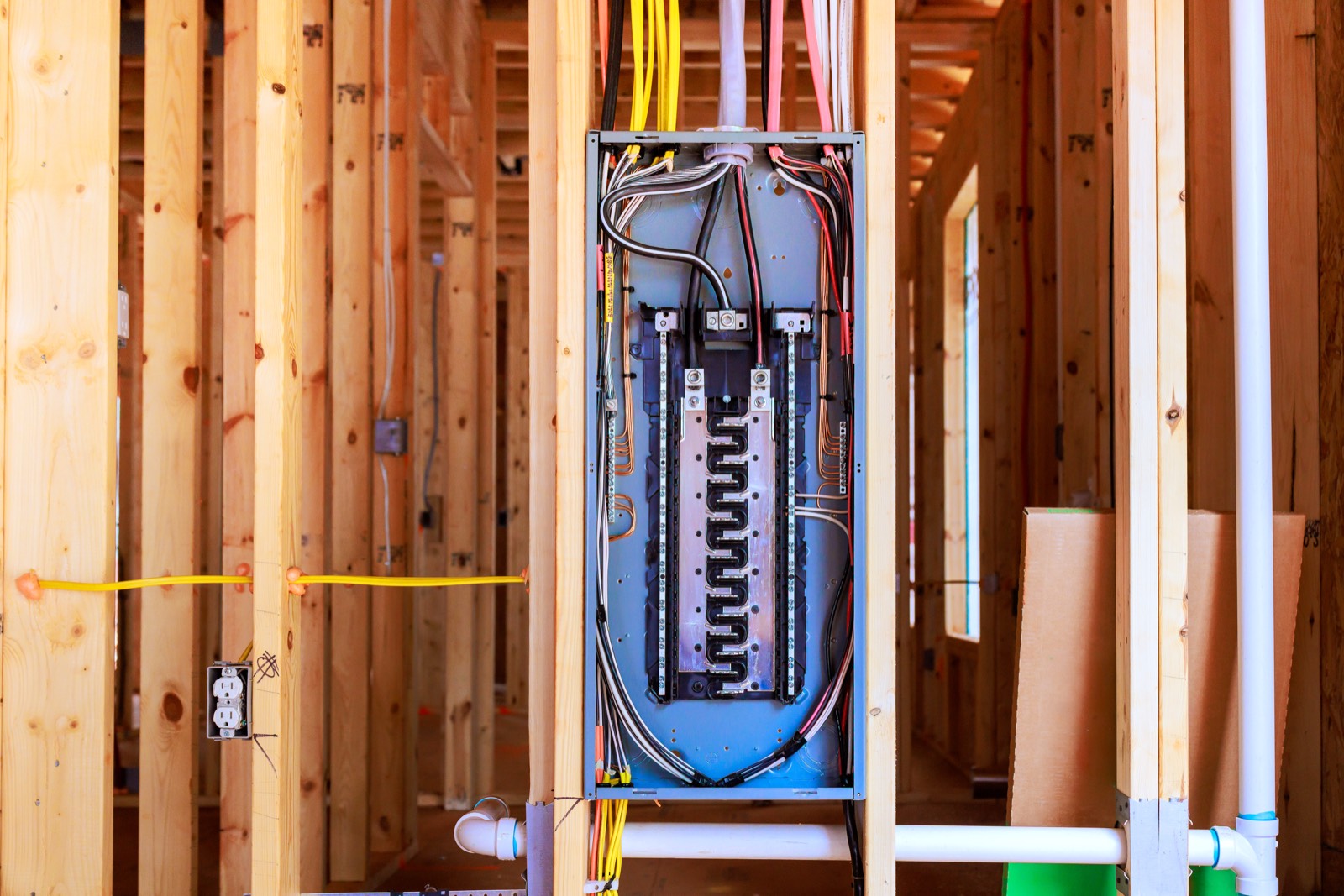
A service mast replacement in Ontario is quoted in writing after a site visit unless it is part of a published service upgrade package. The reason is simple: the mast is tied to the utility service drop, the meter base, the panel, exterior wall conditions, roofline clearances, and ESA inspection requirements.
If the mast replacement is part of a 100A-to-200A service upgrade, the published GTA range is $3,200–$4,500 including the panel, labour, ESA permit, and inspection. If you are upgrading from a 60A fuse panel, the published range is $4,000–$6,000 because the service entrance and meter base usually need replacement too.
For mast-only work, City Power prices it after seeing the site. A straight mast repair on open siding is very different from a storm-damaged mast that has pulled away from brick, bent the meter base, damaged the service conductors, and needs utility coordination before power can be restored.
The short answer: mast-only work needs a site quote; mast plus 200A upgrade has a published range
A mast-only replacement is quoted in writing after a site visit because the electrician has to confirm what is damaged and what must be brought up to current requirements before the utility will reconnect.
A service mast is not just a pipe on the side of the house. It is the rigid raceway that carries the overhead service conductors from the weatherhead down toward the meter base. It also supports the service attachment where the utility’s overhead conductors meet the house. If the mast is leaning, corroded, too short, poorly braced, or pulled loose from the wall, the utility may not reconnect until it is corrected.
If you are doing the mast at the same time as a 200-amp panel upgrade, the known published range is $3,200–$4,500 including the panel, labour, ESA permit, and inspection for a typical 100A-to-200A upgrade in the GTA. That is often the practical time to deal with an undersized mast, old weatherhead, worn service conductors, or a meter-base issue because the service is already being disconnected and inspected.
If the home still has a 60A fuse service, the published range is $4,000–$6,000 because the service entrance and meter base usually need replacement too. That is a different job from a cosmetic panel swap: the mast, meter equipment, grounding, and service conductors all have to be assessed as one system.
What is included in a proper overhead service mast replacement
A proper mast job includes the mast, weatherhead, conduit path, service attachment, grounding checks, utility coordination, ESA notification where required, and final inspection. The visible pipe is only one piece.
On a typical overhead residential service, we look at:
- Weatherhead condition: the weatherhead should shed water away from the service conductors and keep rain out of the raceway.
- Mast conduit: the riser must be suitable for service entrance use, properly supported, and not crushed, split, rusted through, or loose at couplings.
- Service attachment: the point where the utility service drop attaches must be mechanically sound. A mast that flexes or leans under conductor tension is not acceptable.
- Clearances: overhead service conductors need safe clearance from grade, driveways, decks, roofs, windows, balconies, trees, and future structures.
- Meter base relationship: if the mast connects directly into an old or damaged meter base, the meter base may also need work. See our related guide on meter base replacement cost in Ontario for that separate scope.
- Grounding and bonding: the grounding electrode conductor, water bond where applicable, panel bonding, and service equipment must be checked as part of the service work.
- Exterior wall repair limits: electrical contractors can fasten and weather-seal the electrical equipment, but siding, masonry, soffit, or roof repairs may require another trade if the storm damage is broader.
This is also why photos help but do not replace a site visit. A photo may show a bent mast; it will not confirm conductor condition inside the raceway, whether the mast height meets the utility’s requirement, or whether the meter base has been stressed.
Service mast replacement cost factors in Ontario
The biggest cost drivers are utility coordination, access, the condition of the meter base and panel, and whether the job is mast-only or part of a service upgrade. Published prices exist for common panel/service upgrade packages; mast-only work is quoted after inspection.
| Scope or cost driver | How it affects the quote | Published price where available |
|---|---|---|
| Mast-only replacement | Depends on wall type, roofline, conductor condition, weatherhead, bracing, utility requirements, and whether the meter base is reusable | Quoted in writing after a site visit |
| Storm-damaged mast | May include emergency make-safe work, temporary disconnection, damaged siding or brick, bent service conductors, and utility reconnect timing | Quoted in writing after a site visit |
| 100A-to-200A upgrade with service mast work | Often combines mast, service entrance, panel, ESA notification, and inspection while power is already disconnected | $3,200–$4,500 including the panel, labour, ESA permit, and inspection |
| 60A fuse service upgrade | Usually needs more than the panel because the service entrance and meter base are commonly replaced too | $4,000–$6,000 because the service entrance and meter base usually need replacement too |
| Meter base damage or replacement | If the mast pulled on the meter base, the base may not be safe to reuse | Quoted in writing after a site visit |
| Clearance corrections | A taller mast, different attachment point, or additional bracing may be needed to satisfy utility and OESC clearance requirements | Quoted in writing after a site visit |
| ESA notification and inspection | Required where applicable for service work and normally coordinated as part of the job | Included in the published panel upgrade ranges above where stated |
The key point: do not compare mast quotes by the length of conduit alone. The real work is planning the disconnect, rebuilding the service entrance safely, meeting clearance requirements, passing inspection, and getting the utility to reconnect.
Common triggers: storm damage, corrosion, leaning mast, and 200A upgrades
Most mast calls start with one of four triggers: a storm, visible corrosion, a leaning mast, or a service upgrade.
Storm damage is the urgent one. Wind, ice, and falling branches can pull the overhead service drop hard enough to bend the mast, loosen the attachment point, crack the hub at the meter base, or tear fasteners out of the wall. If the mast is moving, the meter base is pulled away, or you see arcing, buzzing, burning, or exposed conductors, stay away and call the utility or emergency help. Do not try to push the mast back into place.
Corrosion is slower but just as important. Older steel masts can rust at the roofline, at couplings, around straps, or where water sits above the meter. A mast that looks fine from the ground can be thin at the back where it meets brick or siding. Rust around the weatherhead or meter hub can also indicate water entry.
A leaning mast usually means the service drop tension is no longer being held correctly. Sometimes the mast was never braced well. Sometimes fasteners have loosened in old brick or wood. Sometimes a new deck, porch, garage, or roof change has altered the clearance around the service conductors.
The fourth trigger is a 200A upgrade. When a house adds EV charging, a hot tub, electric heating equipment, a larger renovation, or a finished basement load, the panel calculation may point toward a service upgrade. At that point, the mast and service entrance have to be assessed together, not treated as an afterthought. If you are planning other new loads, our dedicated circuit installation cost guide explains how individual 20A, 30A, 40A, and 50A circuits are usually considered alongside panel capacity.
Utility disconnect, ESA inspection, and reconnect: how the day usually works
A mast replacement requires coordination because the overhead service conductors are controlled by the utility and must not be handled as ordinary house wiring. The safe sequence is planned before work starts.
For Toronto and the GTA, the utility may be Toronto Hydro, Alectra, Oakville Hydro, Burlington Hydro, Oshawa Power, Elexicon, Hydro One, or another local distributor depending on the address. Each has its own process for disconnect and reconnect appointments. The electrician also has to follow the Ontario Electrical Safety Code and file an ESA notification where required.
A typical planned mast replacement follows this sequence:
- Site visit and quote. We inspect the mast, weatherhead, meter base, panel, grounding, attachment point, and clearances. We confirm whether this is mast-only or part of a service upgrade.
- Utility and ESA planning. The job is scheduled around utility disconnect/reconnect availability and ESA inspection requirements.
- Power disconnect. The utility disconnects or otherwise makes the service safe for the electrician to work on. This is not DIY territory.
- Mast and service entrance work. The damaged or outdated mast, weatherhead, conductors, fittings, bracing, and related service entrance components are replaced as required by the approved scope.
- Inspection. ESA inspection is completed where required. The inspector checks that the service equipment, conductor installation, grounding/bonding, and clearances meet the applicable requirements.
- Reconnect. The utility reconnects after the required approvals are in place.
- Cleanup and documentation. City Power provides full cleanup and written documentation for the completed electrical scope.
For homeowners buying an older property, a mast issue may show up during a broader electrical review. Our electrical inspection cost in Ontario guide explains what is checked in a safety inspection and when a written report is useful before negotiating repairs.
How to get an accurate service mast quote
The fastest accurate quote comes from clear photos plus a site visit, not a rough price over the phone. We need to know what the mast connects to, what condition the service equipment is in, and whether the utility will accept the existing layout.
Before the visit, send:
- A photo of the whole service side of the house from ground to roofline.
- A close photo of the weatherhead and overhead wires.
- A close photo of the meter base.
- A photo of the main electrical panel with the door open.
- Any notice from the utility, ESA, insurance company, or home inspector.
- A short description of what happened: storm, tree branch, visible lean, corrosion, renovation, or planned 200A upgrade.
During the visit, we confirm whether the mast can be replaced on its own or whether the meter base, service conductors, grounding, or panel need to be included. We also check access: ladders, roof edge, driveway, fences, overhead tree limbs, finished ceilings inside, and working space around the meter and panel.
For service mast replacement work in Ontario, City Power Electrical Services operates as a Licensed Electrical Contractor, ECRA/ESA #7015314. We serve Toronto and the GTA, provide free written estimates, arrange ESA permits where required, and coordinate the electrical scope through inspection. If your overhead mast is storm-damaged, leaning, corroded, or being replaced as part of a service upgrade, start with a written assessment rather than a guess. You can also browse more related Ontario electrical cost guides on our blog.
Want a licensed electrician to take a look?
Free written quote, usually the same day. ESA permits handled.