Cost Guide
Condo EV Charger Installation Cost
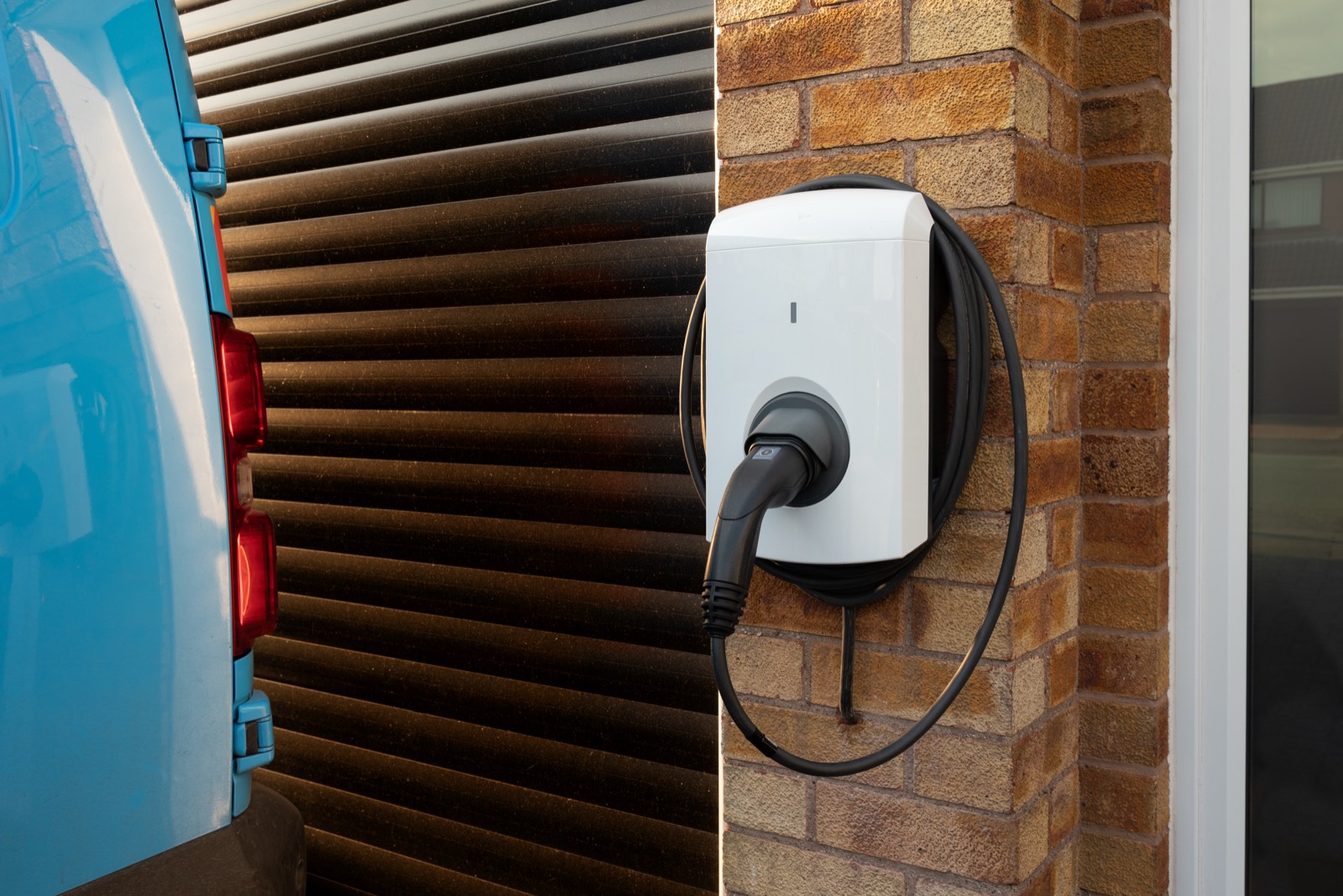
Condo EV charger pricing is less predictable than a detached-home install because the electrical work is only one part of the job. The parking stall may be far from the electrical room, the condo corporation may require drawings or an approval package, and the building may need load management before any charger is allowed.
For a simple detached-home benchmark, a straightforward Level 2 installation in the GTA — panel nearby, capacity available — runs $800–$1,500 for labour, materials, and the ESA permit. In a condo, longer cable routes or finished surfaces can raise installation to $1,500–$3,500, before adding $500–$1,200 for the charger unit. For many condo owners, the total cost typically comes in around $1,500 to $3,000.
A condo install can be similar only when the stall, panel, path, metering, and approvals are simple. Many are quoted in writing after a site visit because the building conditions decide the number.
Condo EV charger cost is driven by approval, distance, metering, and capacity
The honest answer for many condo EV charger installations is: quoted in writing after a site visit. A condo parking garage is not the same as a garage attached to a house. We have to confirm who owns the electrical equipment, how the parking stall is assigned, where the charger can mount, how the power will be metered, and whether the building has enough spare capacity.
Here is how the main cost drivers usually break down.
| Cost item | Typical pricing or quoting approach | What affects it |
|---|---|---|
| Straightforward Level 2 home benchmark | $800–$1,500 for labour, materials, and the ESA permit | Panel nearby, capacity available, simple routing |
| Longer home wire run or finished-wall routing benchmark | $1,500–$3,500 | Distance, access, surface conduit versus fishing cable |
| Charger hardware | $500–$1,200 | Charger model, amperage, smart features, connector type |
| Most detached-home all-in installs | $1,500–$3,000 all-in | Common reference point, not a promise for condo garages |
| Condo board approval package | Quoted in writing after a site visit | Drawings, load information, insurance paperwork, property manager requirements |
| Parking stall conduit run | Quoted in writing after a site visit | Distance from panel or EV distribution point, concrete, fire separations, ceiling height, garage routing rules |
| Metering or billing setup | Quoted in writing after a site visit | Suite meter connection, common-area meter, sub-metering, networked billing, condo corporation requirements |
| Load-management device | Often avoids a panel upgrade when capacity is tight; quoted in writing after a site visit | Available capacity, number of EV stalls, charger amperage, building policy |
| Panel upgrade, where applicable in a home setting | $3,200–$4,500 for a 200A upgrade including the ESA permit | More common in detached homes than condo parking garages |
For a broader benchmark on non-condo installations, see our EV charger installation cost guide. For the actual installation service, start with licensed EV charger installation in Toronto and the GTA.
Condo board approval is part of the cost, not an afterthought
Most condo EV projects start with the corporation or property manager, not with the drill. Before anyone runs conduit across a parking garage, the board usually wants to know exactly what is being installed, where it will go, how it will be powered, and who pays for the electricity.
The approval package may ask for:
- The charger make, model, amperage, and installation manual
- A marked parking-level plan showing the stall, conduit path, and mounting point
- Electrical load information and the proposed breaker size
- Confirmation that a Licensed Electrical Contractor is doing the work
- ESA notification and inspection information, where required
- Proof of insurance from the contractor
- A method for metering, billing, or reimbursing electricity use
- Confirmation that the installation will not block drive aisles, pipes, sprinkler equipment, drains, or garage equipment
Some condos already have an EV policy and a standard form. Others handle each request individually. That difference matters. A building with a clear EV process is usually faster to price and approve. A building without one may need more back-and-forth before the quote is final.
This is one reason condo installs may differ from detached-home charger installs. At a house, the decision is usually between the homeowner, the electrician, the ESA, and sometimes the utility. In a condo, the corporation controls common elements, the garage structure, and often the electrical distribution equipment serving the parking level.
Parking stall distance can change the whole job
The biggest physical cost variable is often the distance between the approved power source and your parking stall. A stall beside an electrical room is a very different job from a stall on the far side of a multi-level garage.
In a condo garage, we look at the full route, not just the straight-line distance. A proper route may have to follow walls, beams, cable tray areas, or approved conduit paths. It may need to avoid exhaust fans, sprinkler mains, drain lines, overhead doors, storage rooms, and other residents’ stalls. If the conduit crosses a fire separation, the penetration has to be sealed properly. If the charger is mounted on a concrete column, the anchors and location have to suit the building rules.
Common routing details that affect the quote include:
- Whether the conduit is surface-mounted on concrete or run through an existing raceway
- How many parking stalls, drive aisles, or garage levels the route crosses
- Whether coring, sleeves, firestopping, or special access is required
- Whether the charger can mount on a wall, column, pedestal, or Unistrut frame
- Whether the building requires work during specific hours
- Whether the shutdown of any electrical equipment is needed
This is where a condo quote becomes building-specific. Two owners with the same vehicle and charger can pay different amounts because one stall is close to the electrical room and the other is far away with a difficult route.
If the charger is fed like a dedicated branch circuit, the same basic principles apply as other high-load circuits, but with EV-specific code and load requirements. For reference, see our dedicated circuit installation cost guide, keeping in mind that condo garage routing is usually more involved.
Metering and load management decide whether the charger can be approved
A condo board will usually ask a simple question: who pays for the electricity? The answer affects the design.
There are several possible approaches, depending on the building:
- Feed from the owner’s suite panel or meter, if the building design allows it
- Feed from a common-area electrical panel with sub-metering or billing
- Use a networked charger that reports energy use for reimbursement
- Install a building EV distribution system for multiple stalls
- Use load management so chargers reduce output when building demand is high
The right method depends on the condo’s electrical infrastructure and rules. Some buildings do not allow individual conduit runs from suite panels to parking stalls. Some prefer all EV chargers to be on a shared EV system. Some require a networked billing platform. Others allow a dedicated installation for one owner if the load calculation works.
Load management is often the difference between yes and no. Instead of assuming every charger will draw maximum power at the same time, an approved load-management setup can limit charging output based on available capacity. That may allow more chargers without immediately upgrading major building electrical equipment.
In detached homes, if capacity is tight, a load-management device often avoids a panel upgrade; otherwise we upgrade to 200A at the same time. In condos, the same idea applies at a different scale: the building, board, engineer, or electrician may require a managed system rather than a simple breaker and charger.
Subpanels can also enter the conversation when a building is creating an EV area or adding capacity for several stalls. If your board is considering that path, our subpanel installation cost guide explains the basic cost factors, although condo common-area work is quoted after review.
ESA permits and licensed contractors are not optional details
In Ontario, condo EV charger work should be handled by a Licensed Electrical Contractor.
Where an ESA notification is required, we file it and arrange the inspection. The ESA inspection is there to confirm that the installation matches the Ontario Electrical Safety Code and the approved scope. For an EV charger, that can include the breaker, conductor size, grounding and bonding, GFCI protection where required, disconnecting means where applicable, labelling, mechanical protection, and the installation of the charger itself.
In a condo garage, the inspection is not only about the charger turning on. The installation has to be suitable for the location. The inspector may look at the raceway, support spacing, panel connection, overcurrent protection, conductor type, and whether the work has been left safe and accessible.
Common failure points we watch for before inspection include:
- Charger amperage set higher than the circuit is designed for
- Missing or unclear panel labels
- Unsupported conduit in the garage ceiling area
- Incorrect breaker type for the equipment
- Poor placement where the cord creates a trip or impact hazard
- No clear metering or ownership arrangement for the circuit
Every City Power job is permitted with the ESA where required and inspected. We also provide free written estimates and full cleanup.
The best quote starts with the right site information
To price a condo EV charger accurately, we need more than the charger model. The faster we can see the building conditions, the faster we can give a useful written quote.
Before requesting a quote, collect:
- Your condo corporation’s EV charging policy, if it has one
- The property manager’s application form or contractor rules
- Your parking level and stall number
- Photos of the stall, nearby walls or columns, and the ceiling above the likely route
- Any known electrical room location near the parking area
- The charger model you want installed, if already chosen
- Any board requirements for metering, billing, drawings, or insurance
Then we confirm the path, capacity, approval requirements, and ESA process. If the building needs a board package, we can help identify the electrical information usually required. If the board needs more formal engineering or building-wide EV planning, that is flagged before work starts.
The key is not to buy equipment and hope the garage can accept it. In condos, approval and infrastructure come first. A charger that is perfect for a detached driveway may not be the right choice for a shared underground garage.
City Power Electrical Services serves Toronto and the GTA, including North York, Scarborough, Etobicoke, Mississauga, Brampton, Markham, Vaughan, Richmond Hill, Oakville, Burlington, Pickering, Ajax, Whitby, Oshawa, and nearby areas. For a written quote, call 416-837-4038 or start with our EV charger installation service. You can also browse more pricing topics in our electrical cost guide hub.
Want a licensed electrician to take a look?
Free written quote, usually the same day. ESA permits handled.