Answered by a licensed electrician
Why are my outlets loose?
Quick answer
Loose outlets are usually caused by worn receptacle contacts, loose device screws, a cracked electrical box, or a wall opening that no longer supports the device. Do not keep using an outlet that moves, sparks, or won’t hold a plug. A standard receptacle replacement is usually $80–$120 per device.
Loose outlets usually come from the receptacle, the box, or the wall opening
Loose outlets usually have one of four causes: the receptacle is worn out, the device is not fastened tightly to the box, the electrical box is cracked or loose, or the drywall/plaster opening has broken away around it.
Those are different problems, and the fix is different for each one. A receptacle that wiggles slightly inside the cover plate may only have loose 6-32 device screws. An outlet where the whole box moves in the wall needs the box secured or replaced. An outlet where plugs feel sloppy may have worn internal spring contacts, which is a device replacement issue rather than a wall repair issue.
Here is the quick separation:
| What you notice | Likely cause | Correct repair |
|---|---|---|
| The face of the receptacle moves when you plug in | Loose device mounting screws or broken device ears | Refasten or replace the receptacle correctly |
| The entire box moves in the wall | Loose, cracked, or unsupported electrical box | Secure or replace the box with an approved method |
| The cover plate sits proud or the device is recessed | Damaged wall opening, missing box extender, or improper depth | Correct box depth and support before reinstalling |
| Plugs slide out or feel loose | Worn receptacle contacts | Replace the receptacle; see why plugs fall out of outlets |
| The wall is broken around the outlet | Oversized cutout, crumbling plaster, or previous bad repair | Repair support, then mount the device without relying on the cover plate |
The cover plate is not supposed to hold the outlet in place. It is a finishing cover. The receptacle should be mounted to a solid electrical box, and the box should be properly supported in the wall. If the wall plate is the only thing stopping the outlet from moving, the repair is not done.
Older homes in Toronto often have plaster that has cracked around the device opening. Renovated condos sometimes have outlets recessed too far behind tile, backsplash, millwork, or panelled walls. Basement finishes often expose another issue: the device was installed before drywall thickness, tile, or a cabinet panel changed the final wall surface. In each case, the outlet needs proper box depth, support, and a device that sits square and firm.
A loose outlet matters because movement can loosen connections and create arcing
A loose outlet is not just annoying; repeated movement can stress the conductors and terminals behind the device. When a receptacle rocks every time you insert or remove a plug, the copper conductors can shift, terminal screws can loosen, and older push-in connections can lose pressure.
That matters because electricity needs a tight, continuous contact path. A loose contact creates resistance. Resistance creates heat. If the gap opens and closes under load, it can arc. Arcing is a tiny electrical jump across an air gap, and it can damage the receptacle, carbonize insulation, pit the metal contact surfaces, and eventually create a fire risk inside the box.
Do not keep using the outlet if you notice any of these signs:
- Crackling, snapping, or visible sparking when a plug moves
- A plug that only works when held at a certain angle
- Brown marks, melting, or a brittle cover plate
- A loose outlet feeding a high-load appliance, heater, microwave, kettle, or air conditioner
- A device that moves in and out of the wall with the cord
- Burning smell from the outlet area
- A two-prong outlet or ungrounded old device that is also loose
If the outlet is also hot to the touch, treat that as a higher-priority warning and read why an outlet is warm. Warmth under load can point to an overloaded device, loose termination, or failing receptacle.
The failure mode is often hidden. The front of the outlet may look normal while the back has a loose side screw, a conductor inserted poorly under a terminal, a broken plastic box, or heat damage around a stab-in connection. That is why simply tightening the cover plate is not a real electrical repair.
The proper fix is to open the box, inspect the connections, and secure the outlet correctly
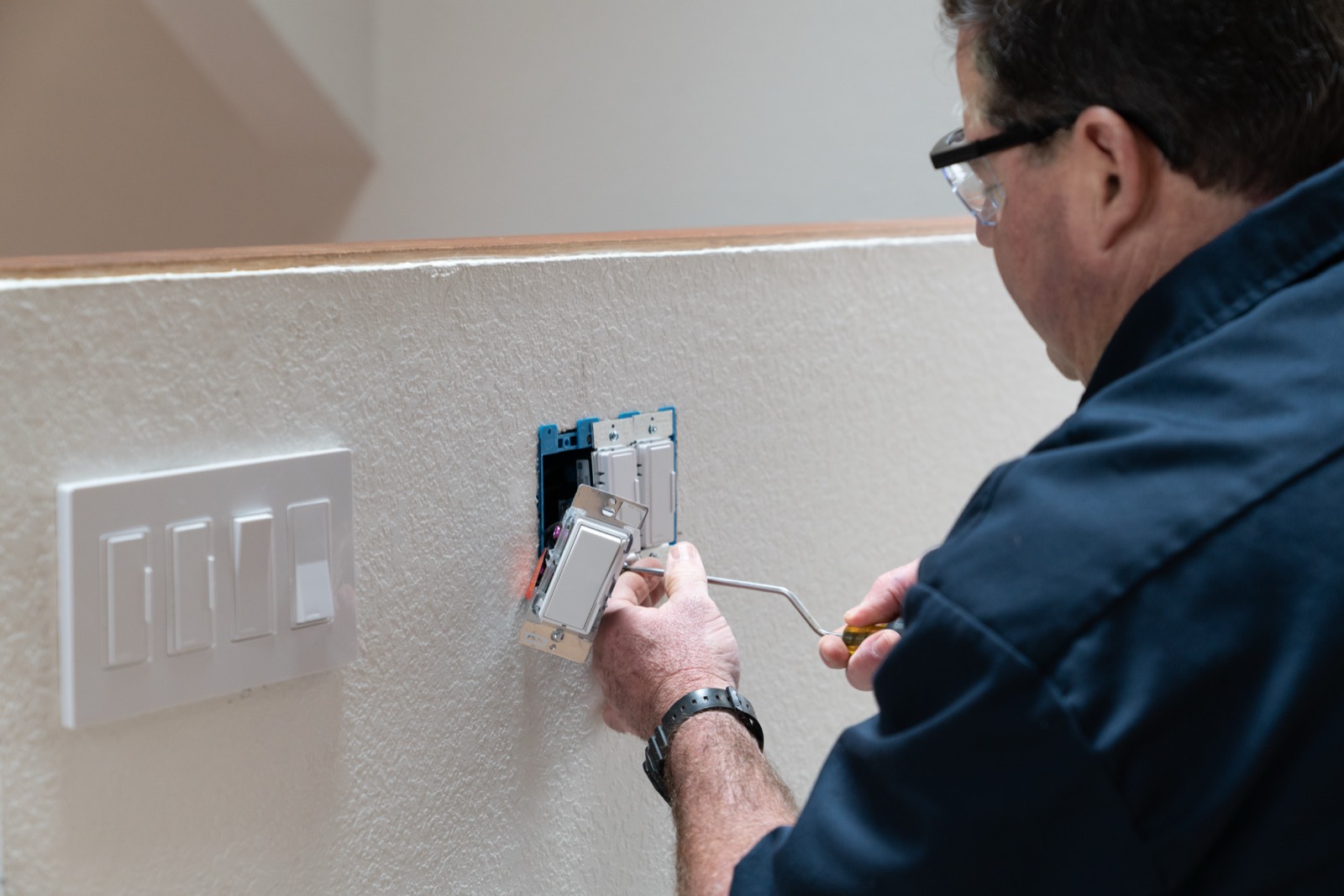
The proper repair starts with shutting off the circuit, verifying it is de-energized, removing the cover plate, and inspecting the device and box. The visible wiggle is only the symptom. The important part is what is happening behind the wall.
For a loose receptacle, we check:
- Whether the device screws are the right length and properly threaded into the box
- Whether the receptacle yoke is bent, cracked, or missing its mounting ears
- Whether the box is loose on the stud, cracked, or unsupported
- Whether the wall opening is too large to support the device neatly
- Whether conductors are damaged, nicked, overheated, or too short
- Whether the grounding conductor is present and properly bonded
- Whether backstabbed conductors should be moved to screw terminals or properly pigtailed
- Whether the device is the right type for the room, such as GFCI protection where required
If the receptacle itself is worn, replacement is usually the cleanest repair. Old devices lose spring tension, especially in outlets used for vacuums, chargers, lamps, space heaters, or kitchen appliances. A new, properly rated receptacle restores firm contact and reduces movement.
If the box is the problem, the fix may involve securing the existing box, replacing a cracked box, adding an approved box extender, or correcting a recessed device behind tile or backsplash. We do not use caulking, drywall mud, tape, or an oversized cover as the “support.” Those hide the problem and still leave the device moving under pressure.
If the wall opening is damaged, the electrical repair and wall repair need to work together. Sometimes the right sequence is to secure or replace the box first, then patch the plaster or drywall around it so the device sits flush and square. In other cases, a box extender or proper support ring brings the device forward to the finished wall surface.
If the outlet is two-prong, loose, and old, it is worth stepping back before replacing only the face device. Two-prong outlets may indicate no equipment grounding conductor at that location. See why outlets are two prong before assuming a three-prong replacement is allowed.
For kitchens, bathrooms, laundry areas, garages, basements, and outdoor-facing walls, GFCI protection may also be part of the correct repair. If the outlet location is near water or in another higher-risk area, compare it with where GFCI outlets are required in a home.
Replacement is usually straightforward, but adding or moving outlets can trigger ESA requirements
Replacing a loose receptacle in the same location is usually a small service job; adding a new outlet, moving one, changing wiring, or repairing damaged conductors is a larger electrical task and may require an ESA notification. In Ontario, the key question is not whether the job looks small from the room side, but whether electrical wiring is being altered and whether the work falls under notification requirements.
For budget planning, a standard receptacle replacement is commonly $80–$120 per device when the box and wiring are sound. GFCI devices are usually higher, often $120–$180 installed. Specialty devices such as USB-C receptacles, timers, or smart controls can land in the $120–$250 range depending on the device and wiring condition. If the box is cracked, the wall opening is damaged, or conductors need correction, the job is quoted in writing after inspection.
A loose outlet is also a good time to ask whether the circuit is doing too much. If one receptacle is feeding a power bar, office equipment, window air conditioner, microwave, or portable heater, the issue may not only be the device. The outlet still needs to be mechanically secure, but the load on the circuit should also make sense. For layout and circuit planning, see can lights and outlets be on the same circuit.
City Power Electrical Services is a Licensed Electrical Contractor, ECRA/ESA #7015314, and for outlet repairs in Toronto and the GTA we provide free written estimates, file ESA notifications where required, and clean up when the repair is complete.
If you are not sure whether your outlet repair needs a permit, start with do new outlets need permits. For direct help replacing or securing loose receptacles, book switch and outlet service.
You should stop using a loose outlet when movement affects power or the device is damaged
You can wait a short time on a cosmetic issue, but you should stop using the outlet immediately if movement changes the power, creates sparks, or exposes damage. Turn off the breaker if the outlet is arcing, smoking, discoloured, cracked, or no longer holds the device securely in the wall.
A loose outlet behind furniture can be worse than one you see every day. Cords get bumped, plugs sit under side pressure, and the problem can go unnoticed until the receptacle is heat-damaged. Outlets behind beds, sofas, desks, and entertainment units should be firm because cords often pull sideways there.
Do not try to fix a moving receptacle by:
- Tightening only the cover plate until it bends
- Stuffing cardboard, wood, tape, or plastic behind the device
- Using drywall screws through the electrical box unless the box is designed for that method
- Replacing a two-prong outlet with a three-prong without confirming grounding or approved protection
- Installing a GFCI as a guess without checking the wiring and line/load connections
The safe repair is boring: de-energize, test, open, inspect, correct the support, replace worn parts, verify grounding and polarity, and put the device back square and tight. A loose outlet should feel solid when a plug is inserted and removed. If it still moves after the cover plate is off, the repair is not finished.
Want a licensed electrician to take a look?
Free written quote, usually the same day. ESA permits handled.
People also ask
Can a loose outlet cause a fire?
Yes, it can if the looseness affects the electrical connection. Movement can loosen terminal screws, weaken old push-in connections, and create arcing or resistance heat inside the box. The risk is higher when the outlet feeds a heater, microwave, kettle, air conditioner, or other high-load device.
Is it safe to tighten the screws myself?
Tightening the cover plate is safe but usually does not fix the electrical problem. Tightening the device screws requires removing the plate and working close to energized parts unless the circuit is off and verified. If the box moves, the outlet sparks, or the device is cracked, have it opened and inspected properly.
Why does my outlet move after a renovation?
Renovations often change the finished wall depth. Tile, backsplash, paneling, or drywall repairs can leave the box recessed or unsupported, so the receptacle floats behind the cover plate. The fix may be a proper box extender, support correction, or box replacement, not just longer screws.
Should I replace all loose outlets at once?
If several outlets are loose, it is usually more efficient to inspect and replace them together. Older receptacles often wear at a similar rate, especially in high-use rooms. Whole-home refreshes can also catch cracked boxes, weak grounding, two-prong devices, and GFCI locations that should be corrected.