Answered by a licensed electrician
Why is my outlet warm?
Quick answer
A warm outlet is not normal if the cover plate, plug, or wall feels hot, smells burnt, buzzes, or shows brown marks. Shut off that breaker and call a licensed ECRA/ESA electrical contractor the same day. Standard outlet or switch replacement runs $80–$120 each, with larger repairs quoted in writing after inspection.
A warm outlet can be a fire warning, especially if the heat is coming from the receptacle itself rather than a plug-in charger or small electronic device. Stop using it, unplug the load if it is safe to touch, and turn off the breaker if you feel heat, smell burning, see discolouration, or hear crackling.
City Power Electrical Services is licensed to inspect and repair warm outlet concerns, ECRA/ESA #7015314. We provide 24/7 emergency service across Toronto and the GTA, including North York, Scarborough, Etobicoke, Mississauga, Brampton, Markham, Vaughan, Richmond Hill, and nearby cities. Warm outlets are same-day calls because the problem can be hidden behind the wall plate.
Slight warmth can be normal only when the heat belongs to the device, not the outlet
Some plug-in equipment produces a little warmth during normal use. USB chargers, phone adapters, smart plugs, dimmer-style plug-in controls, and battery chargers convert electricity and can feel mildly warm at the plastic body. A GFCI receptacle may also feel slightly warm because it has electronics inside.
That is different from a receptacle that heats the cover plate, the wall, the plug blades, or the cord end. If the outlet stays warm after the device is unplugged, or if a different load makes the same receptacle warm, treat it as an electrical fault.
Use this quick read:
| What you feel or see | What it usually means | What to do |
|---|---|---|
| A phone charger brick is slightly warm, outlet plate is cool | Normal device heat is possible | Monitor it and avoid covering the charger |
| Cover plate is warm with a heater, microwave, kettle, or power bar plugged in | Possible overload, weak contact, or wrong use of the receptacle | Stop using the outlet and call an electrician |
| Plug is loose, falls out, or wiggles easily | Worn receptacle contacts | Replace the receptacle; do not bend plug blades to “fix” it |
| Brown marks, melting, fishy/burning smell, or crackling | Arcing or overheating connection | Turn off the breaker and call immediately |
| Warmth continues with nothing plugged in | Fault inside the box or connected wiring | Leave breaker off until inspected |
If there is any smoke, sparking, or burning odour, follow the safety steps on what to do if an outlet sparks or smells like burning and do not reset the circuit until it has been checked.
The most common cause is a loose connection behind the receptacle
A loose terminal creates resistance, and resistance creates heat. That heat can char the insulation, weaken the spring contacts, and damage the device box before the breaker trips. Breakers protect against overcurrent; they do not always trip for a small, glowing-hot loose connection.
We often find one of these faults behind a warm receptacle:
- Loose side terminal screw: the conductor is under the screw but not clamped firmly.
- Backstabbed wiring: the wire is pushed into the rear spring connection instead of wrapped or clamped under a proper terminal. These connections can loosen with age, heat cycles, and repeated plug use.
- Damaged wire end: copper nicked during stripping, overheated insulation, or a brittle conductor that no longer holds tight.
- Overfilled box: too many conductors or bulky devices forcing sharp bends and pressure on terminals.
- Mixed wiring conditions: older homes may have repairs, extensions, or junctions that need to be opened and tested, not guessed at from the front of the plate.
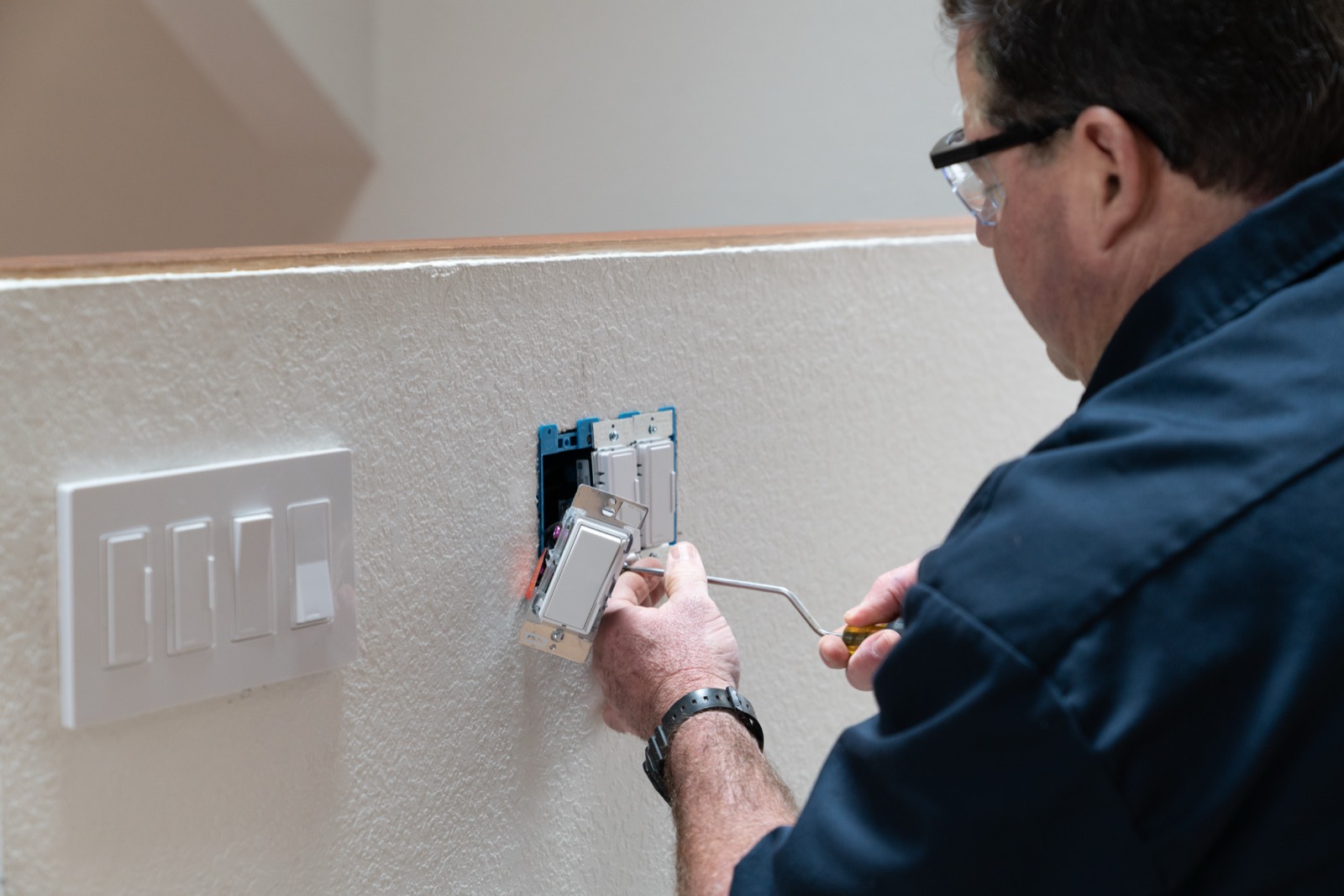
A warm outlet is not something to “tighten and see” unless you are qualified to work inside an energized electrical system safely. The correct repair is to shut off the circuit, verify power is off, remove the device, inspect the conductor ends, check the box and cable condition, remake the terminations properly, and replace damaged parts.
If the issue is limited to a failed receptacle, standard outlet or switch replacement runs $80–$120 each, with volume pricing for whole-home refreshes. If there is burned wiring, aluminum wiring, a shared neutral issue, or hidden damage in the wall, the repair is quoted in writing after inspection.
For device replacement and diagnosis, see our switches and outlets service.
Overloaded power bars and high-draw appliances make outlets heat up fast
An outlet can get warm when too much load is pulled through one receptacle, one plug end, or one power bar. The breaker may be correctly sized for the circuit, but the weak point can be the worn receptacle contacts, an old extension cord, or a cheap multi-tap adapter.
Be especially careful with loads that run hot or draw steady current:
- Portable heaters
- Window air conditioners
- Microwaves
- Toasters and kettles
- Hair dryers
- Dehumidifiers
- Treadmills
- Battery chargers for tools, e-bikes, and mobility equipment
- Power bars feeding multiple office devices, monitors, and chargers
A power bar does not create more circuit capacity. It only gives more places to plug things in. If a power bar, extension cord, or plug end is warm, remove it from service. Do not plug a power bar into another power bar, and do not run high-draw heating appliances through light-duty extension cords.
If the same room repeatedly needs power bars because there are not enough receptacles, the better fix is adding correctly placed outlets or dedicated circuits where the load requires it. A typical 20A dedicated circuit from the panel costs $250–$500 depending on the distance and finish of walls along the route. For planning, see how much it costs to add an outlet.
Bathrooms, kitchens, garages, unfinished basements, and outdoor areas often involve GFCI protection, moisture-rated covers, or more specific device choices. If the warm outlet is a GFCI or is downstream from one, do not assume pressing reset solves the heat problem. Resetting a protective device is for nuisance trips or loss of power, not for heat damage. If you are dealing with a dead GFCI instead, see how to reset a GFCI outlet.
Worn receptacles should be replaced, not reused
A receptacle is a mechanical device. The internal contacts grip the plug blades every time something is inserted. After years of use, those contacts loosen. A loose grip creates a small contact point, and that contact point heats under load.
Signs the receptacle itself is worn include:
- Plugs slide in too easily.
- Plugs sag or fall out.
- One half of the duplex outlet feels warmer than the other.
- The face is cracked or the slots are darkened.
- The device moves when you unplug something.
- A space heater or vacuum plug becomes hot at that location but not elsewhere.
Do not keep using a worn receptacle because “it still works.” It may work electrically while failing mechanically. Replacing the device also gives the electrician a chance to inspect the box, conductor length, grounding, polarity, and any heat damage at the insulation.
Polarity matters too. A miswired receptacle can still power a lamp or charger, but it can put switching and internal appliance parts on the wrong side of the circuit. If testing shows hot and neutral reversed, see why an outlet has reverse polarity.
In Ontario, electrical work must follow the Ontario Electrical Safety Code. Where ESA notification and inspection are required, we include that step. For a simple like-for-like receptacle replacement, the work is normally straightforward; for new circuits, relocated outlets, aluminum wiring repairs, outdoor receptacles, or panel changes, the permitting and inspection requirements can be different.
Shut off the breaker when heat, smell, or discolouration is present
If the outlet is hot, smells burnt, or shows brown marks, shut off the breaker and leave it off until a licensed electrician checks it. Do not cool the outlet with water. Do not tape over it and keep using nearby outlets on the same circuit. Do not replace a breaker with a larger one.
A safe response looks like this:
- Unplug the device only if the plug and cord are safe to touch.
- Turn off the breaker that controls the outlet.
- If you cannot identify the breaker, turn off the main breaker if conditions are worsening and call for help.
- Keep people away from the outlet.
- Do not reset the breaker repeatedly.
- Call a licensed ECRA/ESA electrical contractor for same-day service.
When we inspect a warm outlet, we check more than the faceplate. We test for correct voltage and polarity, confirm the breaker and conductor size are appropriate, inspect the receptacle terminals, look for backstabbed conductors, check for damaged insulation, and identify whether downstream outlets are fed through the same damaged device. If there is heat damage, we replace the affected parts and repair the wiring to a safe condition.
City Power provides free written estimates, full cleanup, and ESA notification where required. For more electrical safety answers, you can browse our electrical answers hub.
Want a licensed electrician to take a look?
Free written quote, usually the same day. ESA permits handled.
People also ask
Is it normal for a plug to feel warm?
A plug-in charger or adapter can feel slightly warm during use, but the outlet cover plate and wall should not feel hot. If the plug blades, cord end, receptacle face, or wall plate are warm, stop using that outlet. Heat at the connection point can mean loose contacts, arcing, or overload.
Can a warm outlet start a fire?
Yes. A warm outlet can be caused by a loose terminal, worn receptacle contact, overloaded power bar, or damaged wiring. Those faults create resistance and can char insulation before a breaker trips. If there is heat, smell, buzzing, melting, or discolouration, shut off the breaker and call a licensed electrician.
Should I reset the breaker if the outlet is warm?
No. A breaker reset does not repair a hot connection. If an outlet is warm or smells burnt, leave the circuit off until it is inspected. Repeated resetting can re-energize damaged wiring and make the fault worse. The device and wiring need to be opened, tested, and repaired.
How much does it cost to replace a warm outlet?
If the repair is a straightforward receptacle replacement, standard outlet or switch replacement runs $80–$120 each, with volume pricing for whole-home refreshes. If wiring is burned, the box is damaged, or a new circuit is needed, the job is quoted in writing after a site visit.