
Answered by a licensed electrician
Do new outlets need permits?
Quick answer
Yes. In Ontario, adding a new outlet, box, cable run, or circuit usually needs an ESA notification because new wiring is being installed or an existing circuit is being altered. A like-for-like receptacle replacement at the same box is different; standard outlet replacement runs $80–$120 each, while new wiring is quoted after scope and access are checked.
Yes — adding a new outlet usually needs an ESA notification
Yes, a new outlet normally needs an ESA notification in Ontario because it is not just a cosmetic device swap. If a new electrical box is installed, cable is fished through a wall, a receptacle is added to an existing circuit, or a new breaker is installed, the work changes the electrical installation and is subject to the Ontario Electrical Safety Code.
The common confusion is the word “outlet.” Homeowners often use it to mean the visible receptacle on the wall. The Code treats the wiring, box, grounding path, breaker, device, cover, and location as one installation. Moving from one receptacle to two, adding power behind a wall-mounted TV, adding a counter plug, or putting a receptacle outside all involves more than replacing the face of a device.
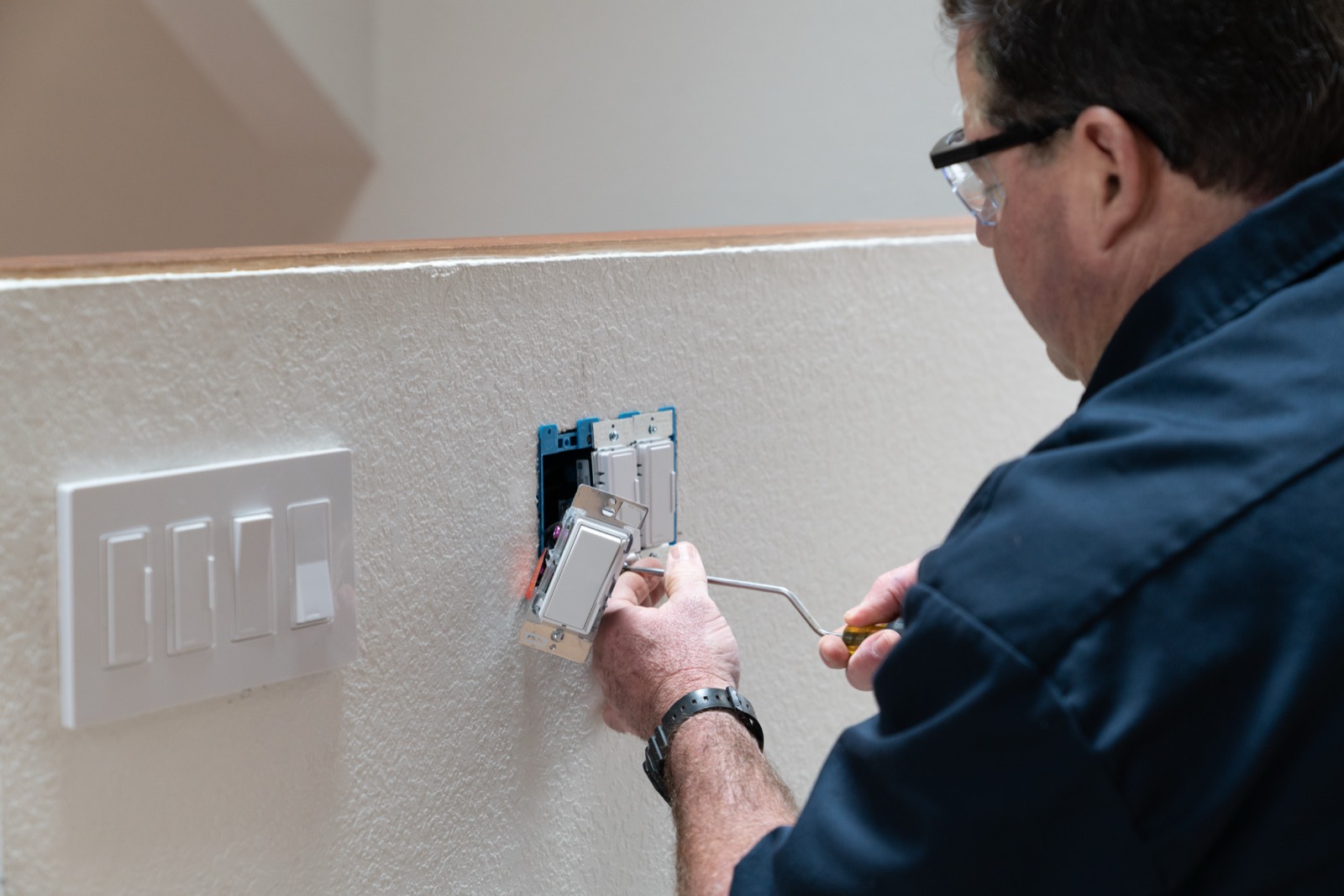
A simple like-for-like replacement is different. If an existing receptacle is worn, cracked, painted over, or no longer holds plugs tightly, replacing that device in the same approved box without adding wiring is usually treated differently from adding a new outlet. For safety issues with old devices, see why plugs fall out of outlets and why outlets become loose.
| Work type | ESA notification usually needed? | Why |
|---|---|---|
| Replace a standard receptacle in the same box | Usually no, if wiring is not changed | Like-for-like device replacement |
| Replace a damaged GFCI in the same bathroom box | Usually no, if wiring is not changed | Device replacement, but wiring must still be correct |
| Add a new receptacle beside an existing one | Usually yes | New box and cable or circuit alteration |
| Add an outlet for a wall TV | Usually yes | New cable is fished to a new location |
| Add a kitchen, bathroom, garage, or exterior receptacle | Usually yes | New wiring plus GFCI/location rules |
| Add a new breaker and circuit | Yes | New branch circuit at the panel |
If you hire the work out, it should be done by a Licensed Electrical Contractor. City Power Electrical Services is an Ontario Licensed Electrical Contractor, ECRA/ESA #7015314, and we file ESA notifications where required for outlet additions and circuit changes.
Replacing a device is not the same as adding an outlet
Replacing a device means the approved outlet box, cable, circuit, and location stay the same; adding an outlet means at least one of those changes. That distinction matters for permits, inspection, cost, and code requirements.
A like-for-like replacement might be appropriate when:
- The receptacle is cracked or worn.
- Plugs are loose but the box and wiring are sound.
- A standard duplex outlet is being replaced with another standard duplex outlet.
- A GFCI device is being replaced at the same bathroom, kitchen, garage, or exterior location.
- No new cable is run and no breaker work is needed.
Adding an outlet is a different job. It can mean fishing cable through finished drywall, drilling studs, installing an approved electrical box, securing cable where accessible, maintaining box-fill capacity, identifying the circuit load, and choosing the correct breaker or protective device. In older Toronto and GTA houses, the existing circuit may already feed several rooms, mixed lighting and receptacles, or older two-prong outlets. In that case the right answer may be a new circuit, not one more receptacle on an already busy branch.
Cost follows that difference. Standard outlet or switch replacement runs $80–$120 each, with volume pricing for larger refreshes. Each GFCI outlet installed typically costs $120–$180 including parts. If a new 20A dedicated circuit is needed, the circuit run typically costs $250–$500 depending on distance and wall access. When finished walls, fishing, patching access, or panel work are involved, the job is quoted in writing after a site visit.
If your question is whether the circuit can share lighting and receptacles, the answer depends on load, room use, and Code rules; we cover that separately in can lights and outlets be on the same circuit.
The new outlet may need AFCI, GFCI, tamper-resistant, or weather-rated protection
A new outlet has to meet the current Code for its location, not the looser standard that may have existed when the house was built. This is the part many DIY plans miss. You are not simply matching the nearest old receptacle; the new work is assessed under today’s Ontario Electrical Safety Code requirements.
For living areas, bedrooms, hallways, family rooms, and many general-use receptacle circuits in dwelling units, arc-fault protection may be required. That is usually done with an AFCI breaker or an approved device arrangement. AFCI protection is designed to reduce fire risk from arcing faults, such as damaged cords, loose terminations, or compromised cable. It also means the panel must be checked for compatibility. Some older panels do not accept modern AFCI breakers cleanly, and tandem or crowded panels can complicate the layout.
For wet or damp locations, ground-fault protection is the issue. Bathrooms, many kitchen counter areas, laundry areas, garages, unfinished basements, exterior receptacles, and receptacles near sinks or other wet areas may need GFCI protection. The exact requirement depends on the location and circuit arrangement. A GFCI can be at the receptacle, at an upstream device, or at the breaker, but it must be wired so the protected outlets are correctly identified and tested.
Exterior outlets add more details:
- The device must be suitable for the environment.
- The cover must suit wet or damp use, often an in-use style cover.
- Cable routing and penetrations must be sealed and mechanically protected where required.
- The receptacle must be on an appropriate GFCI-protected circuit.
- The box must be properly supported, not just screwed to siding without a proper electrical enclosure.
Kitchens are their own category. Adding a receptacle above a counter is not the same as adding one in a bedroom. Counter receptacles serve portable cooking appliances, coffee makers, kettles, microwaves, and other high-load equipment. The circuit capacity, GFCI protection, spacing, and whether the receptacle is part of a small-appliance branch circuit all matter. If the outlet is for a specific appliance, it may need a dedicated circuit rather than being tapped from a nearby general receptacle.
Tamper-resistant receptacles are also common in dwelling areas. They look like regular outlets but have internal shutters that reduce the chance of a child inserting an object into one slot. When we add or replace receptacles in homes, we check whether tamper-resistant devices are required for that location.
ESA inspection checks more than whether the outlet works
ESA inspection is not just a plug-in tester showing 120 volts. The inspector is looking at whether the new work was installed under the Ontario Electrical Safety Code, whether the correct notification was filed, and whether the installation is safe to energize and use.
For a new outlet, the important inspection points can include:
- Correct cable type and conductor size for the breaker.
- Cable protection where it passes through framing or finished areas.
- Proper box type, support, and box-fill capacity.
- Grounding and bonding continuity.
- Correct polarity at the receptacle.
- Correct breaker size and circuit identification.
- AFCI or GFCI protection where required.
- Weather-rated boxes, covers, and devices outdoors.
- No hidden splices outside approved junction boxes.
- No overcrowded boxes or loose backstabbed terminations.
A common failure mode is tapping a new receptacle from the nearest outlet without checking what else is on that circuit. That may leave a bathroom, bedroom, fridge area, microwave area, or exterior load on a circuit that was never intended to carry it. Another is installing a three-prong receptacle on old two-wire cable without a real grounding path or proper GFCI labelling. If you have older two-prong devices, read why outlets are two prong before assuming a simple swap solves the issue.
The ESA notification is normally filed before or at the start of the work by the Licensed Electrical Contractor doing the job. After installation, the work is made available for inspection. Some small jobs may be inspected remotely or through the process ESA assigns; larger or higher-risk work may require an in-person inspection. The exact inspection method is ESA’s decision.
If an inspector finds defects, the contractor must correct them. That is one reason unpermitted outlet additions become a problem during renovations, insurance reviews, and home sales. A receptacle can appear to work for years while still hiding an overloaded circuit, open ground, reversed polarity, missing GFCI protection, or an inaccessible splice.
The practical answer: replace devices carefully, but permit new wiring
The safe rule is simple: replacing a receptacle at the same box is a small device job; adding a new outlet, new cable, or new circuit is permitted electrical work. If you are not sure which category your project falls into, assume it needs review before the wall is closed.
This matters most in finished homes because the electrical work disappears behind drywall. Once the wall is patched, no one can easily see how the cable was routed, whether staples were used correctly, whether nail plates were installed where needed, or whether a splice is buried. Permitting and inspection create a record that the hidden work was checked.
For homeowners, the clean path is:
- Decide what the outlet will serve: general use, TV, desk, appliance, exterior equipment, freezer, sump pump, or kitchen load.
- Check the panel and existing circuit before choosing where to tap power.
- Confirm whether AFCI, GFCI, tamper-resistant, or weather-rated equipment is required.
- File the ESA notification when new wiring or circuit alteration is involved.
- Keep the outlet accessible for testing and inspection before covering anything.
- Label any new breaker or GFCI-protected downstream outlets clearly.
For hired work, do not use a handyman for new outlet wiring. In Ontario, electrical contracting is regulated. A Licensed Electrical Contractor can assess the circuit, install the correct materials, file the ESA notification where required, and provide a written estimate before starting. For service details, see our switches and outlets installation page. For similar permit questions, compare do pot lights need permits and do panel replacements need permits.
Want a licensed electrician to take a look?
Free written quote, usually the same day. ESA permits handled.
People also ask
Can I replace an outlet myself without a permit in Ontario?
A like-for-like receptacle replacement at the same approved box is different from adding wiring. If no cable, box, breaker, or circuit arrangement changes, an ESA notification is usually not the issue. The replacement still has to be safe: correct polarity, grounding, box condition, device rating, and GFCI/AFCI requirements where applicable.
Does adding one outlet beside an existing outlet need ESA inspection?
Usually yes. Even if the new receptacle is only a metre away, adding a box and cable changes the electrical installation. The installer must confirm the existing circuit can accept the added load, use the correct box and cable method, and provide AFCI or GFCI protection where the Ontario Electrical Safety Code requires it.
Do outdoor outlets need permits?
Adding a new outdoor receptacle usually needs an ESA notification because new wiring is being installed. Outdoor outlets also need the right weather-rated box, cover, cable method, grounding, and GFCI protection. The inspector may check both the electrical protection and whether the device is suitable for a wet or damp exterior location.
Can a handyman add an outlet in Ontario?
If you are hiring someone to add an outlet, use a Licensed Electrical Contractor. New outlet wiring is electrical contracting, not general handyman work. The contractor can file the ESA notification where required, install to the Ontario Electrical Safety Code, correct any defects, and leave you with inspected work instead of hidden liability.