Answered by a licensed electrician
What is a neutral wire?
Quick answer
A neutral wire is the grounded conductor that carries return current back to the panel on many 120V circuits; it is usually white. It is not the same as the bare or green bonding conductor. If you are adding a smart switch and need a neutral confirmed or added, smart dimmers and switches typically run $150–$250 installed.
A neutral wire is the grounded conductor that completes many 120V circuits by carrying current back to the electrical panel. In a typical Ontario home circuit, the black or red conductor is the ungrounded “hot,” the white conductor is the neutral, and the bare or green conductor is the bonding conductor.
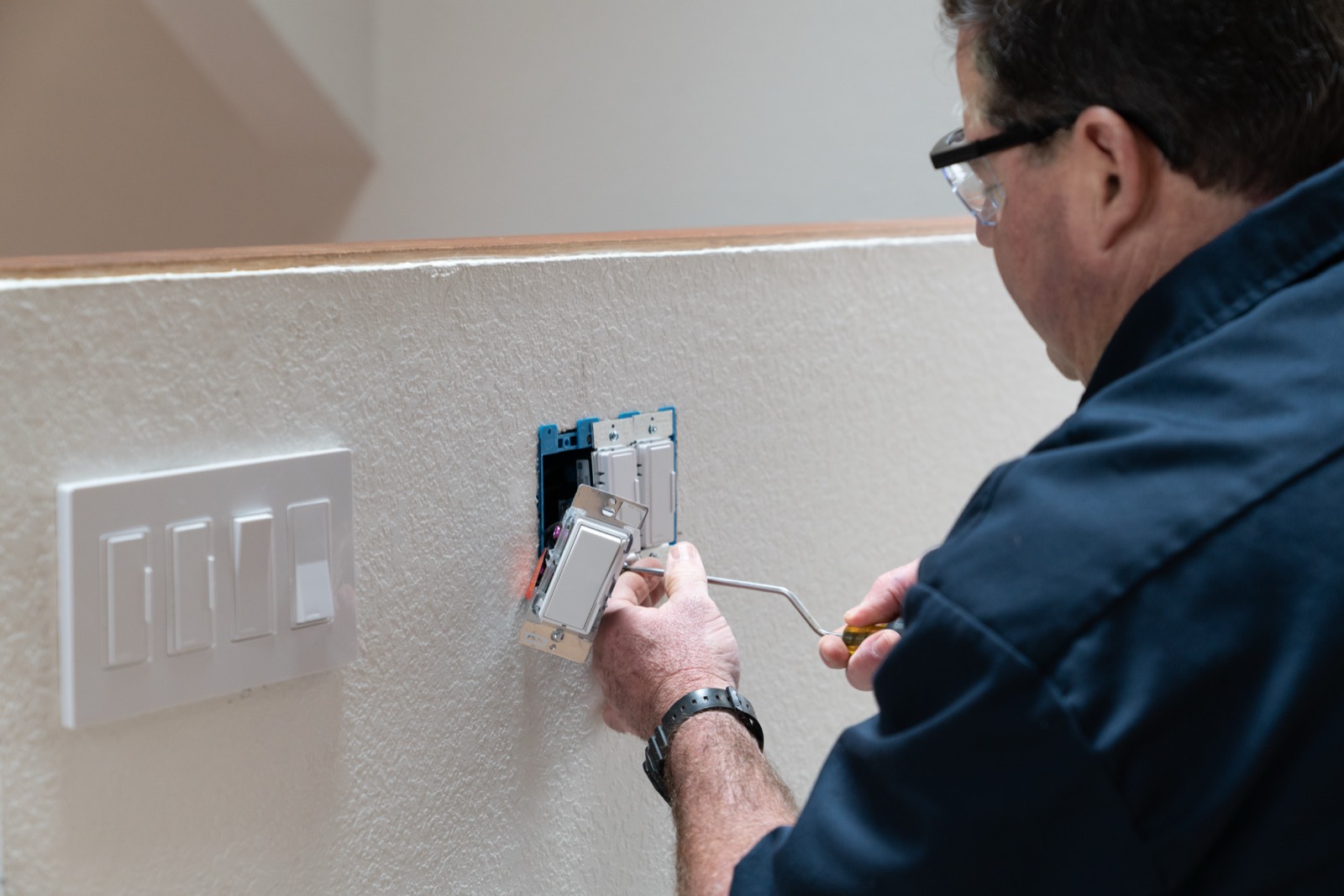
That sounds simple until you open a switch box and see only two insulated wires, a bundle of whites tucked in the back, or an older switch loop where the white wire is being used as a hot. That is why neutral-wire questions usually come up during smart switch installation, dimmer replacement, or outlet troubleshooting.
If you are changing a standard switch, replacing an outlet, or adding a smart device, the safest route is to have the wiring identified before anything is connected. City Power Electrical Services is a Licensed Electrical Contractor, ECRA/ESA #7015314, and handles switch and outlet installation across Toronto and the GTA.
A neutral wire completes the normal 120V path back to the panel
A neutral wire is the return path for current on many standard 120V loads. When a lamp, receptacle, dishwasher control, furnace board, or smart switch needs 120V power, current leaves the panel on the hot conductor, passes through the load, and returns on the neutral.
In a simple 120V receptacle circuit:
| Conductor | Common colour | What it does |
|---|---|---|
| Hot | Black or red | Supplies voltage from the breaker |
| Neutral | White or grey | Carries normal return current back to the panel |
| Bonding conductor | Bare copper or green | Provides a fault path for metal boxes and equipment |
The neutral is called the grounded conductor because it is connected to the electrical system’s grounded point at the service equipment. That does not mean it is safe to touch. A neutral can carry load current, can become energized if loose or open, and can show voltage under certain fault conditions.
The bonding conductor is different. It is not supposed to carry normal operating current. It is there so a fault has a low-impedance path back to the source, helping the breaker trip if a hot conductor touches a metal box, device strap, appliance frame, or other bonded metal part.
A common mistake is thinking “neutral” and “ground” are interchangeable. They are not. On branch circuits, neutrals and bonding conductors must be kept separate. Using a bonding conductor as a neutral can energize metal parts and create shock risk. Tying neutral to bond in the wrong place can also cause nuisance GFCI/AFCI trips and make future troubleshooting much harder.
Older switch boxes often do not have a usable neutral
Many older switch boxes contain only a switch leg, not a neutral. That is the detail that catches homeowners installing smart switches.
A traditional light switch only needed to open and close the hot feed to the light. In many older homes, power was brought to the light fixture first, then a two-wire cable was run down to the wall switch. In that setup, both conductors at the switch may be part of the hot path: one brings power down, and the other sends switched power back up to the light.
You may see a white wire on the switch in that older arrangement. It may not be a neutral. It may be a white conductor being used as a hot in a switch loop. In proper work it should be re-identified, but in older boxes it is not always obvious without testing and tracing.
That matters because many smart switches need a constant supply of power for their radio, electronics, indicator light, and app control. They typically need:
- Line hot: constant power into the switch
- Load: switched power out to the light
- Neutral: return path for the electronics inside the smart switch
- Bond: equipment bonding connection, where provided in the box
If the neutral is missing, the smart switch may not power up, may flicker the light, may lose Wi-Fi connection, or may try to leak a tiny current through the light load. Some “no neutral” smart switches exist, but they are not right for every lamp type, LED driver, or multi-way switching arrangement.
The practical answer: do not assume a white wire is neutral just because it is white. If you need a smart switch, dimmer, timer, occupancy sensor, or USB-C receptacle installed, book a licensed electrician through our switches and outlets service. Specialty devices such as smart dimmers, timers, GFCI devices, and USB-C combo outlets are usually in the $120–$250 installed range depending on the device and box conditions; smart switches and dimmers are commonly $150–$250 each installed.
You identify a neutral by testing the circuit, not by colour alone
The right way to identify a neutral is to test with the circuit energized under controlled conditions, then de-energize and verify before working. Colour is a clue, not proof.
A homeowner may open a box and see a white bundle under a wire connector. That bundle is often the neutral group passing through the box, but not always. In multi-gang boxes, renovations, additions, and older switch loops, conductors can be repurposed, spliced, extended, or mislabelled.
An electrician will usually look for several things:
- Whether the white conductors are tied together and not connected to a switch terminal
- Whether one white conductor is landed on a switch as part of a switch loop
- Whether the box contains line and load from the same circuit or multiple circuits
- Whether a neutral is shared by a multi-wire branch circuit
- Whether the device is on a GFCI/AFCI-protected circuit
- Whether the box fill has enough room for the new device and connections
Testing is also important because neutrals can fail. A loose neutral splice, damaged conductor, backstabbed receptacle, corroded connection, or open neutral can produce strange symptoms: lights acting unevenly, devices not working, or voltage readings that do not make sense. If a neutral appears energized, that is a different problem from simply identifying one; see why is my neutral wire hot? for that specific fault.
For basic device replacement, the work may be straightforward. Standard switch or outlet replacement usually falls in the $80–$120 each range, with volume pricing when several devices are refreshed at the same visit. If the box needs a neutral added, a cable fished, a multi-way circuit corrected, or a new circuit installed, the work should be quoted in writing after a site visit.
Adding a neutral can mean fishing cable, not just changing the switch
If there is no neutral in the switch box, adding one is wiring work. It may require running a new cable from the light, another junction point, or the panel area, depending on how the existing circuit was built.
There are a few common ways this is solved:
- Replace the cable between the light and switch box with a cable that includes a neutral
- Bring a new feed with neutral into the switch box, where the layout allows it
- Use an approved smart device that does not require a neutral, if compatible with the load
- Relocate the smart control to a location where line, load, and neutral are already present
- Rework the circuit during a larger renovation when walls or ceilings are open
The best option depends on finished surfaces, attic or basement access, plaster versus drywall, number of switches in the box, and whether the lighting circuit shares a neutral with another hot conductor. In older Toronto and North York homes, it is common to find switch loops, crowded metal boxes, and mixed generations of wiring from past renovations.
This is also where permits and inspections can matter. Replacing a device like-for-like is different from adding new wiring, extending a circuit, or correcting unsafe work. When ESA notification is required, it should be filed by the electrical contractor, and the work should be left accessible for inspection where required.
If the issue is broader than one switch, such as several rooms losing lights or receptacles after a device change, stop resetting and guessing. A mis-spliced neutral can take out part of a circuit, and in some layouts one loose connection affects downstream devices. For that symptom, read why did one room lose power?.
Call an electrician if the neutral is missing, shared, loose, or confusing
You should call a licensed electrician when the box does not clearly contain a neutral, when a white wire is connected to a switch, when multiple circuits appear in one box, or when a device behaves strangely after installation. Neutral mistakes are not cosmetic. They affect shock protection, GFCI/AFCI operation, device reliability, and how safely a circuit carries load.
Call before continuing if you see or experience:
- A smart switch that will not power up after connection
- A white wire connected to an old toggle switch
- Two or more cables in a box with no clear line/load separation
- A neutral bundle that is loose, burned, brittle, or overcrowded
- Lights getting brighter or dimmer when other loads turn on
- Voltage on a neutral conductor when the circuit should be off
- Warm devices, buzzing, arcing marks, or a burning smell
Warm outlets and switches have their own failure modes, often involving loose terminals, damaged contacts, or overloaded devices. If heat is part of the symptom, start with why is my outlet warm? rather than treating it as only a neutral question.
For most smart switch and outlet projects, the goal is simple: identify line, load, neutral, and bond correctly, install a device rated for the load, make tight approved splices, confirm box fill, test operation, and clean up. If new wiring is needed, we provide a written estimate first and arrange ESA notification where required.
Want a licensed electrician to take a look?
Free written quote, usually the same day. ESA permits handled.
People also ask
Is the neutral wire the same as the ground wire?
No. The neutral is the grounded conductor that carries normal return current on many 120V circuits. The bare or green bonding conductor is a safety path for fault current and should not carry normal load current. They must not be used interchangeably in switch boxes, receptacle boxes, or appliance connections.
Do all light switches have a neutral wire?
No. Many older light switch boxes only have a hot feed and a switched leg to the light. A white conductor in that box may be part of the switch loop, not a neutral. That is why many smart switch installations fail unless the box wiring is tested and confirmed first.
Can I install a smart switch without a neutral?
Sometimes, but only with a smart switch specifically designed for no-neutral installations and only if it is compatible with the light load and circuit layout. LED fixtures, multi-way switching, and low-load circuits can be fussy. A licensed electrician can confirm whether a no-neutral device is suitable or whether a neutral should be added.
Why would a neutral wire be dangerous if it is the return path?
A neutral can carry current whenever the circuit is operating, and it can become energized if a connection opens or is shared incorrectly. Loose neutral connections can also create unstable voltages. Treat every conductor as live until it has been properly tested, isolated, and verified with the correct meter.