
Answered by a licensed electrician
How much does it cost to install a dimmer switch?
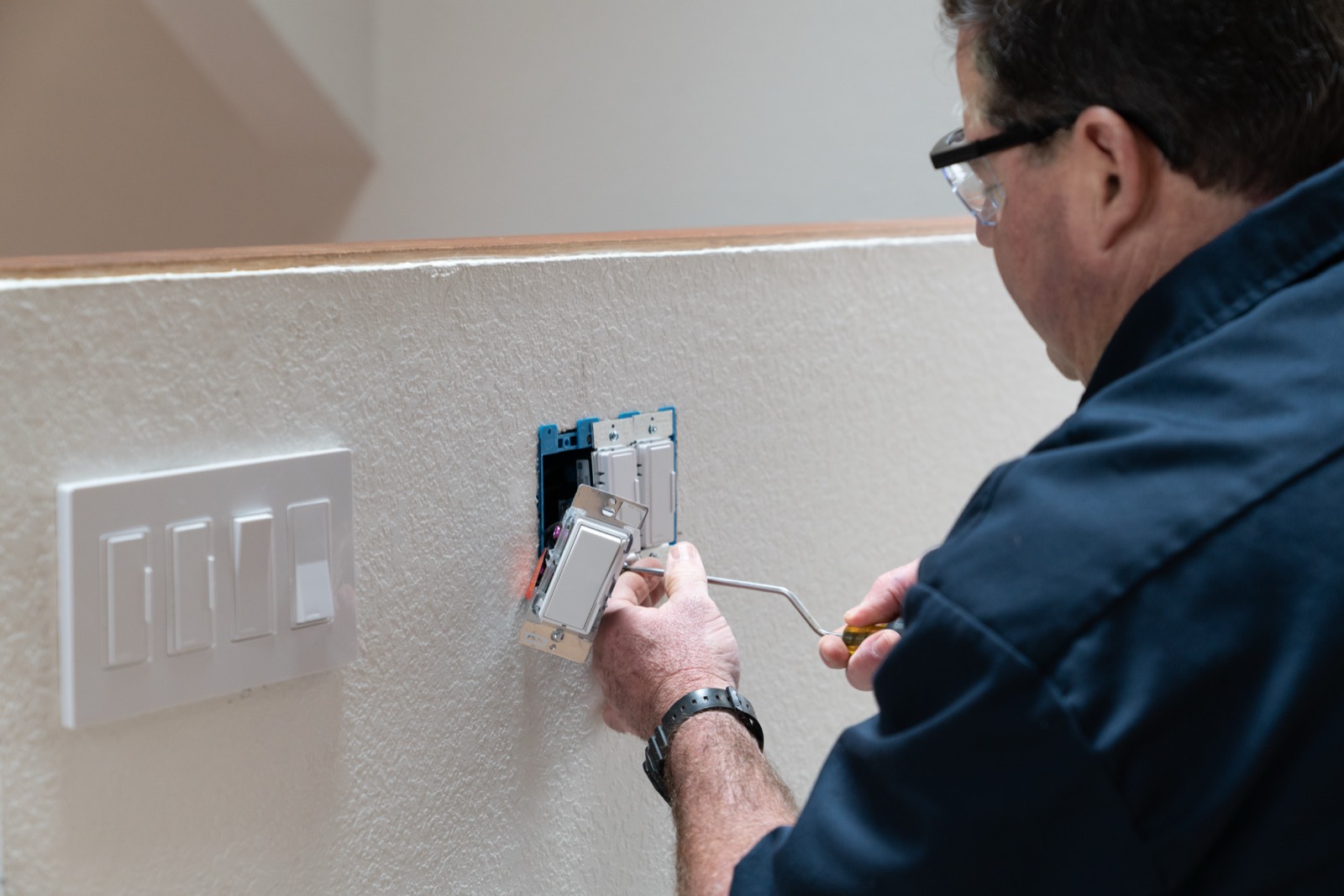
Quick answer
A dimmer switch replacement in the GTA usually costs $120–$250 installed when the existing box and wiring are suitable; smart dimmers are commonly $150–$250 each installed. Electrician labour in Toronto typically runs $95–$150 per hour, with most service calls carrying a $150–$250 minimum.
A dimmer looks like a small upgrade, but the price depends on what is already in the switch box: the load type, number of switch locations, whether a neutral is present, and whether any new cable has to be fished. For City Power Electrical Services, dimmer work falls under switch and outlet service, so the first step is checking the box before promising that a device swap is enough.
Most dimmer replacements cost $120–$250 installed when the existing wiring is usable
A straightforward dimmer swap is usually in the same range as other specialty switch devices: expect about $120–$250 installed, depending on the dimmer, wall plate, box condition, and whether there are multiple switches in the same gang box. Smart dimmers are commonly $150–$250 each installed, including device setup when the wiring supports it.
For labour context, licensed electricians in Toronto typically charge $95–$150 per hour, and many small service calls have a $150–$250 minimum. That is why one single dimmer can feel expensive compared with buying a device at a store. You are paying for safe identification of line, load, travellers, grounding, box fill, device compatibility, and testing under load.
| Dimmer situation | Typical price approach | What changes the price |
|---|---|---|
| Simple dimmer replacing an existing single-pole switch | Usually $120–$250 installed | LED-rated device, crowded box, old wiring, dimmer wattage, plate style |
| Smart dimmer replacing an existing switch | Usually $150–$250 installed | Neutral required, hub or app setup, Wi-Fi strength, multi-gang derating |
| 3-way or multi-location dimming | Quoted after confirming the wiring | Travellers, compatible companion dimmers, which location has line and load |
| New switch-leg wiring where no switch exists | Quoted in writing after a site visit | Fishing cable, wall finish, attic or basement access, switch location, ESA notification |
A dimmer replacement is normally quick when the existing switch box contains the correct conductors and the light fixtures are dimmable. If the switch box has no neutral, no ground, damaged insulation, mixed older wiring, or an overloaded multi-gang box, the job changes from a simple device replacement into a wiring correction.
If you are comparing this to a plain switch swap, our related answer on the cost to replace a light switch is a useful baseline. A dimmer costs more because the device and compatibility checks matter more.
LED-compatible dimmers cost more because the dimmer and bulb have to match
Use an LED-rated dimmer for LED bulbs or fixtures. Older incandescent dimmers often cause flicker, limited dimming range, buzzing, or lights that do not fully shut off when used with modern LED lamps.
There are three checks we make before installing a dimmer on LED lighting:
- Dimmable load: the bulbs, wafer lights, pot lights, or driver must be labelled dimmable.
- Dimmer type: many LED products work best with a CL, ELV, or reverse-phase dimmer, depending on the driver.
- Load range: LED fixtures draw little power, so an old dimmer may not meet its minimum load and may behave badly.
The dimmer’s rating also changes when several switches are packed into one box. Some dimmers lose capacity when side tabs are removed for a multi-gang installation. That matters in kitchens, hallways, and main-floor renovations where one box may hold dimmers for pot lights, pendants, under-cabinet lighting, and exterior lights.
A cheap dimmer that is not matched to the load can create callbacks. The common symptoms are low-end flicker, buzzing at the device, buzzing at the fixture driver, lights popping on instead of fading up, or a very narrow dimming range. If your issue is noise rather than pricing, see why a dimmer switch buzzes for the fault-finding side.
For pot lights, the dimmer choice should be made with the fixture choice. Most pot light installations in the GTA are priced per light, but the dimming control still needs to suit the driver, trim, and circuit layout. That is why we treat dimming as part of the lighting design, not just the last device screwed into the wall.
Multi-location dimming costs more when the 3-way wiring is not laid out for the dimmer you want
A 3-way or 4-way lighting circuit can often be dimmed, but not every location can accept any dimmer. The cost depends on where the permanent line feed is, where the switched leg to the fixture leaves, and how the traveller wires run between boxes.
In a typical hallway, stairway, or large room, you may have two or more switches controlling the same lights. For dimming, you usually need one master dimmer and either a compatible companion control or a standard 3-way switch, depending on the product. Smart dimmers are even more specific: the manufacturer may require a companion device at the other location, and wiring it like an old mechanical 3-way can damage the control.
We check for:
- which box has the incoming hot conductor;
- which box has the switched leg to the lighting load;
- whether neutrals are present in the required box;
- whether travellers are being reused correctly;
- whether the existing device was wired with backstabbed connections or loose splices;
- whether the box has enough room for the larger dimmer body.
If all conductors are present and accessible, multi-location dimming may still fit within a normal specialty-device service visit. If the needed conductor is missing, the job becomes wiring work and is quoted in writing after a site visit. Fishing a new cable through finished plaster, tile backsplashes, stair walls, or insulated exterior walls is a very different job from changing a device.
New switch-leg wiring can also trigger ESA notification requirements, because it is no longer just replacing a device in an existing box. City Power Electrical Services is a Licensed Electrical Contractor, ECRA/ESA #7015314, and when a job requires ESA notification and inspection, we include that step in the written scope.
Smart dimmers are usually $150–$250 installed, but neutral-wire requirements decide whether it is simple
Most smart dimmers cost more to install than a basic LED dimmer because the wiring and setup requirements are stricter. Many smart switches and dimmers need a neutral conductor in the switch box so the device can power its electronics even when the light is off.
Newer homes often have neutrals in switch boxes. Older Toronto homes may not, especially where the switch is wired as an older switch loop. In that case, a smart dimmer may not be possible at that location without rewiring, or we may need to choose a no-neutral smart dimmer that is compatible with the lighting load.
Smart dimmer installation can include:
- confirming neutral, line, load, and ground conductors;
- replacing wire connectors and correcting loose splices;
- checking box fill because smart dimmers are deeper than standard switches;
- pairing the dimmer to a hub or app;
- setting LED low-end trim to stop flicker at low brightness;
- labelling circuits if the panel directory is unclear.
Smart controls are also sensitive to shared neutrals, mixed lighting loads, low-wattage LED fixtures, and metal boxes that reduce wireless range. In a condo, the issue may be less about wireless range and more about building rules: work hours, in-suite panel access, and whether the lighting circuit is part of a larger renovation.
If your project includes several smart switches, the per-device visit becomes more efficient because setup, circuit identification, and cleanup happen once. A typical main-floor smart switch package has its own price range, but for a single dimmer the $150–$250 installed figure is the better expectation when the box is ready.
For other small electrical upgrades that often happen during the same visit, see how much it costs to add an outlet or browse the electrical answers hub.
New dimmer wiring is quoted after a site visit because access drives the job
If there is no switch where you want dimming, or if the existing switch does not control the light you want, the price cannot be reduced to a device number. New switch-leg wiring depends on the path between the panel or feed, the light outlet, and the new switch location.
A site visit answers practical questions that photos often cannot:
- Is there attic, basement, or unfinished ceiling access?
- Is the wall plaster, drywall, tile, brick, or concrete?
- Is the lighting outlet rated and accessible?
- Does the circuit already have arc-fault or GFCI protection where required?
- Is the box grounded and large enough for the dimmer body?
- Will the work require cutting and patching by others?
- Does the lighting load share a circuit with receptacles or other rooms?
The cheapest path is usually when the light, switch, and cable route are accessible from an unfinished basement, open ceiling, or attic. Finished walls, exterior insulated walls, tiled backsplashes, and condo concrete ceilings take more time and may require a different plan.
ESA inspection focuses on the parts that matter: correct conductor size, secure boxes, approved connectors, proper grounding and bonding, device ratings, cable protection, and safe terminations. The dimmer itself is only one part of the installation. The concealed wiring route has to be legal and mechanically protected.
For a simple replacement, you can often book service with photos of the existing switch box and fixture type. For new dimmer wiring, the honest answer is a free written estimate after we see the route and confirm whether ESA notification is required.
Want a licensed electrician to take a look?
Free written quote, usually the same day. ESA permits handled.
People also ask
Can I install a dimmer switch myself in Ontario?
A homeowner can do some electrical work in their own home, but it still has to meet the Ontario Electrical Safety Code and may require ESA notification. The risk with dimmers is misidentifying line, load, travellers, or neutrals. If there is no ground, no neutral, aluminum wiring, or a crowded box, hire a licensed electrical contractor.
Why is a dimmer switch more expensive than a regular switch?
A regular switch is just on/off. A dimmer has to match the lighting load, wattage, LED driver, box size, and sometimes multi-location wiring. Specialty devices such as LED dimmers, timers, GFCI devices, USB-C outlets, and smart dimmers typically cost more installed than a basic switch replacement because the device and testing take more work.
Do I need a neutral wire for a dimmer switch?
Basic LED dimmers often do not need a neutral, but many smart dimmers do. Older switch loops may only have line and switched load in the box, which limits your options. An electrician can open the box, identify the conductors, and recommend either a compatible no-neutral dimmer or new wiring if you want a specific smart control.
Does installing a dimmer require an ESA permit?
Replacing an existing switch with a compatible dimmer in the same box is often treated differently from adding new wiring, but requirements depend on the exact work. New switch-leg wiring, relocating controls, or adding boxes can require ESA notification and inspection. When notification is required, it should be filed by a licensed electrical contractor before the work proceeds.