Answered by a licensed electrician
How much does AC circuit installation cost?
Quick answer
AC circuit installation cost in the GTA usually follows dedicated-circuit pricing: a 20A run is typically $250–$500, while heavier 30A–50A air-conditioner or heat-pump circuits run $400–$900. The final price depends on the condenser nameplate, outdoor disconnect, cable route, panel capacity, and whether ESA inspection is required.
Most AC circuit installations cost the same as a dedicated appliance circuit, but the outdoor work can change the quote.
For a central air conditioner or heat-pump condenser, the electrical price starts with the branch circuit size. A smaller 20A circuit is usually in the $250–$500 range. Larger 30A–50A runs, common on bigger condensers and some heat pumps, usually land between $400–$900 for the circuit work.
That range assumes a reasonably direct route from the panel, available breaker space, and no major service upgrade. Once the job includes a new exterior disconnect, long finished-wall fishing, conduit across brick, panel corrections, or surge protection, the full AC electrical package is quoted in writing after a site visit.
The cost is not based only on tonnage. A 2-ton and 3-ton unit can have different electrical requirements depending on the manufacturer, compressor type, and whether it is a straight-cool condenser or a heat pump. We price it from the actual equipment specifications, not a guess.
For a broader view of branch-circuit pricing, see our dedicated circuit installation cost guide or the main dedicated circuits service page.
| AC electrical item | What affects price |
|---|---|
| Breaker and wiring | Required amperage, wire size, panel space, route length |
| Outdoor disconnect | Location, wall surface, weatherproof fittings, condenser position |
| Cable route | Basement access, finished ceilings, exterior conduit, crawlspaces |
| Panel capacity | Load calculation, spare spaces, tandem breaker limits, service size |
| Surge protection | Optional panel-mounted protection, often considered with inverter equipment |
The circuit size comes from the condenser nameplate and HVAC specification sheet, not from the old breaker.
The correct AC circuit is sized from the equipment nameplate. The two numbers we look for are usually minimum circuit ampacity and maximum overcurrent protection. The conductor must be sized for the minimum circuit ampacity, and the breaker or fuse must not exceed the maximum overcurrent protection marked by the manufacturer.
That matters because air-conditioning equipment has motor-compressor starting characteristics. It is normal for HVAC equipment to have conductor sizing and breaker sizing that do not look like a simple general-purpose receptacle circuit. The manufacturer nameplate is the authority, together with the Ontario Electrical Safety Code.
Before quoting, we want to know:
- The condenser or heat-pump model number.
- Voltage and phase, usually 240V single-phase for a house.
- Minimum circuit ampacity.
- Maximum fuse or breaker size.
- Whether the manufacturer calls for a fused or non-fused disconnect.
- Whether the indoor air handler, furnace, or mini-split heads need separate electrical work.
If an HVAC contractor is replacing only the outdoor unit, we also check whether the existing circuit still matches the new equipment. A newer inverter condenser may have different nameplate values than the older unit it replaces. Reusing the old breaker without checking the new maximum overcurrent rating can create an ESA defect.
Mini-split systems deserve extra attention. Some need one outdoor circuit only, while others have specific wiring between the outdoor unit and indoor heads. Control wiring, communication cable, and line-voltage wiring must be kept in the correct wiring methods. We coordinate that boundary with the HVAC installer so the electrical scope is clear.
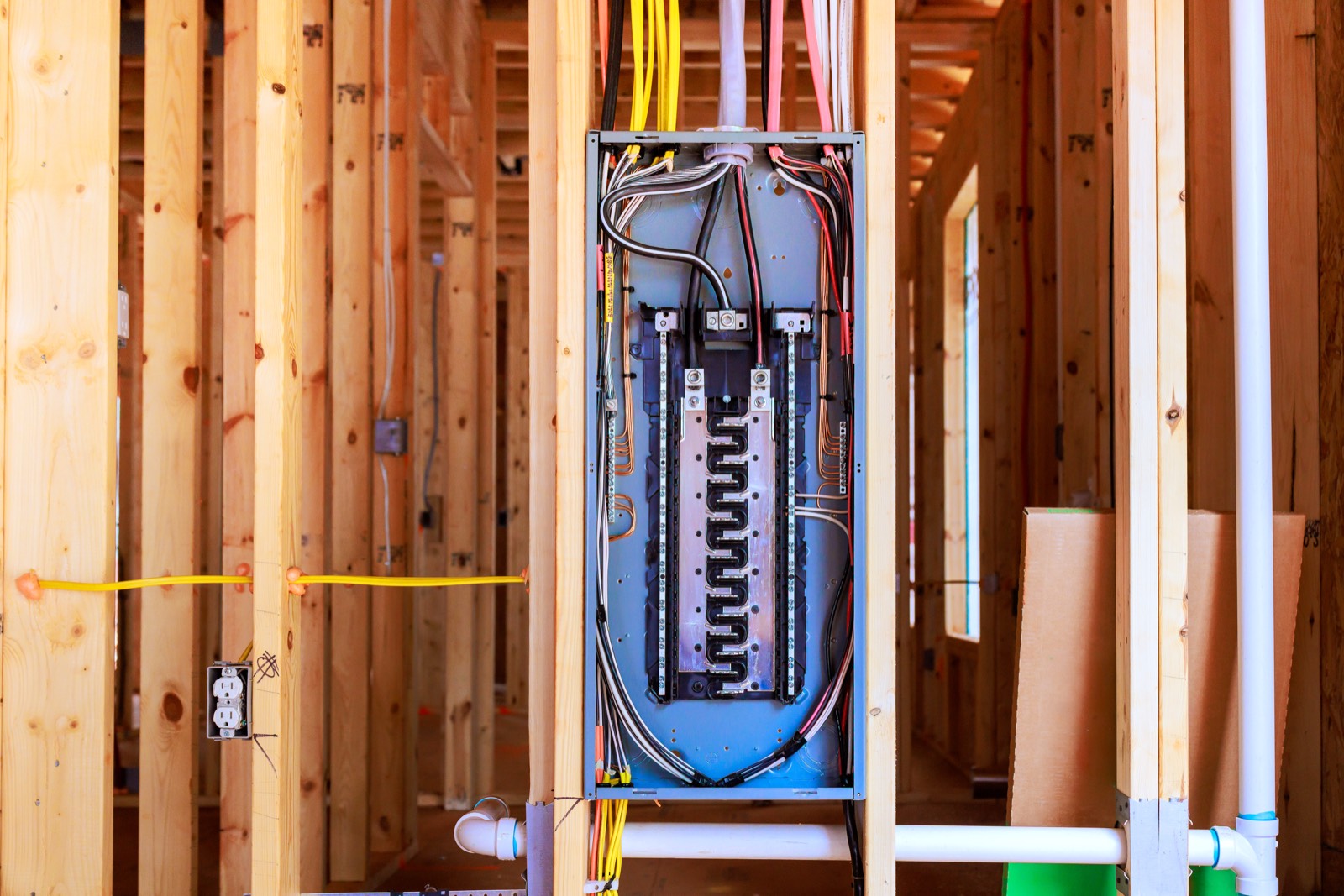
A proper AC circuit includes the panel work, protected cable route, outdoor disconnect, and weather-rated terminations.
The visible box beside the condenser is only one part of the job. The circuit starts at the electrical panel, passes through the building, transitions outdoors using an approved wiring method, lands in the disconnect, and then connects to the condenser with the correct whip or conduit.
The outdoor disconnect is normally installed within sight of the condenser and in an accessible location for service. It should not be hidden behind stored materials or placed where a technician cannot safely reach it. If the unit requires a fused disconnect, the fuse size must match the manufacturer’s instructions.
Typical installation details include:
- Confirming the breaker type allowed for the panel.
- Checking that the panel has physical breaker space and electrical capacity.
- Running the correct conductor size for the nameplate load.
- Protecting cable where it passes through framing, masonry, or exterior wall surfaces.
- Using outdoor-rated fittings, boxes, and liquid-tight flexible conduit where required.
- Bonding and grounding the circuit correctly.
- Labelling the breaker and disconnect.
An AC condenser is not powered from a regular exterior receptacle. It needs a dedicated branch circuit. If you also need a service receptacle near the outdoor equipment for HVAC maintenance, that is a separate item from the condenser circuit; the cost and code considerations are closer to outdoor outlet installation.
Surge protection is worth discussing, especially for inverter-driven heat pumps and modern condensers with control boards. A panel-mounted surge protector costs $400–$700 installed and protects every circuit in the home, not just the AC. It does not replace correct wiring or grounding, but it can reduce the risk from common utility and storm-related surges.
New HVAC electrical work usually needs an ESA notification and inspection in Ontario.
When we install a new AC circuit, relocate the disconnect, or materially change the wiring for HVAC equipment, an ESA notification is typically part of doing the job properly. The inspection confirms that the wiring method, breaker, conductor size, disconnect, bonding, and weatherproofing match the Ontario Electrical Safety Code and the equipment requirements.
For Toronto and GTA homeowners, City Power Electrical Services is a Licensed Electrical Contractor, ECRA/ESA #7015314, and we file ESA notifications where required rather than leaving the paperwork to the homeowner or HVAC company.
An ESA inspector may look at:
- The panel breaker type and rating.
- The conductor size and cable protection.
- The nameplate minimum circuit ampacity and maximum overcurrent protection.
- The disconnect location and rating.
- Whether exterior boxes and fittings are suitable for wet locations.
- Bonding, grounding, and labelling.
The utility is usually not involved for a simple AC circuit. Toronto Hydro, Alectra, Hydro One, or another local distributor may become relevant if the load calculation shows the house needs a service upgrade, meter work, or utility coordination. That is a different scope from simply adding a condenser circuit.
If the panel is already crowded, we do not just force in a breaker. Some panels accept tandem breakers only in specific positions, and some do not accept them at all. If the service is near capacity because of an EV charger, electric range, hot tub, secondary suite, or heat pump, the load calculation decides whether the AC can be added safely.
A 100A-to-200A panel upgrade in the GTA typically costs $3,200–$4,500 including the panel, labour, ESA permit, and inspection when that becomes necessary.
The biggest cost drivers are distance, access, disconnect type, and panel capacity.
The cleanest AC circuit is a short basement run from the panel to an exterior wall near the condenser pad. The price rises when the panel is on the opposite side of the house, the basement ceiling is finished, the route crosses masonry, or the disconnect must be placed to suit landscaping, decks, fences, or side-yard clearance.
We also look at the timing. If your HVAC contractor has not installed the condenser yet, we can often rough in the circuit and leave the final connection for when the equipment is set. If the condenser is already in place, the nameplate is easier to verify, but the cable path and disconnect location may be more constrained.
Common scenarios:
- Replacing an old condenser with the same electrical requirements: lowest-cost case if the existing circuit and disconnect are compliant.
- New condenser where no AC existed: new breaker, new route, new disconnect, ESA notification.
- Heat pump replacing central AC: may need a load calculation and careful nameplate review.
- Side-yard condenser with finished basement: fishing and exterior conduit can drive labour.
- Panel full or undersized: may require panel corrections or a service upgrade before the AC circuit is approved.
If you are comparing other 240V circuits, a dryer circuit is usually simpler because it terminates indoors; see dryer circuit installation cost. A hot tub circuit is more complex because of outdoor GFCI and disconnect requirements; see hot tub circuit cost. An AC condenser sits between those two in many homes: outdoors like a hot tub, but usually a smaller and more direct load.
The best next step is to send the condenser model number, a photo of the nameplate, the panel location, and the proposed outdoor unit location. From there we can confirm whether the work is a straightforward dedicated circuit or a larger HVAC electrical upgrade.
Want a licensed electrician to take a look?
Free written quote, usually the same day. ESA permits handled.
People also ask
Does a new air conditioner need a dedicated circuit?
Yes. A central air conditioner or heat-pump condenser normally needs its own dedicated branch circuit from the electrical panel. It should not share a general outdoor receptacle, lighting circuit, or old spare circuit unless the equipment nameplate and code requirements are met. The breaker, wire size, and disconnect are based on the condenser specifications.
Can I reuse the existing AC disconnect when replacing my condenser?
Sometimes, but only if the existing disconnect, wiring, breaker, and conductor size match the new unit’s nameplate. A replacement condenser may have different minimum circuit ampacity or maximum breaker requirements than the old one. If the disconnect is damaged, poorly located, undersized, or not weather-rated, it should be replaced as part of the installation.
Do I need a panel upgrade for a new AC or heat pump?
Not always. We check available breaker space and perform a load calculation when the service is close to its limit. A small AC replacement may fit on the existing panel, while a heat pump added to a home with an EV charger, range, hot tub, or secondary suite may push the service beyond capacity.
Who files the ESA notification for AC electrical work?
The Licensed Electrical Contractor doing the wiring should file the ESA notification when required. For a new AC circuit, relocated disconnect, or changed HVAC wiring, the notification and inspection document that the installation was completed under Ontario rules. Homeowners should not be left with unpermitted HVAC electrical work after the condenser is installed.