
Cost Guide
Garage Electrical Wiring Cost Ontario
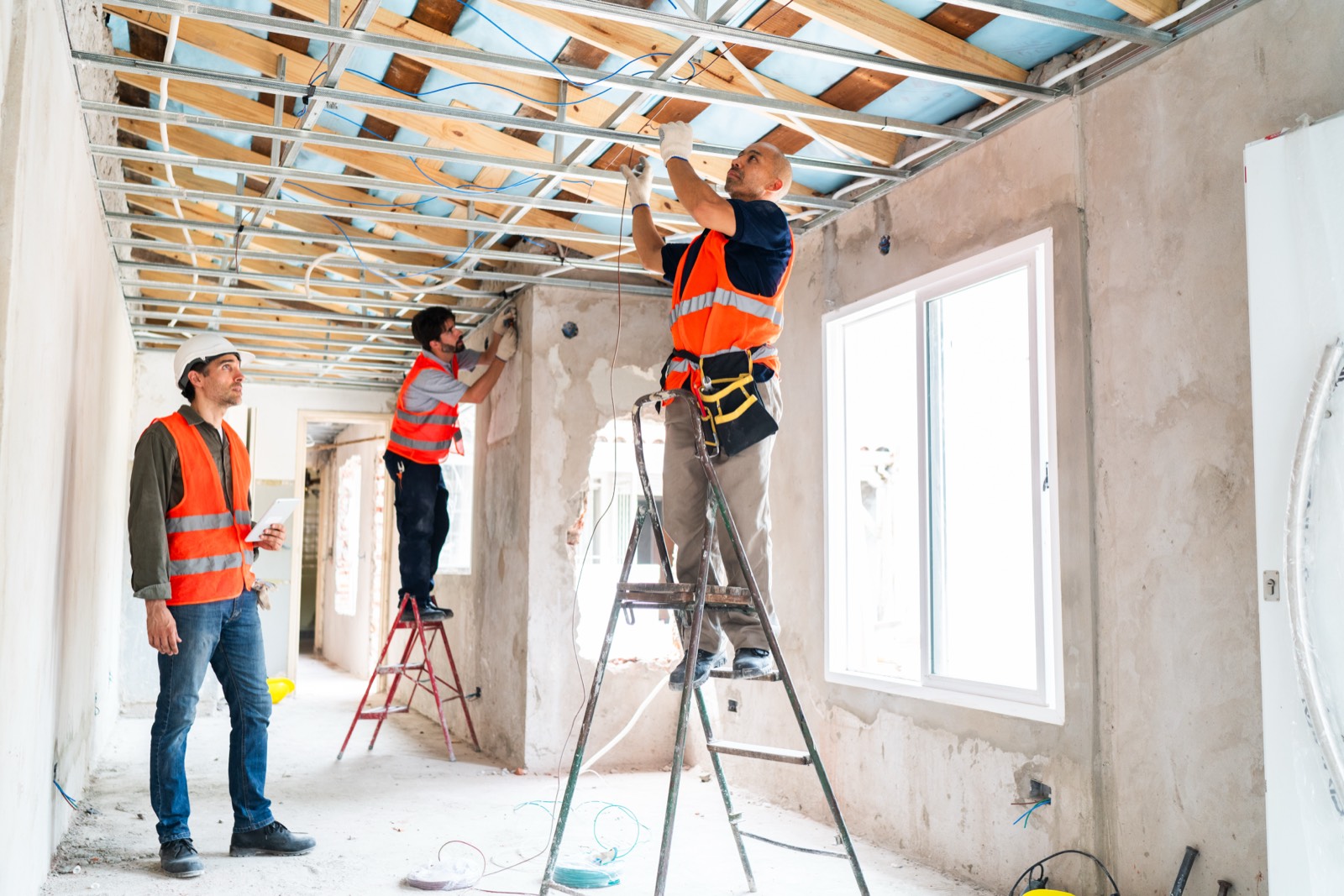
Garage wiring cost in Ontario depends less on the word “garage” and more on the route, load, and finish level. An attached garage with open framing and a short run from the panel is a different job from a detached garage that needs trenching, exterior-rated conduit, a subpanel, lighting, receptacles, and EV charger readiness.
City Power Electrical Services provides free written estimates for garage wiring across Toronto and the GTA. We’re a Licensed Electrical Contractor, ECRA/ESA #7015314, and garage wiring is permitted with the ESA where required and inspected.
Garage wiring is quoted after a site visit unless it matches a published item
A full garage wiring scope is usually quoted in writing after a site visit because the price turns on access, distance, trenching, existing panel capacity, and what you plan to use in the garage. Some individual line items have published GTA pricing, but a complete attached or detached garage package does not have a single reliable flat rate.
| Scope or price driver | Typical pricing approach |
|---|---|
| Attached garage wiring package with lighting, receptacles, switching, and opener power | Quoted in writing after a site visit |
| Detached garage wiring package with underground feed, conduit, lighting, receptacles, and grounding/bonding review | Quoted in writing after a site visit |
| Garage subpanel scenario | Quoted in writing after a site visit |
| Each GFCI outlet installed | Typically costs $120–$180 including parts |
| Standard outlet or switch replacement | Runs $80–$120 each, with volume pricing for whole-home refreshes |
| Specialty devices — GFCI, USB-C combo outlets, smart dimmers, timers | Range $120–$250 installed depending on the device |
| Typical 20A dedicated circuit from the panel | Costs $250–$500 depending on the distance and finish of walls along the route |
| Heavier 30A–50A circuits for dryers, ranges, hot tubs, EV chargers | Run $400–$900 |
| Straightforward Level 2 EV charger installation in the GTA — panel nearby, capacity available | Runs $800–$1,500 for labour, materials, and the ESA permit |
| Longer EV charger wire runs or finished walls | Push it to $1,500–$3,500, and the charger itself adds $500–$1,200 |
| Most homeowners for EV charger installation | Land between $1,500 and $3,000 all-in |
| 100A-to-200A panel upgrade in the GTA | Typically costs $3,200–$4,500 including the panel, labour, ESA permit, and inspection |
| Comprehensive electrical safety inspection in the GTA | Runs $250–$400 and includes the panel, grounding, outlet and GFCI testing, detector verification, and identification of knob-and-tube |
For a garage project, the estimate should separate the must-have work from the optional work. Must-have items usually include safe routing, proper protection, lighting, receptacles, GFCI protection where required, an ESA notification where required, and inspection. Optional items may include extra workbench circuits, EV charger readiness, smart controls, security wiring, or a subpanel.
If the garage work is part of broader renovation wiring, start with our home wiring and rewiring service. For a wider look at renovation budgets, compare this with home addition electrical cost in Ontario and basement finishing electrical cost in Ontario.
Attached garages cost less when the panel route is short and accessible
Attached garage wiring is usually simpler because the electrician can often route cable from the main panel through the basement ceiling, utility room, or an interior wall into the garage. The expensive parts are not the devices themselves; they are the route, the wall finishes, and whether the existing panel has capacity and breaker space.
In an attached garage, we look at:
- Where the main panel is located relative to the garage wall
- Whether the basement ceiling is open, tiled, drywalled, or finished with bulkheads
- Whether the garage walls are open framing, insulated, vapour-barriered, or finished drywall
- Whether exposed wiring needs conduit or other mechanical protection
- Whether the garage is damp, unheated, or subject to road salt and condensation
- Whether existing garage receptacles are grounded and GFCI-protected where required
- Whether the garage door opener has a proper receptacle, not an extension cord
A basic attached garage scope often includes ceiling lighting, a switch at the man door, receptacles around the perimeter, and one or more dedicated circuits for tools, a freezer, compressor, or opener. If you are adding a workbench, tell us what tools will be used at the same time. A small charger, battery station, and shop vacuum are a different load than a table saw, dust collector, heater, and air compressor.
The Ontario Electrical Safety Code matters here because garages are harsher environments than bedrooms or living rooms. Receptacles may need GFCI protection. Wiring may need protection from impact. Devices in cold or damp areas need to be suitable for the location. If cable is run on the surface, we plan the conduit path so it is serviceable and not in the way of shelving, bikes, tire racks, or garage door tracks.
Detached garages cost more because the feed is the job
Detached garage wiring is not just “adding outlets.” The main cost is getting power safely from the house to the garage. That usually means planning an underground route, choosing the correct wiring method, protecting the run with exterior-rated conduit or burial-rated cable where appropriate, and coordinating around paving, landscaping, drains, tree roots, fences, and gas or communications lines.
For a detached garage, the site visit matters because we need to see:
- The distance from the house panel to the garage
- Whether the route crosses a driveway, walkway, patio, or finished landscaping
- Where the underground feed can enter and leave the buildings
- Whether trenching is practical or if hard surfaces must be cut and repaired by others
- Whether the garage structure has a dry interior wall for a panel or junction point
- Whether grounding and bonding arrangements need changes
- Whether the garage will be used only for storage or as a workshop
Detached garages often justify a subpanel, especially when the owner wants multiple receptacle circuits, better lighting, a heater, a compressor, future EV charging, or exterior lighting on the garage. A subpanel avoids bringing every individual branch circuit back to the house panel, but it also adds planning: feeder size, overcurrent protection, grounding and bonding, panel location, working clearance, labelling, and ESA inspection access.
We do not guess detached garage prices over the phone because the trench and route can dominate the job. A short, straight route over soft ground is not the same as a long route under interlock or asphalt. The written estimate should show what is included electrically and what is excluded, such as trenching, concrete cutting, asphalt repair, or landscape restoration if those are handled by others.
If the garage wiring is being added because you are building a new structure, the electrical design belongs in the early planning stage, not after the slab is poured. That is the same lesson we see on additions: rough-in choices are cheaper before finishes go on.
The electrical scope should match how the garage will be used
A storage garage, workshop garage, EV garage, and hobby garage should not be wired the same way. The cheapest layout on day one often becomes expensive later when the owner adds tools, a freezer, cameras, a heater, or a charger and there is no capacity or conduit path left.
Common garage wiring items include:
- Ceiling lights bright enough for vehicle work, storage, and winter evenings
- Switches at practical entrances, including the house door and exterior man door where applicable
- GFCI-protected receptacles where required by code
- Receptacles along workbench walls so tools are not run from extension cords
- A dedicated receptacle for a garage door opener
- Dedicated circuits for freezer, compressor, heavy tools, or equipment where needed
- Exterior-rated conduit or weather-rated fittings where wiring is exposed to damp or outdoor conditions
- Exterior lighting at the overhead door, man door, side yard, or driveway
- A subpanel when several circuits or future expansion are planned
- Low-voltage pathways for cameras, doorbells, access control, or network equipment
Lighting deserves its own decision. A single fixture in the centre of the ceiling leaves shadows under the hood and around storage shelves. Linear LED fixtures or multiple ceiling lights usually work better in a work garage. If the ceiling is open, it is also the right time to place lights around garage door tracks and overhead storage so the door does not block the light.
Receptacle placement matters too. Garages collect extension cords because the original builder gave the owner one or two outlets. We plan receptacles around real use: the charger shelf, lawn equipment, winter battery maintainer, freezer, workbench, tire inflator, and vacuum. If you plan security cameras or smart controls, compare the options in our security camera wiring cost guide and smart home wiring cost guide.
EV charger readiness is best treated as an optional line item
EV charger readiness does not always mean installing the charger today. It can mean leaving capacity, installing a conduit pathway, running a heavier circuit, setting a junction point, or choosing a subpanel size that will not paint you into a corner.
This is especially important in garages because the charger location affects the whole design. A charger beside the panel is a different installation from a charger across the garage, on a detached wall, or outside on the driveway side. Finished walls, masonry, fire separations, and trenching all change the work.
For EV planning, we look at:
- Existing service size and available panel capacity
- Whether the panel has physical breaker space
- The path from the panel to the charger location
- Whether the charger will be indoors or outdoors
- Whether a load-management device may avoid a panel upgrade
- Whether the garage wiring should include a subpanel now to simplify future work
For a simple garage electrical wiring job in Ontario — panel close by and enough available capacity — budget $800–$1,500 for labour, materials, and the ESA permit. If the garage needs a longer cable run or wiring through finished walls, the cost can rise to $1,500–$3,500, with an EV charger adding $500–$1,200 if included. Most Ontario homeowners spend about $1,500 to $3,000 in total for this type of garage wiring work.
When panel capacity is limited, load management may prevent an upgrade; if not, a 200A panel upgrade is typically $3,200–$4,500 and can be completed with the garage wiring. For garage projects, we usually price EV readiness as a separate option so you can decide whether to do it now, rough in for later, or leave it out.
A proper quote includes route, protection, ESA, and cleanup
To get an accurate garage wiring quote, we need more than a room size. We need to see the panel, the route, the garage construction, and the equipment you want to use. Photos help, but a site visit is what lets us quote the work properly in writing.
Before the visit, make a simple list:
- Attached or detached garage
- Number of vehicles and how the space is used
- Workbench location
- Garage door opener location
- Freezer, compressor, heater, welder, or heavy tool loads
- EV charger now or future readiness only
- Exterior lights, cameras, or doorbell wiring
- Finished surfaces you want preserved
- Any known old wiring, aluminum wiring, or knob-and-tube in the house
During the estimate, we check the panel capacity, breaker space, grounding clues, visible wiring condition, and the route. For detached garages, we also walk the outside path and discuss trenching, conduit, entry points, and restoration. If the existing electrical system is questionable, a separate electrical inspection cost in Ontario may be worthwhile before committing to a larger garage scope.
ESA inspection is part of doing the job correctly. The inspector may look at the panel work, conductor sizing, overcurrent protection, GFCI protection, bonding and grounding, boxes, conduit, support, device locations, and whether the installation matches the notification. Finished work should still be accessible where inspection is required, so do not close walls or bury conduit before the electrical stage is complete.
City Power Electrical Services provides free written estimates, full cleanup, and 24/7 emergency service across Toronto and the GTA. Call 416-837-4038 to book a garage wiring estimate. We will separate the required safety work from the optional upgrades, price it in writing, and handle the ESA notification where required.
Want a licensed electrician to take a look?
Free written quote, usually the same day. ESA permits handled.