Comparison
Commercial Electrician vs Industrial Electrician
The practical difference is this: a commercial electrician keeps business spaces safe, functional, code-compliant, and open to the public; an industrial electrician works deeper in production equipment, controls, motors, machinery, and process power.
There is overlap. A warehouse with high-bay lighting, loading dock receptacles, office areas, and a small repair shop may need both skill sets. A restaurant needs a commercial electrician for lighting, panels, kitchen circuits, fire alarm interfaces, emergency lighting, and service maintenance. A light industrial unit with a CNC machine, compressor, dust collector, or production line may also need industrial machine wiring support.
If you are comparing a commercial electrician vs industrial electrician before calling, start with the environment: is the problem in the building electrical system, or inside production equipment and controls? That answer usually tells you who should lead the work.
Verdict: call a commercial electrician for the building, and an industrial electrician for machinery and process equipment
For most GTA offices, restaurants, retail stores, plazas, warehouses, and mixed-use commercial units, the first call is a licensed commercial electrician. The building systems usually include distribution panels, lighting, receptacles, dedicated circuits, data pathways, emergency and exit lighting, signs, HVAC power, kitchen equipment feeds, and routine electrical maintenance.
Industrial electricians are the better fit when the work involves machinery wiring, motor controls, production equipment, process shutdowns, control panels, sensors, variable frequency drives, interlocks, or troubleshooting equipment that is part of manufacturing or processing.
A simple way to separate the two:
- If it serves the space, it is usually commercial: lights, panels, plugs, tenant improvements, emergency lighting, and maintenance.
- If it serves the process, it may be industrial: machines, drives, motors, control circuits, safety interlocks, and production lines.
- If it touches both, the job may need coordination between the building electrician, equipment supplier, landlord, utility, and ESA.
City Power Electrical Services handles commercial electrical work across Toronto and the GTA, including maintenance, lighting, panels, dedicated circuits, service calls, and buildout support. For ongoing building issues, start with our commercial electrical maintenance service. For machine-specific wiring, see industrial machine wiring electrician.
Side-by-side: commercial electrician vs industrial electrician
| Category | Commercial electrician | Industrial electrician |
|---|---|---|
| Typical workplaces | Offices, restaurants, retail stores, plazas, warehouses, clinics, common areas, tenant units | Factories, production shops, packaging lines, processing areas, machine shops, heavy warehouse operations |
| Main focus | Building electrical systems that support people, tenants, customers, and business operations | Production equipment, motors, controls, process power, and machinery reliability |
| Common equipment | Panels, breakers, lighting controls, receptacles, emergency lights, exit signs, fire alarm interfaces, data pathways, rooftop unit feeds | Motor starters, VFDs, PLC-related wiring, machine disconnects, control cabinets, sensors, conveyors, compressors, production equipment |
| Typical service calls | Tripping breakers, failed lights, dead receptacles, overloaded circuits, emergency lighting issues, tenant changes | Machine trips, nuisance faults, motor failures, control circuit problems, production downtime |
| Maintenance style | Scheduled inspections, thermal scanning where appropriate, lighting replacement, panel labelling, emergency lighting checks, repair logs | Preventive maintenance tied to production schedules, shutdown work, motor testing, control troubleshooting, spare parts planning |
| Safety focus | Public access, employee safety, emergency egress, Ontario Electrical Safety Code compliance, ESA notifications where required | Lockout, arc flash controls, CSA Z462 practices, guarded equipment, stored energy, production shutdown procedures |
| Who usually coordinates | Property manager, tenant, general contractor, restaurant owner, retail operator, facilities manager | Plant manager, maintenance supervisor, equipment vendor, controls contractor, safety lead |
| Pricing approach | Some common scopes have published bands; larger work is quoted after site review | Usually quoted in writing after a site visit because machinery, downtime, and controls vary widely |
The table matters because the wrong call can waste time. A commercial electrician may be able to restore power to a unit, replace a failed breaker, or repair a lighting circuit, but not reprogram or diagnose a machine control system. An industrial electrician may be excellent with drives and equipment, but not the best first call for restaurant emergency lighting, retail tenant wiring, or office renovations.
Commercial electricians fit offices, restaurants, retail, and most warehouse building systems
A commercial electrician is usually the right fit when the electrical work supports the building and the people using it. In an office, that may mean adding receptacles for workstations, relocating lighting for a new layout, installing exit and emergency lighting, supporting data cabling pathways, or correcting panel schedules before a tenant move-in.
In a restaurant, the commercial scope is more demanding because the kitchen load changes the electrical design. Dedicated circuits may be needed for refrigeration, dishwashers, make-up air, exhaust equipment, small appliances, POS stations, lighting controls, patio equipment, and signage. A restaurant also needs careful coordination around life safety systems, fire alarm interfaces, emergency lighting, and equipment clearances.
Retail spaces have their own pattern. Display lighting, cash desks, sign circuits, stock room power, security equipment, and after-hours service access all matter. A retail lighting failure is not just an inconvenience; it affects how products look and whether the store feels open and safe.
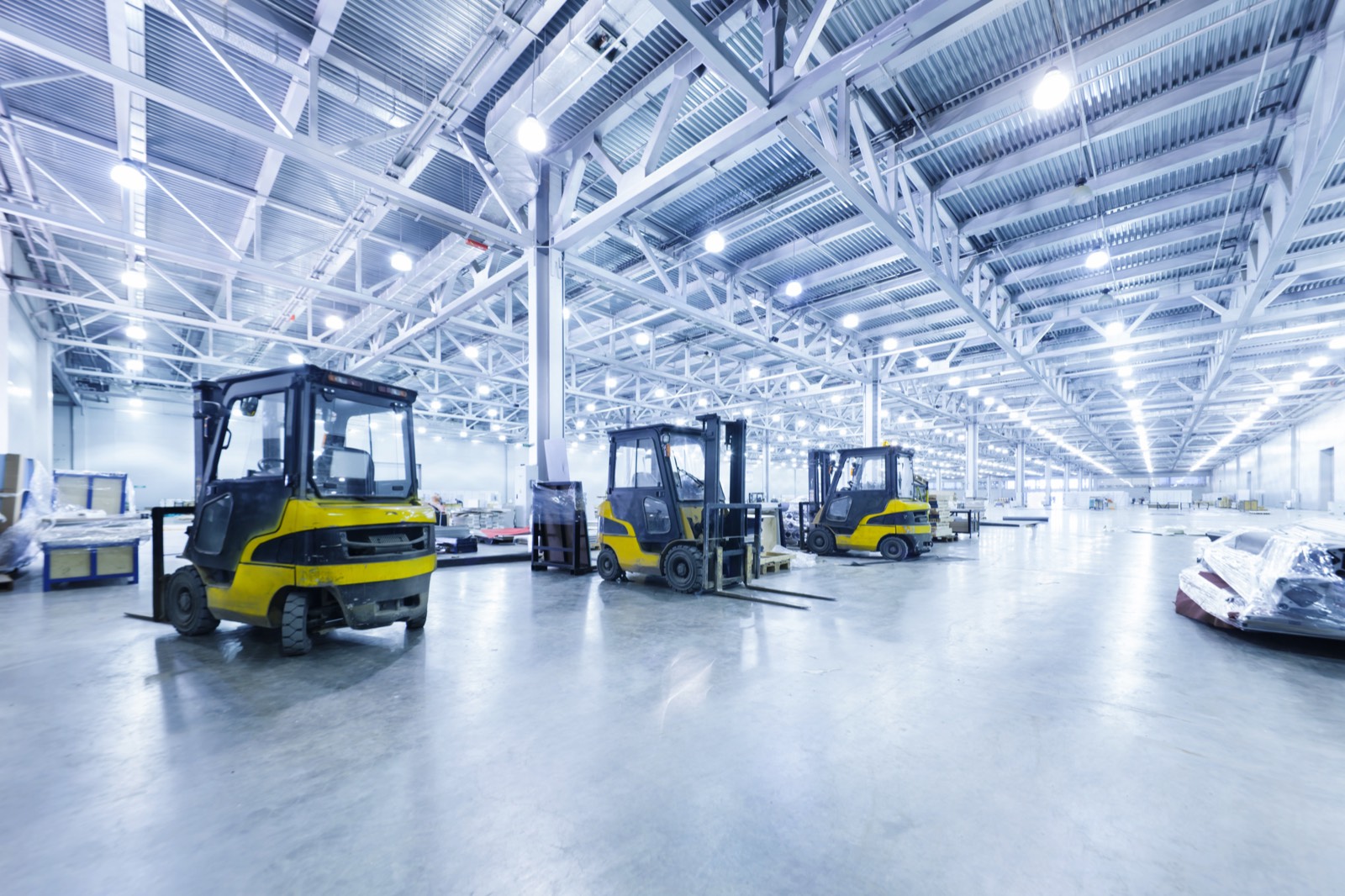
Warehouses are mixed. The building side may include high-bay LED fixtures, motion sensors, loading dock receptacles, battery charger circuits, panel maintenance, exterior lighting, and emergency lighting. Those are commercial electrical tasks. If the warehouse also has conveyors, production equipment, automated racking, compressors, or shop machinery, the line starts to move toward industrial.
For local commercial service coverage, readers in York Region can also see Commercial Electrician in Aurora and Commercial Electrician in Richmond Hill.
Industrial electricians fit machinery, controls, motors, and light industrial process power
An industrial electrician becomes the better fit when the electrical work is tied to a machine or production process rather than the base building.
Light industrial spaces often sit in the middle. A unit may look like a warehouse from the outside but include a compressor, saw, CNC machine, paint booth, dust collector, packaging machine, pump system, or assembly line inside. The building still needs commercial service, but the equipment may need industrial wiring methods, disconnects, overload protection, control circuit work, and careful shutdown planning.
Common industrial tasks include:
- Connecting equipment that requires a dedicated disconnect and proper overcurrent protection.
- Wiring motors, starters, and control cabinets according to the equipment requirements.
- Supporting variable frequency drives and motor loads where harmonics, heat, and conductor sizing must be considered.
- Troubleshooting nuisance trips that only happen during start-up, heavy load, or certain machine cycles.
- Coordinating work during planned shutdowns so production is not interrupted longer than necessary.
- Working with equipment manuals, nameplates, manufacturer instructions, and field conditions at the same time.
Safety requirements are also different. Industrial work often involves lockout procedures, stored mechanical energy, moving equipment, elevated arc-flash concern, and coordination with plant safety rules. CSA Z462 practices may apply to energized electrical work and arc flash risk management. If exact requirements are unclear for a facility, the employer, safety consultant, and authority having jurisdiction should confirm them before work starts.
For a location-specific example of this distinction, compare Industrial Electrician in Aurora with the commercial pages above. The setting, equipment, and safety planning are not the same.
Maintenance needs are different because the failure modes are different
Commercial maintenance is usually about preventing building disruption: lights out in a public area, a nuisance breaker trip in an office, a failed emergency light, a warm connection in a panel, a dead receptacle serving a POS station, or exterior lighting that affects parking lot safety.
A good commercial maintenance plan looks at the systems people depend on every day:
- Panel condition, labelling, breaker fit, and signs of heat or corrosion.
- Emergency and exit lighting operation, battery condition, and monthly/annual service records where required.
- Lighting controls, occupancy sensors, timers, photocells, and exterior lighting.
- Receptacles, GFCI protection where required, and dedicated equipment circuits.
- Tenant changes that left abandoned wiring, overloaded power bars, or unclear panel schedules.
- ESA notifications and inspections when the work requires them.
Small facilities (retail, office suites) typically run $500–$1,500 annually; larger industrial sites with monthly emergency-lighting service and extensive panels scale with scope. Larger work is quoted in writing after a site visit.
Industrial maintenance is more tightly connected to downtime and production. A loose control wire, failing contactor, overheated terminal, worn motor connection, or incorrect replacement part can stop a line. Industrial service often needs planned shutdown windows, spare parts review, and coordination with maintenance staff who know the machine history.
Commercial pricing has more repeatable patterns. Office electrical typically runs $8–$15 per square foot in the GTA depending on lighting design, data infrastructure, and mechanical coordination. A 3,000 sq ft office usually lands between $25,000 and $45,000 including lighting, receptacles, panels, and emergency lighting. Restaurant electrical in the GTA typically runs $20,000–$80,000 depending on kitchen equipment load, dining room lighting design, and whether the base building service needs upgrading.
Industrial machine work is harder to price without seeing the equipment, nameplates, service capacity, controls, downtime constraints, and site access. The honest answer is usually quoted in writing after a site visit.
For inspection frequency and owner responsibility, see how often commercial buildings need electrical inspections in Ontario.
What we recommend for GTA businesses and property managers
For a typical GTA business space, start with a commercial electrician unless the problem is clearly inside a machine or production control system. Offices, retail stores, restaurants, clinics, commercial condos, plazas, and most warehouse building systems are commercial electrical work first.
Call for industrial support when the issue follows a machine cycle, only appears during motor start-up, involves a control panel, or requires coordination with a production line or equipment manufacturer. In a light industrial unit, the right plan may be split: commercial work for the service, panels, lighting, emergency systems, and receptacles; industrial work for the machine disconnects, controls, and process equipment.
Before booking, gather:
- The address, unit number, and access instructions.
- Photos of the panel, affected area, breaker labels, and equipment nameplates.
- Any landlord, property manager, or building operations requirements.
- Whether the work affects customers, tenants, kitchen service, deliveries, or production.
- Any drawings, equipment manuals, previous ESA paperwork, or maintenance records.
If you are not sure whether the issue is commercial or industrial, describe the symptom plainly: what stopped working, what else was running, whether a breaker tripped, whether the issue repeats, and whether equipment has been recently added or moved. That is often enough to route the call correctly.
City Power Electrical Services is an ECRA/ESA licensed electrical contractor (#7015314), led by Sam, a licensed electrician with more than fifteen years of hands-on industry experience. We provide free written estimates, arrange ESA notifications where required, and serve Toronto and the GTA from our North York office. If your building needs planned maintenance, a repair visit, or a commercial buildout review, start with commercial electrical maintenance.
Want a licensed electrician to take a look?
Free written quote, usually the same day. ESA permits handled.