Answered by a licensed electrician
Is a 200 amp upgrade worth it for an EV?
Quick answer
A 200 amp upgrade is worth it for an EV when your 100 amp service cannot pass the OESC load calculation with the charger added. In the GTA, a 100A-to-200A upgrade typically costs $3,200–$4,500 including the panel, ESA permit, and inspection, while load management or lower-amperage charging can sometimes avoid it.
A 200 amp upgrade is worth it when the EV is not the only new load coming
A 200 amp service is usually the better long-term choice if your 100 amp panel is already carrying electric cooking, air conditioning, laundry, a finished basement, a hot tub, or planned heat-pump equipment. The EV charger is often what exposes the capacity problem, but it is rarely the only load that matters.
A Level 2 EV charger is a large continuous load. A common setup is a 40 amp charging output on a 50 amp circuit, or a 32 amp charging output on a 40 amp circuit. That is very different from adding a few outlets or lights. The charger may run for hours overnight, so the panel has to be assessed using the Ontario Electrical Safety Code load calculation, not by counting empty breaker spaces.
For a typical 100 amp service, the decision comes down to headroom. If the load calculation works, you may not need a service upgrade. If it fails, the legal options are to reduce the EV charging load, install an approved EV energy management system, or upgrade the service.
The upgrade route costs more upfront, but it solves more than the EV problem. A proper 200 amp panel upgrade gives room for future circuits, reduces the need for workarounds, and makes later additions cleaner. Where the scope is a standard 100A-to-200A service upgrade in the GTA, expect the project to land around $3,200–$4,500 with the panel, labour, ESA notification, and inspection included.
That figure only applies where the service upgrade scope matches: typical residential service, standard access, and no unusual utility or building conditions. If the home is still on a 60 amp fuse service, has an old meter base, overhead clearance issues, damaged grounding, or a buried service that needs utility review, the quote has to be written after a site visit.
Load management is better when you only need EV charging, not more whole-home capacity
An EV energy management system can be the right answer when the house works fine on 100 amps and the only problem is adding the charger. It monitors the home’s electrical demand and automatically pauses or reduces EV charging when the rest of the house is using too much power.
This is not the same as hoping you will remember not to run the dryer while charging. The device has to be approved for the application, installed as part of the EV circuit, and included in the ESA notification. The charger, conductors, breaker, and management equipment all have to match.
Load management is most useful when:
- The load calculation fails only because of the EV charger.
- You are comfortable with the car occasionally charging more slowly.
- The panel and service equipment are otherwise in good condition.
- You do not plan to add a hot tub, electric tankless water heater, large workshop load, or major heating equipment soon.
- Utility service upgrade logistics would be difficult or delayed.
It is less attractive when the panel is already crowded, poorly labelled, corroded, or full of old tandem breakers. In those cases, the issue is not just capacity; it is the condition and layout of the electrical system. See our broader comparison of 100 amp vs 200 amp panels if you are deciding whether the service itself is undersized for the house.
The main drawback of load management is that it preserves the 100 amp ceiling. It may make the EV possible, but it does not create capacity for the next large load. If you expect to own more than one EV, add a secondary suite, install a hot tub, or electrify heating, a service upgrade is usually the cleaner decision.
Lower-amperage charging is often enough if your driving pattern is predictable
You may not need a 40 amp or 48 amp charger to be happy with home charging. Many EV owners do well with a smaller Level 2 circuit if the vehicle sits overnight and the daily commute is consistent.
A lower-amperage charger reduces the load calculation impact. For example, a charger limited to 16, 24, or 32 amps may fit where a larger charger does not. The tradeoff is simple: less electrical capacity required, but fewer kilometres recovered per hour of charging.
| Option | Best fit | Main tradeoff |
|---|---|---|
| Lower-amperage Level 2 charging | Predictable daily driving and overnight parking | Slower charging after long trips |
| EV energy management | 100 amp service with limited spare capacity | Charger may pause during peak household load |
| 200 amp service upgrade | Multiple large loads or future electrification | Higher upfront cost and utility coordination |
This is where a real load calculation matters. A 100 amp panel with gas heat, gas cooking, no hot tub, and limited electric loads may support a modest EV circuit. A similar-looking 100 amp panel in a house with electric range, dryer, air conditioning, basement kitchen, and workshop tools may not.
It is also important not to confuse breaker spaces with capacity. A panel can have physical room for a new breaker and still fail the load calculation. The opposite can also happen: a panel may be messy or full, but the service capacity might be acceptable once the layout is corrected. If your question is specifically whether an EV can stay on 100 amps, read can I run an EV charger on a 100 amp panel? for that narrower scenario.
The proper decision starts with the load calculation, then the utility and ESA steps
The right process is to calculate first, choose equipment second, and file the ESA notification before the work starts. Guessing based on online charger recommendations is how homeowners end up with rejected inspections, nuisance limitations, or a charger that cannot be legally energized.
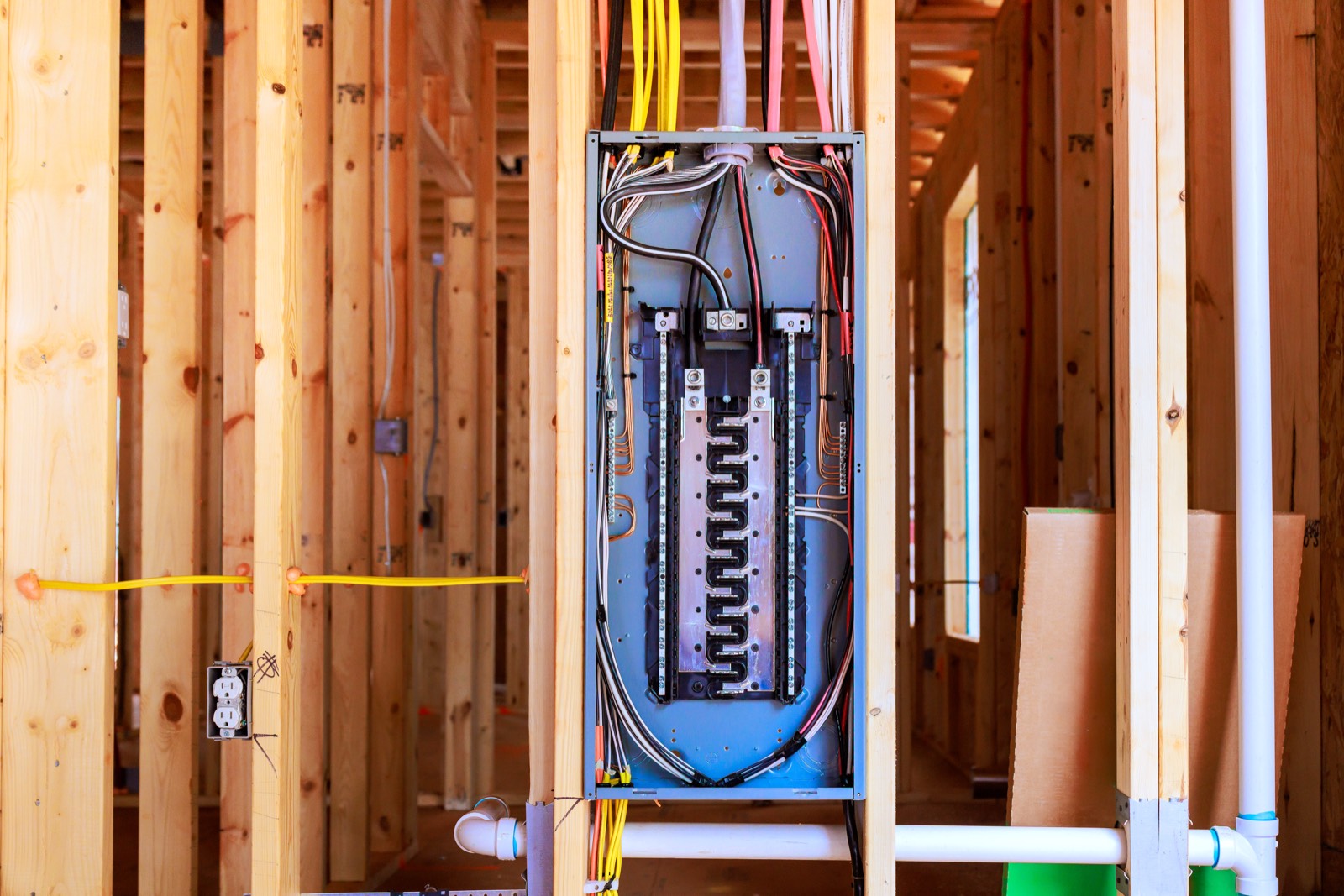
For a 200 amp upgrade, the work usually involves more than replacing the breaker panel. The electrician has to confirm the service conductors, meter base, grounding and bonding, panel location, utility requirements, and available short-circuit rating of the equipment. The local utility may need to disconnect and reconnect power, and in some cases it must review whether the existing service connection can support 200 amps.
In the GTA, that utility could be Toronto Hydro, Alectra, Hydro One, Elexicon, Oshawa Power, Oakville Hydro, Burlington Hydro, or another local distributor depending on the address. Their requirements are not identical, so the service layout matters.
The ESA inspection is the other non-negotiable step. For an EV-related service upgrade or charger circuit, the inspector is looking for items such as:
- Correct conductor and breaker sizing for the charger and service.
- Approved panel, meter, disconnect, and EV equipment.
- Proper grounding and bonding.
- Correct GFCI protection where required by the equipment and code.
- Weather-rated equipment and fittings for outdoor chargers.
- Accurate panel directory and circuit identification.
- Work completed in line with the filed notification.
City Power Electrical Services is an ECRA/ESA Licensed Electrical Contractor, licence #7015314, and we provide free written estimates for Toronto and GTA homeowners comparing EV load management with a 200 amp upgrade.
Choose 200 amps when it prevents a second expensive electrical decision later
The best reason to upgrade is not just today’s EV; it is avoiding another capacity fight in two years. If your home is moving toward more electric loads, a 200 amp service is often the more stable platform.
A service upgrade is usually favoured when you have, or plan to add:
- Two EVs or a need for faster overnight recovery.
- A hot tub, pool equipment, or garage workshop.
- A secondary suite with cooking and laundry loads.
- Heat-pump equipment or other electrification work.
- A panel that is old, full, poorly labelled, or difficult to expand.
- A future renovation where new dedicated circuits are likely.
Load management is usually favoured when the house is otherwise staying the same and you simply need one EV to charge safely. Lower-amperage charging is favoured when your daily driving is modest and waiting overnight is acceptable.
If you are deciding between a general service upgrade and a more targeted EV solution, compare the EV decision with the broader 100 amp question here: should I upgrade from 100 amp to 200 amp service?. If the answer is already yes without the EV, the charger is just the timing trigger.
One more practical point: when the panel is being upgraded, it is often sensible to plan the EV circuit at the same time. The panel is open, the load calculation is already being done, and the ESA documentation can be coordinated. Even if you do not install the charger immediately, planning the route, breaker space, and capacity now can avoid rework later.
A 200 amp upgrade is not automatically required for every EV. But if the load calculation fails, the panel is outdated, or your home is moving toward heavier electrical use, it is usually the more durable choice than squeezing one more load onto a 100 amp service.
Want a licensed electrician to take a look?
Free written quote, usually the same day. ESA permits handled.
People also ask
Can I install an EV charger on a 100 amp panel without upgrading?
Sometimes, yes. A 100 amp service can support an EV charger if the OESC load calculation leaves enough capacity, or if the charger is limited to a lower output. If the calculation does not pass, an approved EV energy management system may allow charging without a full service upgrade.
Is load management safe for an EV charger?
Yes, when it is approved for the equipment and installed correctly. A load management device monitors the home’s electrical demand and reduces or pauses EV charging before the service is overloaded. It still needs proper breaker sizing, wiring, configuration, ESA notification, and inspection.
How much does a 200 amp upgrade cost if I am adding an EV charger?
For a standard 100A-to-200A upgrade in the GTA, the typical range is $3,200–$4,500 including the panel, labour, ESA permit, and inspection. The EV charger circuit is a separate scope unless it is included in the written quote.
Will a 200 amp panel charge my EV faster?
Not by itself. Charging speed depends on the charger output, vehicle onboard charger limit, circuit size, and settings. A 200 amp service gives more capacity to install a larger Level 2 circuit, but the vehicle and charger still determine the actual charging rate.