Answered by a licensed electrician
Does a Tesla need a special outlet?
Quick answer
A Tesla does not need a Tesla-only outlet, but most owners install a 240V Level 2 circuit. A normal 120V receptacle is slow; a NEMA 14-50 or hardwired wall connector is the practical choice. On a 50A circuit, EV charging is commonly limited to 40A because continuous loads are sized to 80%.
A Tesla can use a normal outlet, but it is usually too slow for daily charging
A Tesla can charge from a standard 120V household receptacle, but that is Level 1 charging. It is useful as a backup, for very low daily driving, or while you are waiting for a proper installation. It is not what most GTA homeowners mean when they ask for a “Tesla outlet.”
On a regular 15A household circuit, the car should not pull the full breaker rating continuously. EV charging is a long-duration load, so the circuit and charger setting must leave the proper safety margin. In practical terms, a 15A circuit charges at up to 12A, and a 20A circuit charges at up to 16A when the equipment supports it.
That makes Level 1 slow. It can work if the car sits overnight and your commute is short, but it will not feel like replacing a gas station at home. If the same receptacle also feeds a freezer, garage door opener, lights, or other garage outlets, nuisance tripping and voltage drop become more likely. Extension cords are not the fix; the right fix is a dedicated circuit sized for EV charging.
If you are still deciding between a receptacle and a wall connector, our Tesla charger installation cost guide breaks down the usual installation variables.
The three common choices are 120V, NEMA 14-50, and a hardwired wall connector
The right “outlet” depends on how fast you need to charge, whether you want a plug-in setup, and what your electrical panel can safely support. A Tesla does not require a proprietary wall connector, but a hardwired EV charger is often the cleanest long-term installation.
| Option | What it is | Best for | Electrical notes |
|---|---|---|---|
| Standard 120V receptacle | Regular household outlet | Backup charging or very short commutes | Usually 12A charging on a 15A circuit; slowest option |
| NEMA 14-50 receptacle | 240V, 4-wire range-style receptacle | Plug-in Level 2 charging | Commonly installed on a 50A circuit with the charger set to 40A |
| Hardwired wall connector | EV charger permanently connected to the circuit | Daily home charging with a tidy, fixed setup | Can be sized to the panel and charger, often without a receptacle |
A NEMA 14-50 is popular because it gives plug-in flexibility. It is the receptacle many people picture when they say “Tesla outlet.” It needs a proper 240V dedicated circuit, the correct breaker, correct conductor size, a deep enough box, and a receptacle suitable for repeated EV charging use. A NEMA 14-50 is also a 4-wire receptacle, including a neutral, even though many EV chargers do not use the neutral internally.
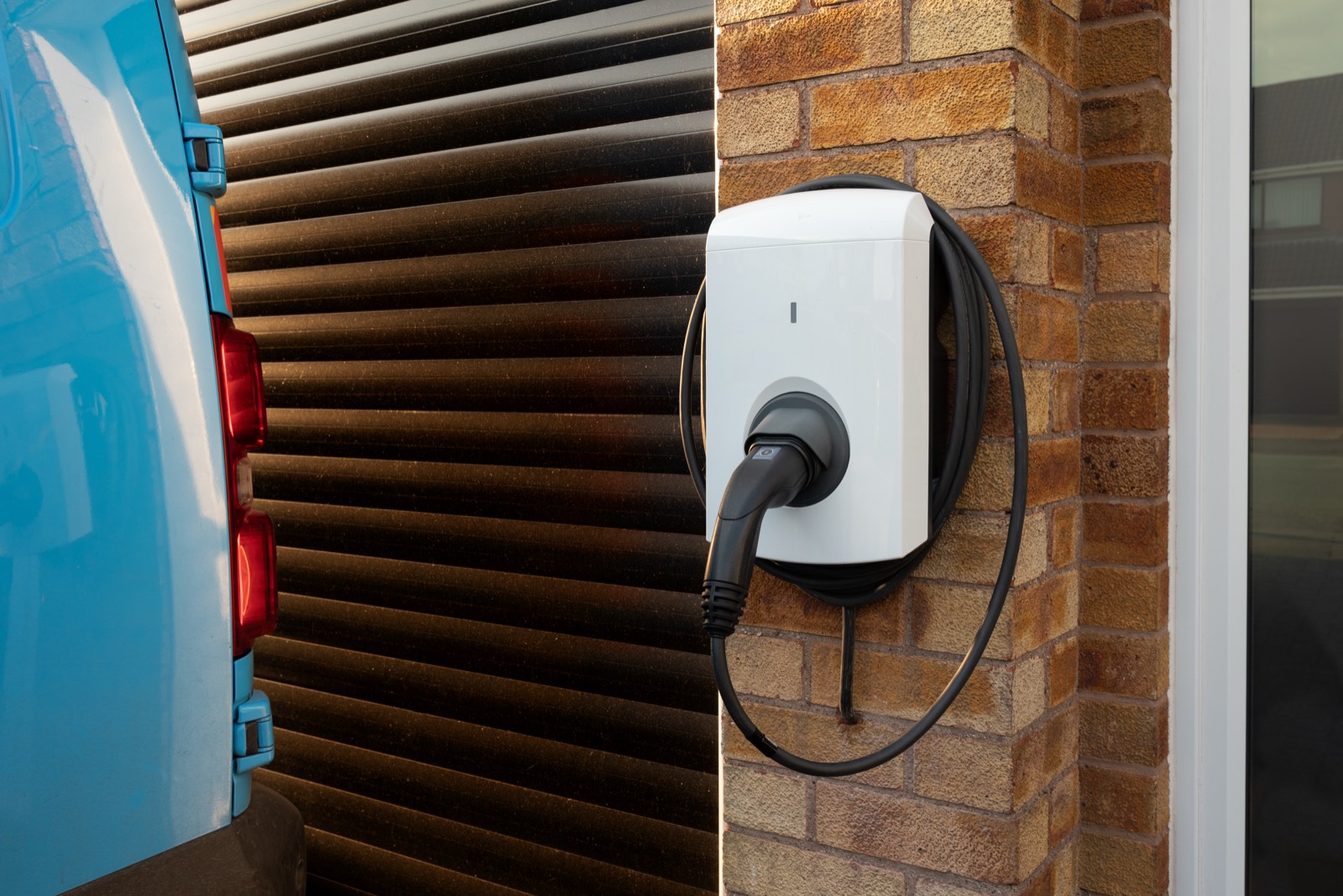
A hardwired wall connector removes the plug and receptacle from the chain. That can be an advantage for a charger that will stay in one parking spot for years. It also avoids wear from repeated plugging and unplugging, and it can look cleaner in a garage or on an exterior wall. If installed outside, the location, cable, fittings, enclosure rating, and physical protection all matter.
For a complete installation, see our EV charger installation service. City Power Electrical Services is a licensed Ontario electrical contractor, ECRA/ESA #7015314, and EV charger work is quoted in writing after the panel and route are checked.
The circuit size must match both the charger setting and the panel capacity
The breaker size is not chosen by the car alone. It has to match the charger’s maximum setting, the wire size, the installation method, the distance from the panel, and the available capacity in the home’s electrical service.
This is where many DIY plans go wrong. A 50A breaker does not mean the car should be set to draw 50A continuously. EV charging is treated as a continuous load, so the usable charging current is typically 80% of the circuit rating. That is why a 50A circuit is commonly paired with a 40A charging setting. A 60A circuit, where allowed by the charger and installation, is commonly paired with 48A charging.
The panel also needs a load calculation. A garage may look simple, but the house may already have electric range, dryer, hot tub, heat pump, basement suite loads, or limited service capacity. On a 100A service, adding a high-output charger without checking the calculation can create an overloaded service even if there is an empty breaker space.
When capacity is tight, the answer is not always a 200A upgrade. A load-management device can sometimes limit EV charging when the house is using heavy loads. In other homes, a panel or service upgrade is the safer long-term answer, especially if more electrical loads are planned. If a 200A upgrade is needed, GTA pricing is typically $3,200–$4,500 including the ESA permit and inspection.
A proper EV circuit design checks:
- Service size and panel rating, not just empty breaker spaces
- Existing large loads such as range, dryer, HVAC, hot tub, and basement kitchen circuits
- Charger model and its adjustable amperage settings
- Wire size, cable type, conduit fill, and voltage drop on longer runs
- Garage, driveway, or exterior mounting location
- Breaker type required by the equipment and current code
- Whether load management is needed to avoid overloading the service
If the plan involves adding a new receptacle only, the cost and scope are different from installing a full Level 2 charger. This is why a general cost to add an outlet can be much lower than an EV circuit: EV charging is a dedicated, high-load, long-duration installation.
In Ontario, EV charger installations normally need an ESA notification
A new Tesla charging circuit is electrical work that normally requires an ESA notification in Ontario. That is the permit process used by the Electrical Safety Authority. The licensed electrical contractor files the notification, completes the installation, and arranges inspection where required.
This is not paperwork for its own sake. The ESA process gives you a record that the EV circuit was installed under the Ontario Electrical Safety Code. That matters for insurance, resale, condo approvals, and future service work. It also protects the next person who opens the panel and needs to know that the charger circuit was installed legally.
For an EV charger, the inspection focus is practical. The inspector is looking for the things that make high-current charging safe over many hours:
- Correct breaker size for the conductor and charger setting
- Proper wire type and mechanical protection
- Secure terminations torqued to manufacturer specifications
- Correct grounding and bonding
- Suitable receptacle or hardwired disconnecting method
- Weather-rated equipment when installed outdoors
- Panel labelling and no improper double-tapping
- Compliance with the load calculation or approved load-management method
If you live in a condo, there may also be board approval, parking ownership questions, and building electrical capacity to confirm before any work starts. That is separate from ESA. The same is true for utility involvement if a service upgrade is required; Toronto Hydro, Alectra, Hydro One, or the local distributor may need to coordinate the disconnect and reconnect.
Most Tesla owners choose Level 2 because it matches real daily use
For most homes, the practical answer is a 240V Level 2 charger, either a NEMA 14-50 receptacle or a hardwired wall connector. The decision comes down to how permanent the setup is, how much panel capacity is available, and where the car parks.
A straightforward Level 2 installation in the GTA, with capacity available and the panel close to the charger location, is commonly $800–$1,500 before the charger if the conditions are simple. Longer cable routes, finished walls, detached garages, exterior conduit, or panel constraints can push the electrical installation into the $1,500–$3,500 range. The charger unit itself commonly adds $500–$1,200. Most homeowners end up in the $1,500–$3,000 all-in range for a typical home setup.
The site visit should answer three questions before you buy equipment:
- Where will the car actually park every night?
- How many amps can the panel safely spare for EV charging?
- Do you want plug-in flexibility or a fixed hardwired charger?
Do not choose the biggest breaker just because the charger supports it. Many drivers do perfectly well with a lower amperage setting because the vehicle sits plugged in overnight. A correctly sized circuit that charges reliably every night is better than an oversized circuit that strains the service or fails inspection.
If you are planning backup power or future energy storage along with EV charging, it is worth coordinating the layout now. A charger, transfer equipment, and battery system all need panel space, load planning, and clean routing. Our battery storage service covers that side when homeowners are planning beyond a single charger.
For more electrical answers like this, the City Power answers hub has plain-language guidance on outlets, panels, EV charging, and inspection issues in Ontario homes.
Want a licensed electrician to take a look?
Free written quote, usually the same day. ESA permits handled.
People also ask
Can I plug a Tesla into a regular wall outlet in Canada?
Yes, you can charge from a regular 120V receptacle with the correct Tesla mobile connector equipment, but it is slow. A 15A circuit is normally limited to 12A for continuous EV charging. It can work for short commutes, but most owners install a 240V Level 2 circuit for daily home charging.
Is a NEMA 14-50 outlet enough for a Tesla?
A NEMA 14-50 is enough for many Tesla owners because it provides 240V Level 2 charging on a dedicated circuit. It must be installed with the correct breaker, wire, box, and receptacle, and the charger setting must match the circuit. On a 50A circuit, charging is commonly set to 40A.
Is it better to hardwire a Tesla Wall Connector?
Hardwiring is often better for a permanent home charger because it removes the receptacle and plug from the connection path, looks cleaner, and can be sized to the charger and panel. A plug-in NEMA 14-50 can still be a good choice if you want flexibility or use a portable mobile connector.
Do I need a 200 amp panel for a Tesla charger?
Not always. Many homes can support EV charging with a proper load calculation, a moderate charger setting, or load management. If the service is already heavily loaded, a 200A upgrade may be needed. In the GTA, a 100A-to-200A upgrade typically costs $3,200–$4,500 including the ESA permit and inspection.