
Answered by a licensed electrician
Can a handyman do electrical work?
Quick answer
In Ontario, a handyman you hire generally cannot do electrical wiring, panel, circuit, switch, or outlet work unless the work is done through an ECRA/ESA licensed electrical contractor. A standard outlet or switch replacement by a licensed contractor typically runs $80–$120 per device, and ESA documentation may be required where the work needs notification.
A handyman can do nearby repair work, but hired electrical work generally needs an ECRA/ESA licensed electrical contractor.
In Ontario, the key question is not whether the person is “handy.” It is whether you are hiring someone to perform electrical installation, alteration, repair, or replacement. If the work involves wiring, circuits, panels, breakers, receptacles, switches, hardwired fixtures, grounding, bonding, or electrical devices, it generally needs to be done by an ECRA/ESA licensed electrical contractor.
That is different from a homeowner doing limited electrical work in their own home, which has its own rules and inspection requirements. If that is your situation, see can I do my own electrical work in Ontario. This page is about paying a handyman, renovator, painter, flooring installer, cabinet installer, or general repair person to do electrical work as part of a job.
A hired handyman may be able to do non-electrical tasks around the electrical work, such as patching drywall after a cable route is opened, installing trim, painting, mounting shelves, or cutting access for a licensed contractor. But once the job includes disconnecting conductors, adding a receptacle, replacing a switch, extending a cable, installing a breaker, or making a splice in a junction box, it has moved into electrical contracting.
The practical test is simple: if the person has to open an electrical box and change how conductors are connected, do not treat it as handyman work.
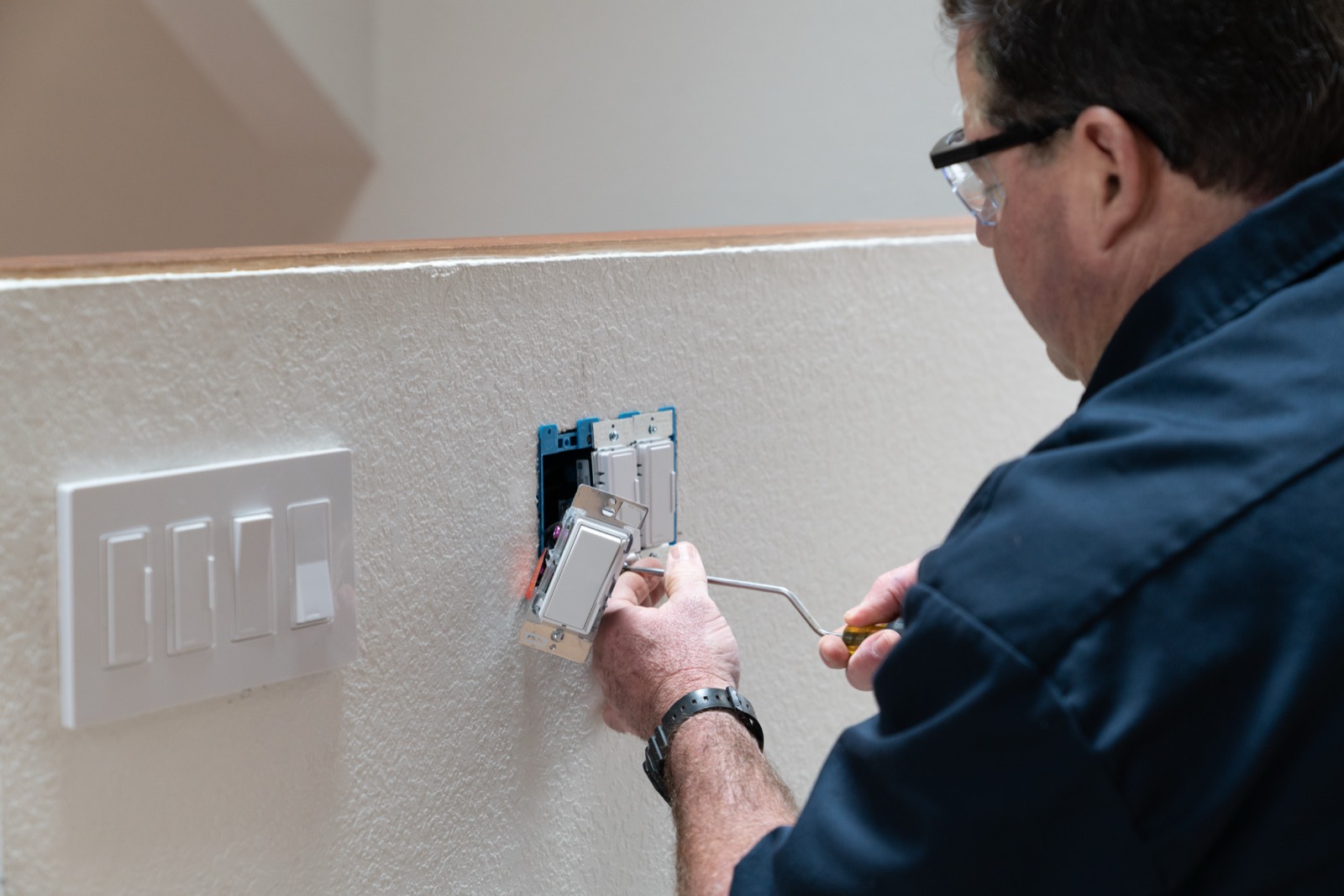
Switches, outlets, fixtures, and circuits are electrical work, even when the job looks small.
Replacing a device is not just cosmetic. A receptacle or switch replacement involves conductor condition, terminal type, box fill, grounding continuity, device rating, polarity, cover fit, and sometimes AFCI or GFCI protection. A bad backstab connection, loose neutral, nicked conductor, or oversized breaker can sit hidden in the wall until it becomes a heat or shock problem.
For homeowners comparing quotes, these are the usual lines:
| Task | Handyman-type work or electrical contracting? |
|---|---|
| Painting around a switch plate | Non-electrical |
| Replacing a cracked plastic wall plate only | Usually non-electrical if no wiring is exposed or moved |
| Replacing a loose receptacle | Electrical work |
| Installing a dimmer or smart switch | Electrical work |
| Adding an outlet behind a TV | Electrical work |
| Extending wiring for a kitchen cabinet, island, or vanity | Electrical work |
| Installing a new breaker or moving a circuit | Electrical work |
| Replacing a light fixture or fan where conductors are connected | Electrical work |
| Patching drywall after wiring is inspected | Non-electrical |
The “small job” argument is where many problems start. A loose outlet may need a new box, proper pigtails, conductor repair, or GFCI protection depending on the location. A smart dimmer may need a neutral in the box and compatibility with the lighting load. A bathroom receptacle is not the same as a bedroom receptacle because ground-fault protection matters.
For basic device work, our switch and outlet service is built around exactly these details: safe terminations, correct device selection, testing, and cleanup. Pricing depends on the device and volume, but the published GTA range is $80–$120 for a standard switch or outlet replacement, $120–$180 for a GFCI receptacle, and $120–$250 for specialty devices such as USB-C outlets, smart dimmers, and timers.
The risk is not only shock or fire; it is missing ESA documentation when you need it later.
Unlicensed electrical work can become a paperwork problem long after the wall is closed. Insurers, buyers, real estate lawyers, condo boards, landlords, and the Electrical Safety Authority may ask who did the work and whether the required ESA notification and inspection were completed.
That matters because an insurance claim can be challenged when unsafe or undocumented electrical alterations are connected to a loss. It also matters during a sale: a buyer’s inspector may flag new-looking wiring, unlabelled breakers, open splices, reversed polarity, missing GFCI protection, or amateur panel work. At that point, “a handyman did it” is not reassuring documentation.
Common red flags include:
- New receptacles with no ESA paperwork for the renovation
- Junction boxes buried behind drywall or cabinets
- Cables run through studs without protection plates where needed
- Mixed wire sizes on the wrong breaker
- Grounds twisted together without proper bonding to the box or device
- A GFCI receptacle installed but not protecting the downstream outlets as intended
- A dimmer installed on a load it is not rated to control
- A panel directory changed without any clear circuit testing
If the work was already done, the next step is usually to have it assessed and corrected, not to ignore it. For the bigger picture, read what happens with unpermitted electrical work and can ESA approve completed electrical work.
ESA may be able to inspect completed work in some situations, but walls, ceilings, and cabinets can make verification harder. If splices, cable routes, or box fill cannot be confirmed, correction may involve opening finishes. That is why the cheapest work can become expensive: the problem is not only the device, but the hidden route and the missing inspection trail.
ESA notification is about the work being done, not the size of the invoice.
Many homeowners assume permits are only for panel upgrades, additions, or major renovations. In Ontario, people often say “permit,” but the electrical term is an ESA notification. Whether one is required depends on the type of electrical work, not simply the price or whether the job takes one hour.
Device replacement, new circuits, panel work, additions, basement renovations, kitchen changes, bathroom wiring, EV chargers, hot tubs, exterior wiring, and service upgrades can all trigger inspection requirements depending on the scope. The licensed electrical contractor is responsible for handling the ESA notification where required and coordinating inspection.
If you are unsure whether your job needs ESA involvement, start with what electrical work needs ESA inspection and do I need a permit for electrical work in Ontario. The safest answer is to ask before the work starts, not after the drywall is patched.
On a typical device or small circuit job, the technical checks include more than “does it turn on?” A proper finish includes testing polarity, grounding or bonding continuity, GFCI trip function where applicable, AFCI protection where required, device fit, cover clearance, breaker compatibility, and whether the circuit is overloaded by the added load. On panel or circuit work, torque, conductor size, breaker rating, neutral separation, cable entry, panel labelling, and working space all matter.
City Power Electrical Services is an ECRA/ESA Licensed Electrical Contractor #7015314, founded and run by Sam, a licensed electrician; where ESA notification is required, we include that step in the job rather than leaving the homeowner to explain undocumented work later.
The safe way to use a handyman is to separate the trades clearly.
You can still use a handyman on a renovation, but do not blur the scope. Have the handyman handle non-electrical finishes and have the licensed electrical contractor handle wiring, devices, circuits, testing, and inspection. Clear sequencing avoids arguments about who touched what.
A clean division might look like this:
- Handyman removes cabinets, baseboards, or drywall access where agreed
- Licensed electrical contractor disconnects, protects, reroutes, or installs wiring
- ESA notification and inspection are completed where required
- Handyman patches and paints after electrical work is approved or ready to cover
- Licensed electrical contractor returns for final devices, plates, testing, and labelling
This is especially important in kitchens, bathrooms, basements, garages, exterior areas, and rental units, where GFCI protection, dedicated circuits, mechanical equipment, moisture, and tenancy documentation can all overlap. It also matters in condos, where the corporation may require proof of licensed electrical work before allowing alterations or closing walls.
If you already have a handyman quote that includes “move outlet,” “add switch,” “install breaker,” “wire pot lights,” or “hook up appliance,” ask for the ECRA/ESA licensed electrical contractor number before approving it. If there is no contractor number and no ESA plan, treat that line item as a warning, not a bargain.
A licensed contractor may cost more than a handyman for the electrical portion, but the price buys the things you actually need: correct materials, code-compliant installation, testing, ESA process where required, and documentation that will still make sense when you sell, insure, renovate, or troubleshoot the home later.
Want a licensed electrician to take a look?
Free written quote, usually the same day. ESA permits handled.
People also ask
Can a handyman replace a light switch in Ontario?
If you are hiring the person, replacing a light switch is generally electrical work and should be done through an ECRA/ESA licensed electrical contractor. It involves opening the box, disconnecting and reconnecting conductors, confirming grounding, matching the device to the load, and testing. A standard switch replacement typically falls in the $80–$120 range per device.
Can a handyman install a ceiling light or fixture?
A handyman can assemble the fixture or patch the ceiling, but connecting the fixture conductors to the house wiring is electrical work. The box must be suitable, the bonding must be correct, and the fixture rating must match the location and load. If the box is loose, overloaded, or not fan-rated for a fan, it needs proper electrical correction.
What happens if I already paid a handyman for wiring?
Stop adding more work until the wiring is checked. A licensed electrical contractor can inspect visible work, identify defects, and advise whether ESA involvement is needed. If wiring is hidden behind finished walls or cabinets, some areas may need to be opened so the cable routing, splices, box fill, and protection can be verified.
Is it okay if the handyman says they used to be an electrician?
Experience alone is not the same as being an ECRA/ESA licensed electrical contractor for hired work in Ontario. Ask for the contractor licence number, who is filing the ESA notification if required, and what documentation you will receive. If the answer is vague, keep that person on non-electrical tasks only.